
In This Article
There’s a moment every candle shopper in Canada eventually hits: standing in the aisle (or scrolling Amazon.ca at 11 p.m.), squinting at a label that says “natural” and wondering if that means anything at all. It usually doesn’t — not on its own, anyway.

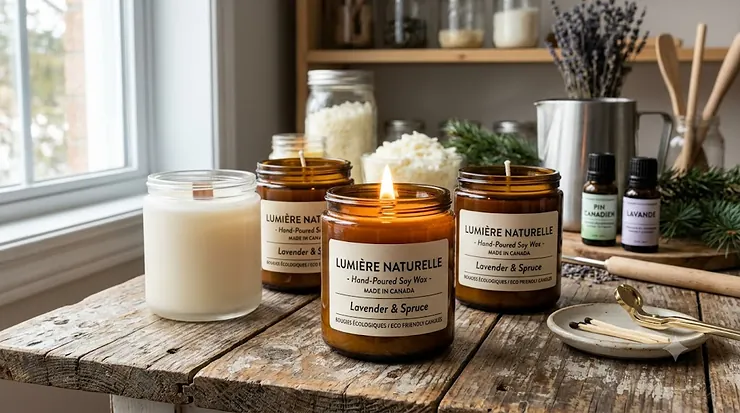
Eco friendly candles have gone from niche to mainstream over the past few winters, and for good reason. Standard paraffin candles are made from a petroleum byproduct, and burning them indoors during a long Canadian winter — when windows are sealed and the furnace is running non-stop — isn’t exactly doing your indoor air quality any favours. Switching to soy, coconut, or beeswax-based candles is one of those small home upgrades that actually holds up to scrutiny.
This guide breaks down seven real eco friendly candles currently sold on Amazon.ca, what their specs actually mean for a Canadian home, and where the “eco” claims hold water versus where they’re mostly marketing. We’ll also walk through Canada’s actual candle safety regulations, since this is one product category where the rules aren’t just bureaucratic noise — they exist because lead-core wicks were a genuine health problem here not long ago.
As an Amazon Associate, I earn from qualifying purchases — more on that at the end. Let’s get into it.
What Are Eco Friendly Candles, Exactly?
Eco friendly candles are candles made primarily from renewable, biodegradable wax — typically soy, coconut, or beeswax — rather than paraffin, which is refined from crude oil. They’re usually paired with lead-free cotton or wood wicks, phthalate-free fragrance oils, and packaging designed for reuse or recycling. The label “eco friendly” isn’t legally standardized in Canada, though, so the wax type, wick material, and container are what actually determine how green a candle is — not the word on the box.
Quick Comparison Table: Wax Types at a Glance
| Wax Type | Renewable? | Soot Level | Typical Burn Time | Best For |
|---|---|---|---|---|
| Paraffin | No (petroleum) | Higher | 30–50 hrs | Budget shoppers, not eco-focused |
| Soy wax | Yes | Low | 40–60 hrs | Everyday eco friendly candles |
| Coconut wax | Yes | Very low | 50–100 hrs | Stronger scent throw, premium feel |
| Beeswax blends | Partial (animal-derived) | Very low | 50–60 hrs | Allergy-conscious, non-vegan households |
Soy and coconut wax both come from renewable crops and burn with noticeably less soot than paraffin, which matters more than people think — that faint grey film on your wall behind a frequently-burned candle is paraffin soot, and it’s not something you want building up indoors during a Canadian winter when your windows stay shut for months. Coconut wax tends to throw scent further and burns slightly cleaner than soy, which is why it shows up more in premium candle lines, while pure beeswax blends are excellent but obviously not vegan if that matters to your household.
💬 Just one click — help others make better buying decisions too! 😊
✨ Don’t Miss These Exclusive Deals!
🔍 Take your home fragrance game to the next level with these carefully selected eco friendly candles. Click on any highlighted product to check current pricing and availability on Amazon.ca — these picks will help your home smell like an actual sanctuary, guilt-free.
The 7 Best Eco Friendly Candles in Canada — Expert Picks
I shortlisted these based on wax composition, wick material, real Amazon.ca availability, and how they actually perform once a Canadian winter starts drying out the air. Prices below are CAD ranges at the time of research — Amazon pricing shifts often, so always confirm the current price on the product page before buying.
| Product | Wax Type | Burn Time | Price Range (CAD) | Best For |
|---|---|---|---|---|
| P.F. Candle Co. Classic | 100% soy | 40–50 hrs | $28–$36 | Everyday budget pick |
| MALA Cereal Candle | Coconut-soy blend | ~45 hrs | $25–$35 | Canadian brand, gifting |
| Annex Ceramic Jar Candle | 100% soy | ~50 hrs | $30–$40 | Reusable container |
| Brooklyn Candle Studio Palo Santo | Vegan soy | ~50 hrs | $35–$45 | Spa/aromatherapy vibe |
| Calyan Wax Co. Fir & Clove | Soy wax | 75 hrs | $30–$38 | Best cost-per-hour |
| Podaras Home Joyful Day | Soy wax | 60 hrs | $28–$36 | Large size, value |
| Voluspa Baltic Amber | Coconut wax blend | up to 100 hrs | $55–$75 | Premium long burn |
A quick read on this table: the Calyan Wax Co. candle and the Podaras Home candle both edge out the rest on raw value — under $40 CAD for 60–75 hours of burn time works out to well under 50 cents per hour. Voluspa costs roughly double the budget options, but at up to 100 hours per candle, the cost-per-hour actually lands in a similar range — you’re paying for the premium glass vessel and stronger scent throw, not just more wax.
1. P.F. Candle Co. Classic Standard Soy Candle
P.F. Candle Co. Classic Standard Candle is the candle equivalent of a reliable winter coat — nothing flashy, just consistently good. It’s made from 100% domestically-grown soy wax with a cotton-core wick, poured into a 7.2 oz (204 g) amber glass jar, with a 40–50 hour burn time.
What that burn time means in practice: at roughly two hours of evening use, that’s three to four weeks of regular burning from one candle — solid value for a household that lights candles most evenings through a long Canadian winter. What most buyers overlook is the cotton-core wick detail; cheaper imported candles still occasionally slip lead-core wicks past labelling, something Health Canada has specifically regulated against, so a clearly stated cotton wick is worth checking for, not just assuming.
Reviewers consistently note the scent is more subtle than competing brands — intentional, since P.F. designs for “elevating,” not overpowering, a room.
✅ 100% soy wax ·
✅ Reusable amber jar ·
✅ Paraben and phthalate-free
❌ Scent throw is intimate, not room-filling ·
❌ Ships from a U.S. seller on Amazon.ca, so factor in delivery time
Price & verdict: Around $28–$36 CAD. A dependable budget-to-mid entry point if you’re testing whether soy candles are worth the switch from paraffin.

2. MALA Cereal Scented Soy Candle
MALA Cereal Scented Candle is one of the few genuinely Canadian-made eco friendly candles with solid Amazon presence — hand-poured by a small, women-led brand based in Vancouver, BC. It’s built on a vegan coconut-soy wax blend, in a 6.8 oz (192 g) size, rated for roughly 45 hours of clean burn.
The standout here isn’t the spec sheet — it’s the brand’s tree-planting program, where one tree is planted per full-size candle purchase. That said, be a little skeptical of broad “eco” language on any candle packaging: the Competition Bureau of Canada’s updated greenwashing guidelines specifically call out vague environmental claims, and a concrete, specific action like tree planting holds up a lot better under that scrutiny than a generic “eco-conscious” label would.
For Canadian buyers specifically, this is a nice option if you want at least one genuinely Canadian-made pick in your candle rotation rather than an imported listing wearing a maple leaf in its marketing copy.
✅ Genuinely Canadian-made (Vancouver) ·
✅ Vegan, cruelty-free ·
✅ Recyclable packaging
❌ Lighter scent throw than coconut-wax competitors ·
❌ Limited scent range compared to bigger brands
Price & verdict: Roughly $25–$35 CAD — a strong mid-range pick if supporting a Canadian small business matters to your purchase decision.
3. Annex Melon & Juniper Ceramic Jar Candle
Annex Melon & Juniper Candle earns its spot by solving a problem most candles ignore: what happens to the container after the wax is gone. It comes in an 8 oz (227 g) handmade ceramic jar — 100% non-toxic soy wax, roughly 50-hour burn — and the ceramic vessel is genuinely reusable as a planter, pen holder, or catch-all dish once you’re done.
This is the pick I’d point to if “recyclable candle containers” or reducing landfill waste is your main motivation for switching. A glass jar is recyclable in most Canadian municipal programs, but a ceramic vessel sidesteps the recycling stream altogether by simply not becoming waste in the first place — genuinely closer to zero waste candles territory than most “recyclable” claims achieve in practice.
✅ Reusable ceramic vessel ·
✅ 100% non-toxic soy wax ·
✅ Unique scent profile (melon, juniper)
❌ Ceramic adds shipping weight/cost ·
❌ Heavier and more breakable than glass for shipping
Price & verdict: Around $30–$40 CAD — fair for a candle that doubles as functional home decor afterward.
4. Brooklyn Candle Studio Palo Santo Jar Candle
Brooklyn Candle Studio Palo Santo Candle leans into the aromatherapy-adjacent end of the eco candle market — vegan soy wax, a cedar-and-eucalyptus-toned scent, 7.5 oz (213 g), roughly 50-hour slow burn.
What the spec sheet won’t tell you: “slow burn” candles like this one are often formulated with a slightly denser wax pour specifically to resist the tunnelling (where a candle burns a narrow well down the middle instead of melting evenly) that’s more common in cold, drafty rooms — relevant if you’re burning candles near a window in a older Canadian apartment where drafts are a year-round fact of life.
✅ Fully vegan soy wax ·
✅ Spa-like, unisex scent profile ·
✅ Slow, even burn designed to resist tunnelling
❌ Premium price point for the size ·
❌ Strong palo santo scent isn’t for everyone
Price & verdict: Roughly $35–$45 CAD. Best suited to gifting or a bathroom/self-care ritual setup.
5. Calyan Wax Co. Fir & Clove Candle
Calyan Wax Co. Fir & Clove Candle is the value champion of this list — a 10.2 oz (289 g) black tumbler jar, 100% soy wax, with a genuinely long 75-hour burn time.
In practical terms, 75 hours means burning a single candle for two hours nightly will last you over a month. For Canadian households trying to keep cozy through a five- or six-month heating season without buying a new candle every two weeks, that math matters more than any sustainability buzzword on the label.
✅ Long 75-hour burn time ·
✅ Seasonal fir-and-clove scent suits Canadian winters ·
✅ Sturdy tumbler jar, low breakage risk
❌ Single scent option in this line is fairly polarizing (heavy on clove) ·
❌ Matte black jar shows wax residue more visibly than clear glass
Price & verdict: Around $30–$38 CAD — arguably the best cost-per-burn-hour on this entire list.

6. Podaras Home Joyful Day Candle
Podaras Home Joyful Day Candle is the size pick — a genuinely large 14.1 oz (400 g) hand-poured soy candle with a 60-hour burn time, in a freesia-and-rosewood scent.
The practical upside of the larger size is fewer container purchases overall, which trims down on shipping-related packaging waste per hour of use — a detail that matters more than it sounds like, since cardboard and packing materials are a real (if often ignored) part of any product’s footprint, eco friendly wax or not.
✅ Large 400 g size ·
✅ Vegan, clean burn ·
✅ Good gifting presentation
❌ Bulkier shipping box, which can push delivery cost up below the $35 CAD free-shipping threshold on smaller orders ·
❌ Floral-forward scent skews feminine
Price & verdict: Around $28–$36 CAD — strong value per hour given the larger fill weight.
7. Voluspa Baltic Amber Candle
Voluspa Baltic Amber Candle is the splurge pick — an 18 oz (510 g) candle poured in a proprietary coconut wax blend, with a genuinely impressive up-to-100-hour burn time and noticeably stronger scent throw than the soy options above it.
Voluspa’s coconut wax blend is specifically engineered to burn cleaner than 100% soy at comparable price points, and the difference shows in the lack of black soot ring around the wick after extended burns — relevant if you’re burning candles in a smaller condo or apartment where ventilation is more limited than in a detached house.
✅ Long 100-hour burn time ·
✅ Coconut wax burns notably cleaner than soy ·
✅ Decorative glass jar suited to repurposing
❌ Highest price point on this list ·
❌ Larger jar takes up more shelf/counter space
Price & verdict: Roughly $55–$75 CAD depending on size variant — premium, but the burn time and scent throw genuinely justify it for regular use.
🇨🇦 Want a Fully Canadian-Made Option? Shop Direct
If supporting a 100% Canadian-made operation is your priority over Amazon convenience, brands like SOJA&CO (Montreal, vegan soy candles), Mimi & August (Montreal, refillable ceramic mug-candles), and Mind Your Bees (Ontario, soy-beeswax blend in reusable glass) are worth a direct look. Availability on Amazon.ca for these smaller-batch Canadian makers is inconsistent — they sell primarily through their own sites — which is a good reminder that product selection on Amazon.ca is sometimes thinner than on Amazon.com, especially for boutique sustainable candles Canadian brands.
How to Choose Eco Friendly Candles in Canada
- Check the wax type first. Look for “100% soy,” “coconut wax,” or “beeswax” explicitly listed — “soy blend” can legally mean as little as 51% soy mixed with paraffin.
- Confirm the wick material. Cotton or wood wicks only — lead-core wicks have been banned in Canada since the early 2000s, but imported products occasionally slip through.
- Look for fragrance transparency. Phthalate-free fragrance oils or pure essential oils are the cleaner-burning choice; vague “fragrance blend” with no further detail is a minor red flag.
- Match burn time to your usage. A 40-hour candle and a 100-hour candle aren’t comparable value at the same price — divide price by burn hours before comparing across brands.
- Consider the container’s afterlife. Glass jars are recyclable curbside in most Canadian municipalities; ceramic and tin containers can be reused directly, which is genuinely better than recycling.
- Be skeptical of unqualified “eco” or “green” labels. Canada’s Competition Bureau now requires environmental claims to be backed by real substantiation — vague language without specifics is worth a raised eyebrow.
- Factor in shipping origin. Many eco candle brands sold on Amazon.ca ship from U.S. warehouses, which can mean longer delivery to northern or remote Canadian addresses.
Real-World Scenarios: Which Candle Fits Your Canadian Home?
The downtown Toronto condo dweller: Limited counter space and strict building fire codes mean a smaller, well-contained jar matters more than burn time. The Annex ceramic jar candle is a strong fit — compact, double-duty as decor once empty, and the soy wax produces minimal soot near tight HVAC vents.
The Ottawa family of four: Frequent burning, multiple rooms, and a tighter household budget point toward value. The Calyan Wax Co. Fir & Clove candle’s 75-hour burn and sub-$40 CAD price make it the most sustainable choice for a household lighting candles most evenings through a long winter.
The Vancouver apartment renter prioritizing local brands: With BC’s strong “shop local” culture and decent access to small-batch Canadian goods, the MALA Cereal candle — hand-poured an hour away in the same metro area — lines up with both the eco-friendly and “Canadian-made” priorities at once.
Caring for Your Eco Friendly Candle: A Canadian Climate Guide
Soy and coconut wax candles behave differently than paraffin in cold, dry Canadian air, and a few habits noticeably extend their life:
- Trim the wick to ¼ inch before every burn. Soft natural waxes mob soot more easily around an overgrown wick than paraffin does.
- Let the first burn reach a full melt pool (wax melted edge-to-edge), which can take 2–3 hours — skipping this causes tunnelling, a much bigger issue in drafty older Canadian homes than in newer, tightly sealed builds.
- Store unused candles away from direct sun and away from cold exterior walls or unheated porches, where temperature swings can cause natural waxes to “frost” (a harmless white bloom on the surface, but it does affect appearance).
- Avoid burning longer than 3–4 hours at a stretch. This is both a safety rule and a wax-life rule — overheating softens natural wax containers faster than paraffin’s denser structure.
- Keep candles away from forced-air heating vents, which are common in Canadian homes and create drafts that pull flames sideways and accelerate uneven burning.

Common Mistakes When Buying Eco Friendly Candles
Even well-intentioned shoppers trip up on a few recurring issues:
- Assuming “natural” means 100% natural wax. Many “natural” labelled candles are wax blends that still contain a meaningful percentage of paraffin.
- Ignoring the wick material entirely. This is the single most overlooked detail, and it’s the one Health Canada actually regulates.
- Buying based on jar aesthetics alone. A beautiful vessel says nothing about wax composition or burn quality.
- Not checking the warranty/return policy for cross-border sellers. Many eco candle brands on Amazon.ca ship from U.S. fulfillment centres, and return shipping across the border can eat into any savings.
- Overlooking bilingual labelling requirements. Products legitimately sold in Canada must carry bilingual safety warnings — its absence on a listing photo can be a sign of a grey-market import.
Eco Friendly Candles vs. Traditional Paraffin Candles
| Factor | Eco Friendly (Soy/Coconut) | Traditional Paraffin |
|---|---|---|
| Raw material | Renewable crop | Petroleum byproduct |
| Soot output | Low to very low | Noticeably higher |
| Biodegradable | Yes | No |
| Typical price (CAD) | $25–$75 | $10–$25 |
| Best For | Health-conscious, long-term value | Strict budget, occasional use |
The price gap is real, and worth being upfront about — eco friendly candles generally cost 30–60% more upfront than mass-market paraffin candles. That premium buys you a renewable, biodegradable wax candle with meaningfully lower indoor soot, which matters most if you burn candles often and live somewhere with sealed windows for half the year. If you light a candle twice a year for ambiance, the case for paying the premium is genuinely weaker — this is a switch that pays off most for frequent burners, not occasional ones.
Features That Actually Matter (And Those That Don’t)
Actually matters: Wax percentage (look for “100%” stated explicitly), wick material, and burn-time-to-price ratio.
Doesn’t matter as much as marketing suggests: The specific crystal, charm, or decorative element added to some “wellness” candles — pretty, but irrelevant to how clean or sustainable the candle actually is. Similarly, “hand-poured” is a nice detail but isn’t itself an environmental claim — a hand-poured paraffin candle is still a paraffin candle.
One useful gut check worth knowing: independent emissions testing on different wax types has found that, under controlled burning conditions, paraffin, soy, and other major wax types all produced emissions within recognized indoor air quality standards — the gap between wax types is real but smaller than some marketing implies. The renewability and biodegradability case for soy and coconut wax stands on its own; you don’t need to oversell the air-quality angle to justify the switch.
Canadian Regulations & Safety Standards
Candles sold in Canada fall under the Canada Consumer Product Safety Act and the Candles Regulations, and this isn’t just paperwork — Health Canada’s own testing in the early 2000s found that over 40% of sampled candles had lead-core wicks, which can vapourize into lead dust when burned and pose a real risk to children and pregnant women. Lead-core wicks have been banned in Canada since 2003, and “relight” candles (which can spontaneously reignite after being blown out) are banned outright.
Two other Canada-specific details worth knowing: products legitimately sold here must carry bilingual (English/French) safety warning labels under the Consumer Packaging and Labelling Act, and as of June 2024, the Competition Act includes new anti-greenwashing provisions requiring businesses to back up environmental and carbon neutral candles-style claims with real substantiation — not just marketing copy. That’s a useful filter: a brand that’s specific about its wax percentage and sourcing is operating under that scrutiny; one that just says “eco-conscious” with no detail is leaning on a claim it may not be able to fully back up.
Long-Term Cost & Value in CAD
| Candle | Price (CAD) | Burn Hours | Cost per Hour |
|---|---|---|---|
| MALA Cereal | $25–$35 | 45 | ~$0.67 |
| P.F. Candle Co. Classic | $28–$36 | 45 | ~$0.71 |
| Podaras Home Joyful Day | $28–$36 | 60 | ~$0.53 |
| Calyan Wax Co. Fir & Clove | $30–$38 | 75 | ~$0.45 |
| Annex Ceramic Jar | $30–$40 | 50 | ~$0.70 |
| Brooklyn Candle Studio | $35–$45 | 50 | ~$0.80 |
| Voluspa Baltic Amber | $55–$75 | 100 | ~$0.65 |
The cost-per-hour numbers tell a different story than the sticker prices alone — Calyan Wax Co. comes out as the genuine value leader at under 50 cents per hour of burn time, while Brooklyn Candle Studio, despite a mid-range sticker price, actually costs the most per hour due to its shorter burn time. Don’t assume Canadian pricing always runs higher than U.S. listings either — once you account for avoided cross-border shipping fees, customs delays, and warranty headaches, buying through a .ca-fulfilled listing is often the more practical choice even at a similar headline price.
Eco Friendly Candles for Different Canadian Lifestyles
- Urban condo dwellers: Prioritize compact, low-soot options (Annex, P.F. Candle Co.) given tighter ventilation and stricter strata fire bylaws in many Canadian condo buildings.
- Rural and small-town buyers: Factor in longer Amazon.ca delivery windows to remote postal codes, and consider stocking up on a longer-burning option like Calyan or Voluspa to reduce reorder frequency.
- Gift shoppers: Brooklyn Candle Studio and Voluspa both present well out of the box — better suited to gifting than the more utilitarian budget picks.
- Frequent burners (most evenings, multiple rooms): The cost-per-hour table above should be your primary filter, not the sticker price.
✨ Don’t Miss These Exclusive Deals!
🔍 Take your home fragrance routine to the next level with these eco friendly candles. Click through to check current pricing and availability on Amazon.ca before scents sell out for the season.

Frequently Asked Questions
❓ Are eco friendly candles actually better for indoor air quality?
❓ Do eco friendly candles ship to remote parts of Canada?
❓ What's the minimum order for free shipping on Amazon.ca?
❓ Is soy wax always 100% biodegradable wax candles material?
❓ How can I tell if a candle has a banned lead-core wick?
Conclusion
Switching to eco friendly candles isn’t a dramatic lifestyle overhaul — it’s a swap that costs a bit more per candle and pays you back in lower soot, a renewable wax source, and (for picks like the Annex ceramic jar) a container that doesn’t just become landfill the moment the wax runs out. Of the seven picks above, Calyan Wax Co. wins on pure value, Voluspa wins on luxury burn time, and MALA is the one to grab if buying Canadian matters to you specifically.
Whatever you choose, check the wax percentage and wick material before checkout — that’s the two-second check that actually separates a genuinely eco friendly candle from clever packaging.
✨ Don’t Miss These Exclusive Deals!
🔍 Ready to make the switch? Check current pricing and availability on Amazon.ca for the picks above before this season’s scents sell out.
Recommended for You
- 7 Best Non-Toxic Candles in Canada (2026): Clean, Safe & Proven
- Paraffin vs Soy Candles Health: 7 Safer Picks for Canada 2026
- Coconut Wax vs Soy Wax Candles: 7 Best Picks for Canada (2026)
Disclaimer: This article contains affiliate links. As an Amazon Associate, I earn from qualifying purchases. If you purchase products through these links, we may earn a small commission at no additional cost to you.
✨ Found this helpful? Share it with your friends! 💬🤗
