
In This Article
There’s a particular kind of smugness that comes from lighting a candle and knowing exactly where it was poured. Not “somewhere,” not “a factory, probably overseas” — an actual address, an actual person who melted the wax and set the wick. That’s the appeal behind the surge in Canadian made candles, and it isn’t just patriotic theatre. Canadian made candles tend to use ingredients sourced closer to home, follow Canadian labour and safety standards, and skip the long shipping chain that can leave mass-produced wax sitting in a container for months before it ever reaches a shelf.
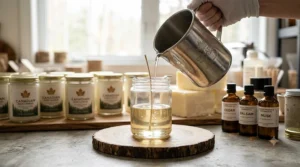
So what is a “Canadian made candle,” exactly? In plain terms, it’s a candle whose wax was poured and substantially transformed inside Canada, typically by a small or independent maker rather than a multinational. That distinction matters more than people assume, because not every candle with a maple leaf on the label was actually made here — a problem we’ll dig into later.
This isn’t a roundup pulled from a press release. Even as the broader “Buy Canadian” sentiment has cooled somewhat heading into 2026, individual Canadian retailers report sales nearly doubling year over year, which tells you something real is happening at the cash register, not just in headlines. We pulled real product listings, cross-referenced maker locations, and read through aggregated customer feedback to find seven candles worth your money — budget, mid-range, and a couple of genuine splurges. We’ll also walk through what local candle brands actually do differently, how to spot small batch candles that are worth the markup, and how to support Canadian candle makers without overpaying for a maple leaf sticker.
Quick Comparison: Canadian Made Candles at a Glance
| Brand & Product | Wax Type | Burn Time (approx.) | Price Range (CAD) | Best For |
|---|---|---|---|---|
| Canadian Hive Beeswax Tealights | Pure beeswax | 4 hrs per light | Under C$25 | Budget bulk buyers |
| Dutchman’s Gold Mason Beeswax Candle | Pure beeswax | 25–35 hrs | C$15–C$25 | Beeswax newcomers |
| Gammy’s Beezwax Rustic Pillar | Pure beeswax | 45–80 hrs | C$20–C$35 | Long, steady burns |
| aftermodern.lab Soy Candle | 100% soy | 25–35 hrs | C$20–C$30 | Toronto-loyal shoppers |
| Kim and Pom Soy Candle | 100% soy | 40–50 hrs | C$25–C$35 | Gifting and self-care |
| Paper Garden Large Beeswax Pillar | Pure beeswax | 80+ hrs | C$30–C$45 range | Cottage and off-grid use |
| Milk Jar Wooden Wick Candle | Coconut-soy blend | 40–45 hrs | C$35–C$45 range | Premium gifting, social impact |
A glance at this table tells a story most listicles skip: the budget tier here isn’t “cheap and nasty,” it’s mostly pure beeswax sold in small formats, while the premium tier buys you blended waxes, wooden wicks, and brand storytelling rather than a fundamentally “better” burn. If you’re buying for raw value per hour of burn time, Dutchman’s Gold and Gammy’s Beezwax punch well above their price point because beeswax simply burns slower than soy or paraffin. If scent throw and gifting presentation matter more than burn-time math, Kim and Pom and Milk Jar earn their higher price tags through fragrance complexity and packaging that doesn’t look like it came from a dollar store.
💬 Just one click — help others make better buying decisions too! 😊
✨ Don’t Miss These Exclusive Deals!
🔍 Take your home fragrance game to the next level with these carefully selected Canadian made candles. Click on any highlighted item to check current pricing and availability. These small-batch finds will help you build a cozier home your family — and your nose — will actually thank you for.
Top 7 Canadian Made Candles: Expert Analysis
We picked these seven specifically because they span the range a Canadian shopper actually encounters: pure beeswax workhorses from family operations, soy candles from independent studios, and a couple of brands that have scaled up without losing the “made by a real person” quality. None of these are sponsored placements — they’re real, currently listed products from real Canadian makers.
1. Canadian Hive Pure Canadian Beeswax Tealights
Canadian Hive’s tealights are the candle equivalent of a reliable used car — unglamorous, but they start every time. Each tealight is hand-poured from 100% Canadian beeswax with a cotton wick, no dye, no synthetic fragrance, just the faint honey note beeswax gives off naturally. A typical burn runs around four hours per light, which sounds modest until you realize a 10-pack stretches across an entire winter’s worth of dinner tables.
Based on the spec comparison with paraffin tealights, the real-world difference shows up in the smell of your kitchen the next morning — cheap paraffin tealights leave a faint petroleum tang behind; pure beeswax doesn’t. This is a candle for people who want ambiance without commitment: condo dwellers without a mantel to decorate, hosts who need a dozen tealights for a dinner party, or anyone testing whether they even like beeswax before buying a bigger pillar. Reviewers consistently note the no-drip, no-soot burn as the standout feature, with the recurring (mild) criticism being that the burn time runs slightly shorter than advertised once a draft is in the room.
✅ Pros: genuinely scent-free for sensitive noses, no soot on walls or ceilings, excellent value per candle
✅ Reusable recycled-plastic cups in some sets reduce holder clutter
❌ Cons: four-hour burn means frequent relighting for longer evenings, no scented options if you want fragrance
Price sits comfortably under C$25 for a multi-pack, and for that price the value verdict is straightforward: this is the cheapest legitimate entry point into Canadian made candles, full stop.

2. Dutchman’s Gold The Mason Beeswax Candle
Dutchman’s Gold isn’t a candle startup that pivoted into beeswax for the Instagram aesthetic — the Van Alten family has kept hives in Carlisle, Ontario since 1981, and their candle line is essentially a downstream product of an actual beekeeping operation. The Mason Beeswax Candle, hand-poured into a reusable mason jar, runs roughly 25 to 35 hours and gives off a noticeably lighter honey aroma than thicker pillar styles, since the surface area exposed to the flame is smaller.
What most buyers overlook about heritage beeswax brands like this one is that the wax itself is a byproduct of honey production rather than a separately sourced commodity, which keeps the supply chain unusually short — from hive to jar without middlemen. That traceability is hard to fake, and it’s part of why beekeeping-rooted brands tend to earn more trust than candle companies that simply buy bulk wax. Aggregated customer sentiment around Dutchman’s Gold skews heavily toward “better than expected for the price,” with the most common praise centered on the absence of dripping and the reusability of the mason jar vessel once the candle is spent.
✅ Pros: traceable supply chain from a 40-plus-year beekeeping family, reusable jar, no synthetic fragrance to trigger sensitivities
✅ Widely stocked, so restocking is rarely a problem
❌ Cons: scent is subtle rather than room-filling, jar style limits decorative versatility compared to a freestanding pillar
In the C$15–C$25 range, this is arguably the best beginner’s introduction to Dutchman’s Gold beeswax candles for anyone who’s only ever burned soy or paraffin.
3. Gammy’s Beezwax Candles Rustic Pillar
Gammy’s Beezwax started, by the family’s own account, as a wedding favour project in 2009 and grew into a full East Toronto operation that’s now a member of the Canadian Beeswax Chandlers Guild. The Rustic Pillar is exactly what it sounds like: an unrefined, slightly textured beeswax column that burns for 45 to 80 hours depending on size, with zero fillers or added fragrance.
Here’s what the spec sheet won’t tell you, but user reports suggest: rustic-finish pillars like this one tend to develop a visible white “bloom” over time, which is actually a sign of purity rather than a defect — refined or wax-blended candles don’t bloom the same way. For buyers who associate a flawless, glossy finish with quality, that bloom can be confusing at first, but it’s one of the more reliable visual cues that you’re burning real beeswax rather than a beeswax-paraffin blend marketed as “natural.” Reviewers describe the family’s customer service almost as often as the product itself, repeatedly mentioning fast shipping and a personal touch to communication that’s rare from a small operation juggling hand-pouring with order fulfillment.
✅ Pros: long burn time relative to price, genuine small-batch family production, strong aggregated customer-service sentiment
✅ Multiple finish styles (smooth, rustic, spiral twist) for different aesthetics
❌ Cons: the natural bloom can look like a flaw to first-time beeswax buyers, no scented variants
At C$20–C$35 depending on size, this candle rewards patience over instant gratification — it’s a slow burner in every sense.
4. aftermodern.lab World’s Best Soy Candle
Despite the bold name, this Toronto-studio candle reads more like a quiet apothecary product than a hype item. Hand-poured in small batches from 100% soy wax with a cotton wick, it runs 25 to 35 hours and leans into nostalgic, emotionally evocative scent profiles — lavender fields, fresh laundry, that kind of register — rather than the punchy “bakery shop” scents common in mass-market soy candles.
Based on the spec comparison with bigger-box soy candles, the trade-off here is intensity for nuance: aftermodern.lab candles tend toward a softer scent throw, which some buyers read as underwhelming and others read as sophisticated. Reviewers consistently note the visible small air bubbles that occasionally appear on the candle’s surface — the brand itself frames these as a hallmark of hand-pouring rather than a manufacturing flaw, and aggregated feedback is genuinely split on whether that framing lands, with several reviewers describing the size as smaller than expected for the price while others praise the delicate, non-overpowering fragrance and the fact that it’s a Toronto-based small business.
✅ Pros: genuinely small-batch and handmade, distinctive non-generic scent profiles, supports a single-city Toronto studio
✅ Reusable, minimalist glass jar
❌ Cons: some buyers find the 8oz size small for the price point, scent throw is mild compared to heavily fragranced competitors
In the C$20–C$30 range, this is the pick for someone who wants their candle to smell like a memory rather than a Yankee Candle aisle.
5. Kim and Pom Soy Candle
Kim and Pom, founded in 2016 by Natalie out of Waterdown, Ontario, has built a genuinely loyal following on Amazon’s handmade marketplace, and the aggregated review data backs that up — durability, scent quality, and burn rate are the three most frequently praised attributes across their candle lineup. Each candle uses soy wax, a lead-free cotton wick, and phthalate-free fragrance oil, with burn times in the 40 to 50 hour range depending on the specific blend.
What most buyers overlook about Kim and Pom specifically is the brand’s seasonal cadence — they rotate scents tightly around Canadian seasonal moments (fall treats, winter walks, gingerbread house) rather than running a static year-round catalogue, which means timing your purchase around the season actually matters here more than with most candle brands. The recurring criticism in aggregated feedback is value-for-size: several reviewers note the candle feels small relative to its roughly C$25–C$35 price, even as they describe the scent and burn quality as genuinely strong. That’s a useful signal — buy this for the experience and the gifting presentation, not for the cost-per-ounce math.
✅ Pros: strong, consistently positive aggregated review sentiment on scent and burn quality, hand-poured in Ontario, excellent gift packaging
✅ Wide seasonal variety keeps the lineup feeling fresh
❌ Cons: some buyers feel sizing is small for the price, soy wax burns faster than the beeswax options on this list
At C$25–C$35, Kim and Pom sits squarely in “thoughtful gift” territory rather than “everyday workhorse” territory.

6. Paper Garden Large Beeswax Pillar
Paper Garden operates out of the Creston Valley in British Columbia, and their beeswax line carries an Amazon “Canada Showcase” certification — a small but meaningful signal that the listing has been verified as genuinely Canadian. The Large Pillar is the standout in their range: a dense, 12cm beeswax column weighing over 500 grams with a burn time north of 80 hours, made from 100% Canadian beeswax with nothing added.
The spec sheet detail worth dwelling on here is weight-to-burn-time ratio — at over 500 grams for 80-plus hours, this pillar quietly outperforms most scented soy candles on cost-per-hour, even though the sticker price looks higher at first glance. For Canadian buyers specifically, that long, steady burn matters in a very practical way: a single pillar can realistically light a weekend at the cottage from Friday evening through Sunday morning without needing to be relit from scratch, which is a use case soy candles with shorter burn windows simply can’t match. Aggregated reviewer sentiment is strongly positive, with repeat buyers specifically calling out the long burn time and the honey scent that develops as the candle warms.
✅ Pros: exceptional burn time per dollar, “Canada Showcase” verified listing, ideal for off-grid or cottage use
✅ Family-run BC operation with consistent quality across batches
❌ Cons: unscented (a feature for some, a drawback for others), higher upfront price than smaller beeswax options
In the C$30–C$45 range, Paper Garden is the rational choice for anyone who burns candles functionally — for light during outages, for cottage weekends — rather than purely decoratively.
7. Milk Jar Candle Co. Wooden Wick Candle
Milk Jar, based in Calgary and founded in 2016, is the most “designed” candle on this list — coconut-soy wax blend, a crackling wooden wick, and a brand identity built around inclusion: the company has donated over half a million dollars since launch to programs supporting people with disabilities. The Wooden Wick Candle line burns 40 to 45 hours and leans into playful, narrative-driven scent names rather than the straightforward “vanilla” or “lavender” labelling common elsewhere on this list.
Here’s what most buyers overlook about wooden-wick coconut-soy blends specifically: the crackling sound isn’t a gimmick, it’s a genuine byproduct of the wick construction, and it changes how a candle “performs” in a room — it adds an audible layer that pure beeswax or standard cotton-wick soy candles simply don’t have. That matters for anyone buying candles as a sensory experience rather than purely for scent or light. Milk Jar’s social-impact framing also distinguishes it from the rest of this list; it’s not just a Canadian candle, it’s a Canadian candle tied to a documented local workforce-inclusion program, which is the kind of “transformation” a spec sheet alone can’t capture.
✅ Pros: distinctive wooden-wick crackle, strong social-impact mission with public donation figures, sophisticated scent development
✅ Calgary-based with deep Alberta retail partnerships
❌ Cons: premium price point, coconut-soy blends can be more sensitive to drafts than pure soy or beeswax
At a C$35–C$45 range, this is the splurge pick — buy it for someone (including yourself) who wants the full sensory package, not just a scent.
Caring for Your Canadian Made Candle: A Practical Usage Guide
Buying well is half the equation; burning well is the other half, and it’s the part most Amazon listings never explain. On the first burn, let the candle establish a full melt pool out to the edges of the container before extinguishing it — stopping early creates a “memory ring” that causes tunneling for the rest of the candle’s life. This matters more for soy candles like Kim and Pom or aftermodern.lab than for beeswax, since soy is more prone to tunneling if the first burn is rushed.
Trim the wick to roughly a quarter-inch before every relight, beeswax included — Dutchman’s Gold and Gammy’s Beezwax both specify this in their care notes, and skipping it is the single most common reason a beeswax candle starts smoking or flickering erratically. For wooden-wick candles like the Milk Jar line, trimming is even more important, since a long wick on a wood-wick design produces a noticeably larger, less controlled flame than the same length would on a cotton wick.
A common first-30-days mistake is burning beeswax pillars for very short stretches — under an hour at a time. Beeswax needs more time to establish its melt pool than soy, so a 30-minute burn on a Paper Garden pillar will barely soften the surface wax, wasting fuel without producing useful light. Aim for at least two to three hours per session on any beeswax pillar. Finally, store unburned candles away from direct sunlight and heat sources; beeswax in particular will soften and warp in a hot car or a sun-facing windowsill, something Canadian summers make easy to forget about during the off-season.
Real Canadians, Real Candles: Matching Products to Lifestyles
Consider three different households, each with genuinely different candle needs. A condo-dwelling renter in downtown Toronto, budget-conscious and burning candles two or three evenings a week, is best served by Canadian Hive tealights or a Dutchman’s Gold mason candle — low commitment, low cost, and no risk of a large pillar tipping in a small space. A family hosting frequent dinners and gift exchanges, with a bit more room in the budget, gets the most mileage from Kim and Pom’s seasonal soy line, since the rotating scent catalogue means gifts never feel repetitive and the presentation already looks finished out of the box.
Then there’s the cottage owner or rural household that loses power semi-regularly and wants candles that double as genuine emergency lighting, not just ambiance. For that household, Paper Garden’s Large Pillar or a bulk set of Canadian Hive tealights are the rational picks — long, steady burns that don’t require constant attention, made from a wax that won’t drip onto wooden furniture during an unattended evening. None of these are wrong choices in isolation; they’re simply optimized for different burn frequencies, budgets, and risk tolerances.
How to Choose Canadian Made Candles
Choosing well comes down to a handful of concrete checks rather than gut feeling.
- Verify the origin claim, not just the branding. A maple leaf graphic isn’t proof of anything — Canada’s Made in Canada certification rules require specific cost and transformation thresholds before a product can legally use that wording, so look for explicit “Made in Canada” or “Handmade in Canada” language tied to a city or region, not just a flag icon.
- Match wax type to burn habits. Beeswax burns slower and cleaner but is unscented; soy and coconut-soy blends burn faster but carry fragrance better — pick based on how long and how often you actually burn.
- Check wick material. Cotton or wood wicks only; lead-core wicks have been banned for decades but cheaper imports occasionally still slip through, so confirm wick composition in the listing.
- Read the aggregated review themes, not just the star rating. A 4.6-star candle with repeated “smaller than expected” complaints is telling you something specific about value, even if the average score looks fine.
- Compare burn time to price, not jar size to price. A smaller, denser beeswax pillar can outlast a larger, lighter soy jar by a wide margin.
- Decide if scent matters at all. If you’re sensitive to fragrance, unscented beeswax options like Canadian Hive or Paper Garden remove that variable entirely.
- Factor in how the company sources its wax. Brands with their own beekeeping or production roots, like Dutchman’s Gold, tend to offer more supply-chain transparency than resellers.
Local Candle Brands vs. Big-Box Imports: What’s the Real Difference
The phrase local candle brands gets thrown around loosely, but the practical differences are measurable. Local candle brands typically pour in small batches of a few dozen to a few hundred units, which means less time sitting in a warehouse before reaching a customer — fresher fragrance oils, less risk of wax degrading from temperature swings in transit. Big-box imported candles, by contrast, are often produced in batches of tens of thousands, shipped across oceans, and stored for months, which is part of why imported paraffin candles sometimes arrive with a faint “off” smell that has nothing to do with the intended fragrance.
There’s also a quality-control argument worth taking seriously: small local operations like Gammy’s Beezwax or aftermodern.lab are pouring candles by hand, batch by batch, which means a maker personally notices if a wick is off-center or a pour is uneven in a way that’s much harder to catch on an automated production line running thousands of units per hour. That doesn’t mean every local candle brand is flawless — small-batch production introduces its own inconsistencies, as the occasional air bubble in an aftermodern.lab candle shows — but the failure modes are different, and arguably more forgivable, than a factory defect repeated across an entire shipping container.
Common Mistakes When Buying Canadian Made Candles
The most frequent mistake is trusting visual cues over written claims — red packaging and maple leaves are marketing, not certification, and Canadian regulators have explicitly warned that pictorial symbols like the flag or maple leaf are treated as origin claims requiring the same accuracy as written ones. A second common error is assuming “handmade” automatically means “made in Canada” — plenty of genuinely handmade candles are produced overseas by small artisans there, which is a different (still valid) value proposition but not what most Canadian buyers are searching for.
Buyers also frequently overlook burn-time math entirely, comparing jar size or weight rather than hours of usable light, which is how a flashy 16oz soy jar can end up costing more per hour of burn than a modest 4oz beeswax votive. Finally, a subtler mistake: assuming higher price always signals better quality. Milk Jar’s premium positioning is justified by its wooden-wick experience and mission-driven brand, not by superior raw materials compared to, say, Paper Garden’s beeswax — they’re simply optimized for different things.
Why “Made in Products” Claims Matter: Understanding Canadian Labelling Rules
The phrase made in products gets used casually, but in Canada it actually triggers specific regulatory thresholds. A business can generally market a good as “Made in Canada” without challenge if at least 51% of total direct production costs were incurred in Canada, the last substantial transformation happened domestically, and the claim includes an appropriate qualifying statement about any imported components. That’s a meaningfully lower bar than “Product of Canada,” which requires closer to all-Canadian sourcing and production.
For candle shoppers, this distinction has a practical consequence: a candle labelled “Made in Canada” might still use imported fragrance oils or glass jars, while the wax was poured and the final candle assembled domestically — which is exactly the case for several brands on this list. That’s not a deception; it’s how the law is designed to work, recognizing that very few consumer products are 100% sourced from a single country. The takeaway for buyers is to treat “Made in Canada” as a meaningful, legally accountable claim, not a marketing flourish, while understanding it doesn’t guarantee every single component originated here.
How to Support Canadian Candle Makers Beyond Amazon
If the goal is genuinely to support Canadian candle makers, Amazon is a convenient starting point but not the whole picture. Several of the brands on this list — Gammy’s Beezwax, Kim and Pom, Paper Garden — sell directly through their own websites, where a larger share of the purchase price typically reaches the maker directly rather than passing through marketplace fees. Local craft fairs and farmers’ markets, which have seen renewed traffic as part of the broader buy-local movement, are another direct channel, and they offer something Amazon listings can’t: the chance to smell a candle before committing to it.
Following these makers on social platforms also matters more than it sounds — small operations like aftermodern.lab or Gammy’s Beezwax often announce limited scent runs or restocks there first, before a listing even updates on Amazon. And if a local candle shop or market stall near you carries Canadian-made stock, buying there keeps the entire transaction within the local economy, sidestepping marketplace fees entirely.
Small Batch Candles vs. Mass Production: Features That Actually Matter
Not every feature marketed on a small batch candles listing translates into a meaningfully better product, and it’s worth separating signal from noise. Hand-poured production genuinely matters for consistency at small volumes — a maker pouring 50 candles a day can catch wicking errors a factory running 50,000 units cannot. Natural wax sourcing (Canadian beeswax, North American soy) genuinely matters for burn cleanliness, since domestic wax suppliers face different regulatory scrutiny than some overseas paraffin sources.
What matters less than marketing suggests: “small batch” labelling alone, without specifics on wax type or wick material, since a small-batch paraffin candle isn’t meaningfully cleaner-burning than a mass-produced one. Similarly, elaborate packaging — while it photographs well — has zero impact on burn quality or scent throw, despite often correlating with a higher price tag. The features that actually matter, in order of real-world impact, are wax type, wick material, and the maker’s transparency about sourcing — not batch size, not packaging, not a maple leaf sticker.
Artisan Candle Companies for Every Budget: Long-Term Cost & Value
Looking at artisan candle companies through a pure cost-per-hour lens changes the calculus considerably. Canadian Hive tealights, at roughly C$2–C$3 per light for four hours of burn, work out to a similar or slightly better hourly cost than most mass-market scented candles, while delivering a cleaner burn. Dutchman’s Gold and Gammy’s Beezwax, both priced in the C$15–C$35 range for 25–80 hour burns, land in a comparable cost-per-hour bracket to mid-tier soy candles, but with notably less soot accumulation on walls and ceilings over time — a maintenance cost most buyers never factor into the “cheap candle” math until they’re scrubbing a windowsill.
At the premium end, Milk Jar’s C$35–C$45 wooden-wick candles cost more per hour than the beeswax options here, but the value proposition shifts — buyers are paying partly for the sensory wooden-wick experience and partly for a documented social mission, both of which sit outside a pure burn-time calculation. The honest takeaway: if cost-per-hour is your only metric, beeswax wins outright; if experience and mission matter to you as much as economics, the premium soy and coconut-soy options justify their price differently, not necessarily better or worse.
Candle Safety and Indoor Air Quality in Canadian Homes
Canadian winters mean more time indoors with windows sealed, which makes indoor air quality a genuinely relevant consideration for frequent candle burners — not just a marketing angle for “natural” wax brands. Health researchers note that candle emissions typically stay below safety thresholds, including volatile organic compounds and particulate matter, though some individuals can still experience reactions to fragrance components or soot particles even at low levels. Beeswax candles like Dutchman’s Gold, Gammy’s Beezwax, and Paper Garden produce less visible soot than paraffin, largely because they burn at a more stable, lower temperature, which is part of why allergy-sensitive households often gravitate toward them.
That said, proper ventilation and wick maintenance matter more than wax type alone for most households. A well-trimmed wick on any candle in this list — beeswax or soy — produces a cleaner burn than an untrimmed wick on the “cleanest” wax available. If you or someone in your household has asthma or fragrance sensitivities, unscented beeswax options remove an entire variable from the equation, which is worth weighing against the gifting appeal of a heavily scented soy candle.
✨ Don’t Miss These Exclusive Deals!
🔍 Ready to build your Canadian candle collection? Click through to check current pricing and availability on any of these picks. Whether you’re stocking up for cottage season or hunting for the perfect gift, these small-batch finds bring real local craftsmanship into your home.

Frequently Asked Questions
❓ Are Canadian made candles actually cleaner-burning than imported ones?
❓ Why do beeswax candles cost more than soy candles in Canada?
❓ Can I trust 'Made in Canada' labels on Amazon listings?
❓ How long should a Canadian made beeswax candle realistically last?
❓ Are small batch candles worth the higher price compared to big-box brands?
Conclusion
Choosing Canadian made candles doesn’t have to mean overpaying for a maple leaf or settling for vague “natural” claims with no substance behind them. The seven candles here represent genuinely different corners of the Canadian market — heritage beekeeping families, Toronto studio makers, a BC certified small business, and a Calgary brand built around social impact — and each earns its spot for a specific kind of buyer rather than a generic “best overall” claim. With federal policy now actively prioritizing Canadian content and suppliers as part of a broader push toward economic resilience, the case for buying domestically made goods, candles included, has only gotten stronger heading into 2026.
If you take one thing from this guide, let it be this: check the burn-time math, verify the origin claim against something more specific than packaging colour, and match the wax type to how you actually live — not how the listing photos make you want to live. Whether that means a stack of Canadian Hive tealights for a rental apartment or a Paper Garden pillar for the cottage, there’s a genuinely local option that fits.
Recommended for You
- Eco Friendly Candles: 7 Best Picks in Canada (2026)
- 7 Best Non-Toxic Candles in Canada (2026): Clean, Safe & Proven
- Paraffin vs Soy Candles Health: 7 Safer Picks for Canada 2026
Disclaimer: This article contains affiliate links. As an Amazon Associate, I earn from qualifying purchases. If you purchase products through these links, we may earn a small commission at no additional cost to you.
✨ Found this helpful? Share it with your friends! 💬🤗
