
In This Article
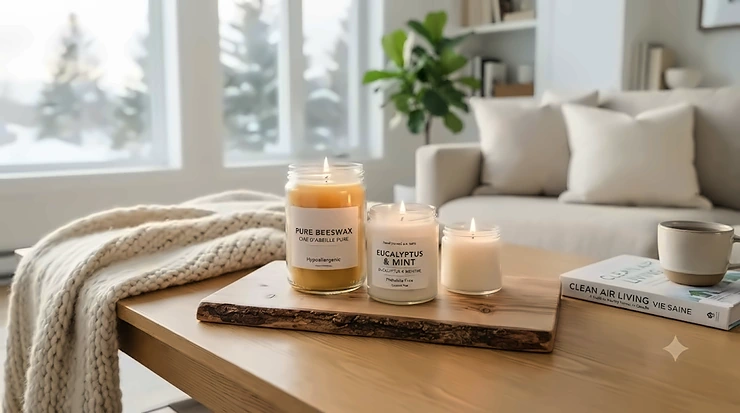
If you’ve ever lit a candle and immediately regretted it — itchy eyes, a scratchy throat, a headache creeping in behind your temples — you already know why non-toxic candles for allergies matter more than a scented label ever will. It’s a strange kind of betrayal, really. You wanted cozy. You got congested instead. And you’re not imagining it: the wax, the wick, and the fragrance blend in a standard drugstore candle can all play a role in how your body reacts to an evening burn.
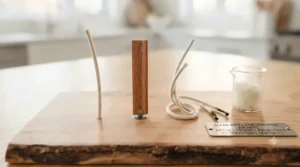
So what is a non-toxic candle for allergies? In short, it’s a candle made from a natural wax (soy, beeswax, coconut, or palm), a lead-free cotton or wood wick, and either no added fragrance or a genuinely clean fragrance blend — designed to minimize the soot, volatile organic compounds, and synthetic additives that tend to trigger allergy and asthma symptoms. Health Canada has taken this seriously enough to regulate it directly: the department has moved to restrict lead in candle wick cores after testing found a troubling share of imported candles still using lead-core wicks well into the 2000s.
This guide digs into seven real, current products sold on amazon.ca, spanning budget-friendly soy jars to splurge-worthy pure beeswax. We’ll break down what’s actually in the wax, what reviewers consistently say after weeks of burning, and — just as importantly — who each candle is genuinely suited for. Whether you’re shopping for candles safe for pets, hunting for non-toxic candles for babies room use, trying to understand lead-free wick candles, building a hypoallergenic home fragrance routine, or simply trying to settle the paraffin vs soy wax health debate once and for all, you’re in the right place. Let’s get into it.
Quick Comparison Table
Before the deep dive, here’s the scannable version for anyone who wants the gist in ten seconds flat.
| Candle | Wax Type | Best For | Price Range (CAD) |
|---|---|---|---|
| Mrs. Meyer’s Clean Day Soy Aromatherapy Candle | Soy/vegetable wax blend | Budget everyday allergy relief | C$15–C$20 range |
| GoodLight Paraffin-Free Palm Wax Votive Candles | Palm wax, unscented | Sensitive noses & fragrance-free living | under C$15 |
| Root Candles Fragrance-Free Votive Candles | Beeswax blend, unscented | Nurseries and babies’ rooms | C$25–C$35 range |
| One Fur All Pet House Candle | Soy wax | Multi-pet households | C$22–C$28 range |
| Big Dipper Wax Works Pure Beeswax Pillar Candle | 100% beeswax, unscented | Air-purifying ambience | C$25–C$32 range |
| Bluecorn Beeswax 3-Wick Candle | 100% pure beeswax | Premium fragrance-free burn | C$48–C$58 range |
| Brooklyn Candle Studio Palo Santo Jar Candle | 100% soy wax | Design-forward scented option | C$40–C$48 range |
Looking at the spread above, the pattern that jumps out is wax purity correlating with price, but not always with allergy-friendliness — GoodLight‘s unscented votive undercuts every other candle here on cost while still checking the fragrance-free box that matters most to reactive airways. Meanwhile, Bluecorn Beeswax and Brooklyn Candle Studio sit at the premium end for very different reasons: one for ingredient purity, the other for scent complexity and design. If your allergy trigger is fragrance specifically, prioritize the unscented rows over the price tag.
💬 Just one click — help others make better buying decisions too!😊
Top 7 Non-Toxic Candles for Allergies: Expert Analysis
We picked these seven to cover the realistic range of what a Canadian household actually needs: a cheap everyday jar, a fragrance-free option for the nursery, something formulated with pets in mind, and a couple of genuine splurges for anyone who wants to phase out synthetic fragrance entirely.
1. Mrs. Meyer’s Clean Day Soy Aromatherapy Candle — best budget pick for everyday allergy relief
Mrs. Meyer’s Clean Day Soy Aromatherapy Candle is the candle you’ll actually find on a regular grocery run, and that accessibility is the whole point. Made from a soy and vegetable wax base with a lead-free cotton wick, it burns for roughly 35 hours per 7.2 oz jar and is scented with essential oils like lavender and orange peel rather than a synthetic fragrance oil.
The lead-free cotton wick means you’re not inhaling trace metal particulate with your lavender, and the soy-vegetable wax base burns notably cooler and cleaner than a straight paraffin jar candle at a similar price point. What most shoppers overlook is that “soy candle” doesn’t always mean 100% soy — this one is a blend, which keeps the cost down but means it’s not quite as clean-burning as a pure soy or beeswax alternative further down this list.
Reviewers consistently report that the scent throw is moderate rather than overpowering, which is actually a plus for anyone with mild fragrance sensitivity, and many note the jar is sturdy enough to reuse for storage once the wax is gone. A recurring theme in feedback is that the scent fades noticeably in the final third of the burn, a common trait of blended waxes.
Pros:
- ✅ Widely available at mainstream Canadian retailers
- ✅ Lead-free cotton wick confirmed on packaging
- ✅ Gentle, essential-oil-based scent profile
Cons:
- ❌ Vegetable wax blend, not 100% soy
- ❌ Scent throw weakens in the last third of the burn
At around C$15 to C$20 for a jar, Mrs. Meyer’s Clean Day Soy Aromatherapy Candle delivers real value for anyone dipping a toe into non-toxic candles without committing to premium pricing.
2. GoodLight Paraffin-Free Palm Wax Votive Candles — best fragrance-free option for sensitive noses
GoodLight Paraffin-Free Palm Wax Votive Candles strip the equation down to basics: non-GMO palm wax, a cotton wick, and zero added fragrance. No phthalates, no synthetic dyes, nothing to mask. Each votive burns for roughly 15 hours, and they’re sold in multi-packs that make sense for households that burn candles often.
Here’s what the spec sheet won’t spell out clearly — unscented doesn’t mean odourless in a bad way. Palm wax carries a faint, neutral warmth when lit, without the chemical undertone some cheap “unscented” paraffin candles carry from residual processing agents. For someone whose allergy trigger is fragrance chemicals specifically rather than smoke or soot, this is close to as safe as an open flame gets.
Aggregated review sentiment points to consistent praise for the clean burn and lack of soot buildup on containers, alongside some hesitation about the shorter burn time per votive compared to jar candles — a real trade-off if you’re burning candles daily rather than occasionally.
Pros:
- ✅ Genuinely fragrance-free, not just “unscented” marketing
- ✅ Non-GMO palm wax with no phthalates or dyes
- ✅ Budget-friendly multi-pack pricing
Cons:
- ❌ Shorter 15-hour burn time per votive
- ❌ Requires a votive holder for proper use
Priced under C$15 for a multi-pack, GoodLight Paraffin-Free Palm Wax Votive Candles earns its spot as the go-to for anyone who wants ambient light without any scent variable at all.
3. Root Candles Fragrance-Free Votive Candles — best unscented pick for nurseries
Root Candles Fragrance-Free Votive Candles use a handcrafted beeswax-blend formula sold in a 12-count pack, specifically marketed as unscented — a detail that matters enormously if you’re shopping for non-toxic candles for babies room use, where even “gentle” essential oil blends can be too much for a developing respiratory system.
The beeswax component in the blend raises the melting point slightly compared to a pure soy votive, which in practice means a steadier, less flickery flame — something parents lighting a candle briefly during a nighttime routine will notice more than they’d expect. Based on the spec comparison with the pure palm wax option above, Root Candles trades a bit of purity for a warmer, more traditional candlelight glow, since beeswax blends tend to burn with a richer amber tone.
Review sentiment describes the burn as reliable and mostly soot-free, with a handful of buyers noting the 10-hour burn time per votive is on the shorter side for the price versus bulk unscented alternatives.
Pros:
- ✅ Explicitly fragrance-free formulation
- ✅ Beeswax blend gives a steadier flame
- ✅ Handcrafted in small batches with quality control
Cons:
- ❌ Premium pricing relative to burn time
- ❌ Not 100% beeswax despite the blend
In the C$25 to C$35 range for the full pack, Root Candles Fragrance-Free Votive Candles are a sensible pick for any room where you want warmth without a scent story attached.
4. One Fur All Pet House Candle — best choice for multi-pet households
One Fur All Pet House Candle was formulated specifically for homes with cats and dogs, which puts it in a different lane than most candles on this list. It’s made from 100% plant-based soy wax, burns for up to 60 hours in a 9 oz jar, and the brand states its formula avoids dyes, parabens, phthalates, and paraffin entirely.
What’s genuinely useful here isn’t just the wax purity — it’s that the fragrance blend is designed to neutralize pet odours (litter box, dog bed, that unmistakable “wet dog” note) rather than simply overlaying a floral scent on top of it. That said, “pet-friendly” marketing on any candle brand is not the same as veterinary-verified safety; animals should never have unsupervised access to an open flame, and birds in particular have such sensitive respiratory systems that even low-fragrance candles warrant caution and good ventilation.
Aggregated customer sentiment is largely positive on scent longevity and the genuine reduction in pet odour, with a recurring caveat that the fragrance is noticeably stronger than a typical unscented allergy candle — worth weighing if your pet-related concern is also a human fragrance sensitivity in the same household.
Pros:
- ✅ 100% soy wax with no paraffin or dyes
- ✅ Long 60-hour burn time per jar
- ✅ Formulated to neutralize pet odours, not just mask them
Cons:
- ❌ Stronger scent than fragrance-free options
- ❌ Not marketed as bird-safe specifically
Expect to pay in the C$22 to C$28 range, making One Fur All Pet House Candle a reasonable mid-tier pick for pet owners who still want a fragranced home.
5. Big Dipper Wax Works Pure Beeswax Pillar Candle — best air-purifying beeswax option
Big Dipper Wax Works Pure Beeswax Pillar Candle is 100% pure beeswax with no paraffin, soy, or synthetic additives, hand-poured in the USA using a cotton wick, and rated for a lengthy 60-hour burn in its 3-inch by 3.5-inch pillar format.
Beeswax candles are frequently credited with an air-purifying effect, since burning beeswax is thought to release negative ions that can bind to airborne particulates like dust and pollen — though it’s worth noting this claim is more folk wisdom than rigorously peer-reviewed science, and shouldn’t be treated as a substitute for a HEPA filter if allergies are severe. What is well-documented is that beeswax has one of the highest melting points of any natural wax, which in practice means a slower, more consistent burn with markedly less soot than paraffin or even standard soy.
Reviewers consistently note the subtle natural honey scent (there’s no added fragrance) and the noticeably soot-free glass and walls after extended burning, alongside occasional comments that the pillar format requires a stable, heat-safe surface since it isn’t contained in a jar.
Pros:
- ✅ 100% pure beeswax with zero additives
- ✅ Long 60-hour burn time per pillar
- ✅ Naturally soot-reducing, high melting point
Cons:
- ❌ Pillar format needs its own holder or plate
- ❌ Air-purifying claims are more anecdotal than clinical
At C$25 to C$32, Big Dipper Wax Works Pure Beeswax Pillar Candle rewards anyone willing to trade a bit of convenience for genuine wax purity.
6. Bluecorn Beeswax 3-Wick Candle — best premium 100% beeswax splurge
Bluecorn Beeswax 3-Wick Candle is about as close to a hypoallergenic home fragrance benchmark as an open flame gets: 100% pure American beeswax, fragrance-free, with no soy or paraffin blended in, spread across three wicks in a 10 oz format for a wider, more even glow than a single-wick candle of the same size.
The three-wick design isn’t just aesthetic — it means the wax pool melts more evenly across the surface, which reduces the “tunneling” that plagues cheaper single-wick jars (where wax builds up unused around the edges). Reviewers consistently point to the noticeably longer, cleaner burn compared to soy or paraffin alternatives, and the complete absence of fragrance oil makes it a genuinely safe pick for anyone whose allergy trigger is scent chemicals rather than smoke.
The honest trade-off, and it’s a real one: pure beeswax commands a premium price, and this candle sits at the top of our comparison table for a reason. For someone managing daily allergy symptoms, though, several reviewers frame the cost as worthwhile specifically because they can burn it without the reactions triggered by scented alternatives.
Pros:
- ✅ 100% pure beeswax, completely fragrance-free
- ✅ Three-wick design burns evenly, no tunneling
- ✅ American-made with transparent sourcing
Cons:
- ❌ Highest price point in this roundup
- ❌ No scent option for those who want fragrance
Priced at C$48 to C$58, Bluecorn Beeswax 3-Wick Candle is the splurge pick for households prioritizing purity above all else.
7. Brooklyn Candle Studio Palo Santo Jar Candle — best luxury design-forward soy candle
Brooklyn Candle Studio Palo Santo Jar Candle brings cedar and eucalyptus notes to a 100% soy wax base with a lead-free cotton wick, hand-poured in a Brooklyn workshop, rated for a 50-hour burn in a 7.5 oz jar with a minimalist brushed-gold lid.
This is the candle for someone who wants their non-toxic choice to also look intentional on a shelf. On the ingredients side, the brand states its candles are petroleum-free, phthalate-free, and vegan, which puts the fragrance oil formulation a notch above a mass-market blended-wax jar, even though it’s still a scented candle rather than a fragrance-free one. Here’s what most buyers overlook when comparing soy candles: 100% soy wax (as opposed to a soy-vegetable blend) tends to burn slightly cooler and release fragrance more gradually, which is part of why the cedar-eucalyptus profile here reads as subtle rather than heavy-handed.
Aggregated sentiment highlights the design and jar quality as standout, with a smaller but consistent thread of feedback noting the fragrance, while clean-burning, is still strong enough that genuinely fragrance-sensitive users may prefer an unscented option instead.
Pros:
- ✅ 100% soy wax, not a blend
- ✅ Lead-free cotton wick confirmed
- ✅ Design-forward glass jar doubles as decor
Cons:
- ❌ Premium pricing for the size
- ❌ Scented, so not suitable for fragrance-sensitive users
At C$40 to C$48, Brooklyn Candle Studio Palo Santo Jar Candle suits the buyer who wants clean ingredients without giving up scent entirely.
Practical Usage Guide: Burning Non-Toxic Candles Safely
Even a genuinely clean candle can behave badly if it’s burned wrong, and this is where most of the “my non-toxic candle still bothers me” complaints actually originate. Start with the wick: trim it to about 6 mm (¼ inch) before every single lighting, no exceptions, since an untrimmed wick is the single biggest cause of soot on any wax type, natural or not. In the first burn especially, let the wax pool melt all the way to the edges of the container before extinguishing — this “memory burn” prevents the tunneling that wastes wax and shortens the candle’s effective life.
Ventilation matters more than most people assume, even for unscented options; crack a window or run a fan on low nearby, particularly in a nursery or a small bathroom where air exchange is naturally limited. Never burn a candle for more than about four hours at a stretch, since prolonged combustion increases both soot output and heat buildup in the wax pool. A common mistake in the first 30 days of ownership is stacking multiple scented candles in one room, which multiplies fragrance load even if each individual candle is well-formulated — one candle at a time is a simple rule that solves a surprising number of “why am I still reacting” mysteries.
✨ Don’t Miss These Exclusive Deals!
🔍 Take your home fragrance routine to the next level with these carefully selected non-toxic picks. Click on any highlighted item to check current pricing and availability. These candles help you create a genuinely cleaner-burning home your whole family — pets included — will notice.
Real-World Scenarios: Matching Candles to Your Home
Picture a young family with a newborn and a toddler who still naps twice a day. For that household, an unscented pick like Root Candles Fragrance-Free Votive Candles or GoodLight Paraffin-Free Palm Wax Votive Candles makes far more sense than anything scented, since a newborn’s respiratory system simply hasn’t built up the tolerance an adult’s has, and even “gentle” lavender can be too much in a small, closed nursery.
Now consider a downtown condo-dweller with two cats and a fragrance sensitivity of their own. The tension here is real: they want odour control without a headache. One Fur All Pet House Candle threads that needle reasonably well, though burning it in a well-ventilated main room rather than a small bedroom keeps the fragrance load manageable for a sensitive nose.
Finally, picture someone managing seasonal allergies who still wants the ritual of an evening candle without the 9 p.m. sneezing fit. Bluecorn Beeswax 3-Wick Candle or Big Dipper Wax Works Pure Beeswax Pillar Candle solve that specific problem, since fragrance-free beeswax removes the most common trigger entirely while still giving them the visual and ambient benefit of candlelight.
Problem → Solution: Common Allergy Candle Complaints Solved
Problem: “My candle triggers a headache within minutes of lighting it.” This is almost always a fragrance-load issue rather than a wax-type issue. Solution: switch to a genuinely fragrance-free option like GoodLight Paraffin-Free Palm Wax Votive Candles, and burn in a ventilated room rather than sealing yourself in with it.
Problem: “I can’t tell if a candle is really soy or just soy-blend.” Manufacturers aren’t required to disclose exact wax ratios on the label in most cases. Solution: look for “100% soy wax” language specifically, as seen with Brooklyn Candle Studio Palo Santo Jar Candle, rather than trusting a vague “soy candle” claim on packaging.
Problem: “Black soot keeps building up on my jar even with a soy candle.” Soot from any wax type typically traces back to an untrimmed wick or a drafty room, not the wax itself. Solution: trim the wick every burn and move the candle away from open windows, air vents, or fans.
Problem: “I’m not sure what’s actually safe with pets in the house.” Solution: choose a candle explicitly formulated with pets in mind, like One Fur All Pet House Candle, and never leave any lit candle unattended around curious cats or excitable dogs regardless of wax type.
Problem: “My baby’s room needs some ambient light but I’m terrified of triggering a reaction.” Solution: go fully unscented with something like Root Candles Fragrance-Free Votive Candles, and keep any lit candle well out of reach on a high, stable surface.
How to Choose Non-Toxic Candles for Allergies
- Check the wax type first. Soy, beeswax, coconut, and palm all burn cleaner than paraffin, but “100% soy” and “soy blend” are meaningfully different — the closer to 100%, the cleaner the burn tends to be.
- Confirm the wick material. Look for “lead-free cotton” or “wooden wick” explicitly stated, since metal-core wicks have historically been the primary source of airborne lead from candles.
- Decide scented versus unscented early. If fragrance itself is your trigger, no amount of clean wax will fix that — go fragrance-free from the start.
- Match burn time to your room size. A votive that lasts 10-15 hours suits occasional use, while a 50-60 hour jar suits daily burners.
- Read for aggregated review themes, not star ratings alone. A 4.5-star candle with repeated complaints about strong scent throw may still be wrong for a sensitive household.
- Consider the household, not just the person. Pets, infants, and asthma sufferers in the same home all shift the calculation toward unscented and pure-wax options.
- Weigh price against actual burn hours, not just the sticker price, since a cheaper candle with a short burn time can cost more per hour than a pricier long-burner.
| Comparison Point | Fragrance-Free Pick | Scented Natural Pick | Traditional Paraffin |
|---|---|---|---|
| Typical trigger risk | Lowest | Moderate | Highest |
| Best For | Nurseries, severe sensitivity | General home use | Not recommended for allergy sufferers |
| Example | GoodLight Paraffin-Free Palm Wax Votive Candles | Brooklyn Candle Studio Palo Santo Jar Candle | Most mass-market drugstore candles |
The table above underscores a point worth repeating: wax purity and fragrance-free status are two separate variables, and a candle can excel at one while still falling short on the other. If you’re choosing based on allergy risk alone, prioritize the fragrance-free row regardless of how appealing a scented option looks on the shelf.
Candles Safe for Pets: What Actually Matters
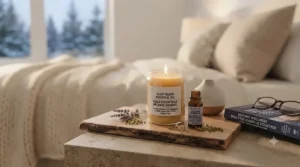
Candles safe for pets is a genuinely nuanced category, because “pet-safe” isn’t a regulated term the way “lead-free wick” increasingly is. What matters in practice: avoid candles with concentrated essential oils like tea tree, wintergreen, or pure peppermint, which have been flagged as potentially toxic to cats and dogs, particularly if ingested. Birds deserve extra caution beyond that — their respiratory systems process airborne chemicals far more efficiently than a mammal’s, which means even a well-formulated candle warrants strong ventilation and, ideally, burning in a room away from any birdcage entirely.
One Fur All Pet House Candle is built around this reality, using soy wax and a fragrance blend designed with odour-neutralizing rather than overpowering intent, but no candle brand can promise zero risk with animals in the room — an open flame and a curious pet are simply not a great combination regardless of wax purity. The safest practical habit, honestly, is placing any lit candle on a high, stable shelf, well out of paw’s or beak’s reach, and never leaving it burning unattended.
Non-Toxic Candles for Babies’ Room: A Nursery Safety Guide
Non-toxic candles for babies room use come with the tightest margin for error of any category here, because infants can’t tell you when a scent is bothering them — you’re relying entirely on your own judgment and a bit of restraint. The safest default is fully unscented: Root Candles Fragrance-Free Votive Candles and GoodLight Paraffin-Free Palm Wax Votive Candles both fit that bill, avoiding the essential oil blends that, while gentle by adult standards, can still be more than a developing respiratory system needs.
Placement is just as important as wax choice. Any candle in a nursery should sit on a high shelf or dresser top, never on a low surface a crawling baby could eventually reach, and should never be left burning during sleep, even briefly. If you want ambient light in a baby’s room without any combustion risk at all, a battery-operated flameless candle remains the genuinely zero-risk alternative — worth considering for the early months before you introduce a real flame into that space at all.
Lead-Free Wick Candles: How to Tell Real From Marketing
Lead-free wick candles should, in theory, be the norm rather than the exception at this point. Following a wave of testing that found a concerning percentage of imported candles still using lead-core wicks for stability, Health Canada moved toward restricting lead in candle wick cores, following similar action from regulators in the United States. The practical upshot for shoppers: look explicitly for “cotton wick” or “wooden wick” on the label, since these materials simply cannot contain lead the way a metal-core wick can.
Every candle in this roundup, from Mrs. Meyer’s Clean Day Soy Aromatherapy Candle through Bluecorn Beeswax 3-Wick Candle, explicitly states a lead-free cotton wick, which is genuinely the baseline you should expect from any reputable brand in 2026. If a candle’s packaging is silent on wick material entirely, particularly with imported or unbranded products, that silence is itself worth treating as a caution flag rather than an oversight.
Hypoallergenic Home Fragrance Beyond Candles
Hypoallergenic home fragrance isn’t a single-product decision — it’s a household habit, and candles are just one piece of it. The Canadian Centre for Occupational Health and Safety notes that scented products can trigger reactions in sensitized individuals even in small amounts, a principle that applies just as much at home as it does in a shared workplace. If candles are one trigger among several, it’s worth auditing plug-in air fresheners, scented laundry products, and diffusers alongside your candle choice, since fragrance exposure tends to be cumulative rather than isolated to a single source.
For anyone building a genuinely low-fragrance home, unscented options like GoodLight Paraffin-Free Palm Wax Votive Candles or Bluecorn Beeswax 3-Wick Candle pair well with fragrance-free cleaning products and unscented laundry detergent, tackling the problem from multiple angles rather than relying on one “safe” candle to offset everything else in the room.
Paraffin vs Soy Wax Health: What the Research Actually Shows
Paraffin vs soy wax health comparisons get thrown around a lot, and it’s worth separating the well-established facts from the more contested claims. What’s broadly agreed: paraffin wax is petroleum-derived, and burning it can release compounds including benzene and toluene, both recognized as respiratory irritants at sufficient concentration. Soy and other plant-based waxes generally burn with less soot and fewer combustion byproducts under comparable conditions.
Where things get murkier is the specific comparative data. A widely cited early study claiming paraffin candles release harmful VOCs while soy candles release none was never published in a peer-reviewed journal, and industry groups have pushed back on treating its conclusions as settled science. A broader 2007 emissions study testing paraffin, soy, palm, stearin, and beeswax found all five wax types stayed within recognized safety limits under normal household burning conditions, though soy and beeswax did produce measurably less soot. The honest takeaway: soy and beeswax are very likely the gentler choice for anyone with existing respiratory sensitivity, but “paraffin causes allergies” is a stronger claim than the current evidence fully supports — soot, fragrance concentration, and wick quality matter just as much as the base wax itself.
| Factor | Paraffin Wax | Soy / Beeswax |
|---|---|---|
| Source | Petroleum byproduct | Renewable plant or animal source |
| Soot Output | Higher under poor burning conditions | Generally lower |
| Common VOCs | Benzene, toluene reported in some studies | Fewer reported at comparable concentrations |
| Best For | Not recommended for allergy-prone households | Root Candles, Big Dipper Wax Works, Bluecorn Beeswax |
This table makes the practical case clearer than the raw science debate does: even accounting for scientific uncertainty, the natural-wax column is the safer bet for anyone already managing allergy or asthma symptoms. If in doubt, choosing a 100% soy or 100% beeswax candle over a paraffin or heavily blended alternative costs little and hedges against the compounds most consistently flagged as irritants.
Common Mistakes When Buying Non-Toxic Candles
The single most common mistake is trusting the word “natural” on a label without checking the actual wax percentage — a candle can legally call itself a soy candle while being 49% paraffin underneath. A close second is assuming unscented and fragrance-free mean the same thing; some “unscented” candles simply add a masking agent rather than omitting fragrance chemicals entirely. Buyers also frequently overlook wick material, focusing entirely on wax type while a metal-core wick quietly undermines the whole non-toxic premise.
Another frequent misstep is buying based on burn-time claims alone without checking real-world reviews, since manufacturer-stated burn times are measured under ideal conditions that don’t always match how most people actually burn candles at home. Finally, environmental sensitivities are recognized as requiring accommodation under Canadian human rights law, which is a useful reminder that fragrance reactions are a legitimate health consideration, not a matter of personal preference to be dismissed — worth keeping in mind if you’re shopping on behalf of a household member rather than just yourself.
Long-Term Cost & Maintenance of Non-Toxic Candles
Cost-per-hour is the number that actually matters here, not the sticker price. A C$15 votive multi-pack burning 15 hours per candle works out to roughly C$1 per hour of ambient light, while a C$50 beeswax candle burning 60 hours works out closer to C$0.83 per hour — meaning the premium option can actually be the better long-term value despite the higher upfront cost.
Maintenance is minimal but matters: trimming the wick before every burn extends candle life and reduces soot-related jar cleaning, and storing candles away from direct sunlight prevents the fading and cracking that shortens a natural wax candle’s usable life. Glass jars from candles like Mrs. Meyer’s Clean Day Soy Aromatherapy Candle are genuinely reusable once the wax is spent, which quietly offsets some of the ongoing cost if you repurpose them for storage rather than tossing them.
| Candle | Approx. Burn Hours | Price Range (CAD) | Cost Per Hour (approx.) |
|---|---|---|---|
| GoodLight Paraffin-Free Palm Wax Votive Candles | 15 hrs/votive | under C$15 | ~C$1.00 |
| One Fur All Pet House Candle | 60 hrs | C$22–C$28 | ~C$0.42 |
| Bluecorn Beeswax 3-Wick Candle | long, even burn | C$48–C$58 | ~C$0.85 |
Looking at cost-per-hour rather than sticker price flips the usual budget assumption on its head — One Fur All Pet House Candle actually delivers strong value precisely because of its long burn time, while a cheaper votive can cost more over a year of regular use. Long-term burners should weigh total burn hours at least as heavily as the upfront price tag.
Features That Actually Matter (And Those That Don’t)
What actually matters: wax purity percentage, wick material, and whether a candle is genuinely fragrance-free versus merely “unscented” in name only. These three factors do the heavy lifting for anyone managing allergies. What matters less than marketing suggests: fancy jar design, exotic scent names, and “eco-friendly” claims that focus on packaging rather than the wax and wick itself — a beautifully packaged candle can still use a paraffin blend underneath.
Burn time is a genuine consideration but shouldn’t be the deciding factor on its own, since a shorter-burning fragrance-free candle may still be the right call over a longer-burning scented one if fragrance sensitivity is the primary concern. Similarly, “hand-poured” and “small-batch” language sounds reassuring but says nothing about actual ingredient purity — always cross-reference marketing language against the specific wax and wick details stated on the product listing.
Frequently Asked Questions
❓ Are soy candles better for allergies than paraffin candles?
❓ What candles are safe to burn around a newborn?
❓ Do lead-free wick candles cost more than regular candles?
❓ Can I burn scented candles if I have a dog or cat?
❓ How do I know if a candle is really 100% soy or beeswax?
Conclusion
Choosing non-toxic candles for allergies really comes down to three questions: what’s the wax, what’s the wick, and is it actually fragrance-free or just labelled that way? Get those three right and you’ve solved most of the problem, whether you’re shopping for candles safe for pets, hunting for something suitable for a nursery, or simply trying to enjoy an evening candle without the sneezing fit that used to follow.
Of the seven picks here, GoodLight Paraffin-Free Palm Wax Votive Candles and Root Candles Fragrance-Free Votive Candles are the safest starting point for genuinely fragrance-sensitive households, while Bluecorn Beeswax 3-Wick Candle rewards anyone ready to invest in the purest possible burn. One Fur All Pet House Candle and Mrs. Meyer’s Clean Day Soy Aromatherapy Candle round things out for pet owners and budget-conscious everyday use, respectively, and Big Dipper Wax Works Pure Beeswax Pillar Candle and Brooklyn Candle Studio Palo Santo Jar Candle offer strong middle and premium ground for anyone wanting natural ingredients without giving up ambience entirely.
Recommended for You
- 7 Best Organic Soy Candles in Canada (2026): Clean-Burning Picks
- Best Wood Wick Candles 2026: 7 Picks That Actually Crackle
- Long Burning Tea Lights: 7 Top Picks for Canadians (2026)
Disclaimer: This article contains affiliate links. As an Amazon Associate, I earn from qualifying purchases. If you purchase products through these links, we may earn a small commission at no additional cost to you.
✨ Found this helpful? Share it with your friends! 💬🤗
