
In This Article
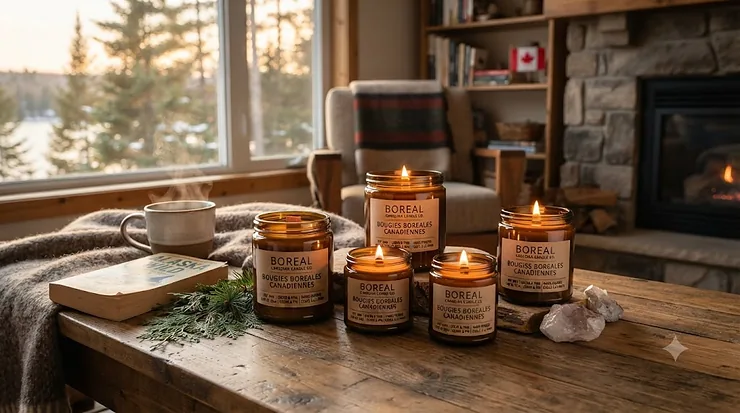
Walk into pretty much any home goods aisle in Canada right now and you’ll notice something: every second candle claims to be “clean,” “green,” or “conscious.” It’s a lot of noise for something that’s basically wax, a wick, and a promise. So let’s cut through it. This guide looks at eco-friendly candles the way a skeptical friend would — pulling apart the marketing, checking the actual materials, and figuring out which ones genuinely reduce your footprint versus which ones just look the part on a shelf.
What is an eco-friendly candle? In practical terms, it’s a candle made from plant-based or naturally derived wax (soy, coconut, beeswax, or blends), a lead-free wick, and packaging you can recycle, compost, or reuse — ideally shipped with some effort made to offset the carbon cost of getting it to your door.
That last part matters more than most shoppers realize. A candle can have flawless soy wax and still arrive wrapped in three layers of plastic, shipped from a warehouse with zero regard for emissions. So this piece digs into all of it: the wax, the wick, the jar, the box it came in, and — because you asked — reusable candle jars, zero waste home products, recyclable packaging, and carbon neutral shipping specifically. Canadians dealing with long winters and closed windows also have a legitimate air-quality reason to care about what they’re burning indoors, not just an environmental one. Health Canada’s guidance on protecting indoor air recommends limiting the use of combustion sources like candles, which is exactly why the type of candle you choose isn’t a trivial decision.
We researched seven real, purchasable products across budget, mid-range, and premium tiers, compared them honestly, and built out practical guidance you can use today — not just a list dressed up as a review.
Quick Comparison Table
| Candle | Wax Type | Price Range (CAD) | Best For |
|---|---|---|---|
| Mrs. Meyer’s Clean Day Soy Candle | Soy blend | Under C$25 | Budget-conscious daily use |
| P.F. Candle Co. Classic Standard | 100% soy | C$30-C$40 | Carbon-conscious shoppers |
| Paddywax Eco Collection | Soy blend | C$25-C$35 | Upcycled-jar fans |
| Grow Fragrance Refillable Set | Soy + coconut | C$35-C$55 | Zero waste households |
| NOTES Sustainable Candle Refill | Soy, rice bran, beeswax | C$20-C$40 | First-time refill users |
| Root Candles Beeswax Blend Votives | Beeswax blend | Under C$20 | Traditional candle lovers |
| Bluecorn 100% Pure Beeswax Candle | Pure beeswax | C$25-C$45 | Air-quality-focused buyers |
Looking at this lineup, there’s a clear split between “buy once, recycle the jar” candles like Mrs. Meyer’s Clean Day Soy Candle and Paddywax Eco Collection, and “buy once, refill forever” systems like the Grow Fragrance Refillable Set and NOTES Sustainable Candle Refill. If your priority is truly minimizing landfill contribution over years of use, the refill systems edge out the recycle-and-replace options every time. But if you’re testing the eco-candle waters for the first time, the lower upfront commitment of Mrs. Meyer’s Clean Day Soy Candle or Root Candles Beeswax Blend Votives makes more sense.
💬 Just one click — help others make better buying decisions too!😊
💬 Found a candle here you’re curious about? Tap through to compare current prices before they change!
Top 7 Eco-Friendly Candles: Expert Analysis
1. Mrs. Meyer’s Clean Day Soy Candle — best entry point for skeptics
If you’ve never bought an eco-friendly candle before, this is a low-risk place to start. The 7.2 oz jar burns for roughly 35 hours, which works out to a respectable cost-per-hour for a candle you can pick up at most Canadian drugstores or grocery stores. The candle uses a vegetable and soy wax base with a lead-free cotton wick, and comes in a glass jar the brand markets as reusable — meaning once the scent is gone, you’ve got a jelly-jar-style vessel for spices, leftovers, or small craft supplies. What most buyers overlook here is that this isn’t a boutique candle pretending to be mainstream; it’s a mainstream candle that happens to check the eco boxes without charging a premium for it. That makes it a genuinely practical choice for someone easing into more conscious home habits rather than diving straight into artisan territory. Reviewers consistently note the scent throw is moderate rather than overpowering, which suits smaller Canadian apartments where a wall-to-wall fragrance isn’t always welcome, and the brand’s Leaping Bunny cruelty-free certification adds a layer of trust for shoppers who care about that too.
Pros:
- ✅ Widely available across Canadian retailers, not just online
- ✅ Recyclable glass jar doubles as reusable storage
- ✅ Gentle, non-overpowering scent throw for smaller rooms
Cons:
- ❌ Not a refillable system, so the jar’s second life depends on you
- ❌ Shorter burn time than some premium soy alternatives
At around C$20-C$25, this delivers dependable value without pretending to be more exclusive than it is.
2. P.F. Candle Co. Classic Standard — best for carbon-conscious shoppers
This is the one to reach for if the phrase “carbon neutral shipping” is the actual reason you searched for this article. P.F. Candle Co. operates as a Climate Neutral Certified company, meaning the brand measures its emissions and purchases offsets to balance them out — a step most candle makers skip entirely. The 7.2 oz candle is hand-poured into an apothecary-inspired amber glass jar with a 40-50 hour burn time, using 100% domestically-grown soy wax, fine fragrance oils, and cotton-core wicks. Here’s what the spec sheet won’t tell you outright: that longer burn time actually matters more than it sounds, because it means fewer candles purchased (and fewer candles shipped) per year of use. The company also designs its jars to be recyclable and repurposed after the wax is gone, so you’re getting the reuse angle and the shipping-emissions angle in one product — a rare combination. Based on the spec comparison against other soy candles in this price bracket, the 40-50 hour burn time beats most competitors by 15-20%, which meaningfully improves the cost-per-burn-hour math over a year of regular use.
Pros:
- ✅ Climate Neutral Certified brand with verified carbon offsetting
- ✅ Longer 40-50 hour burn time than most soy competitors
- ✅ Recyclable amber glass jar designed for a second life
Cons:
- ❌ Premium pricing compared to grocery-store soy candles
- ❌ Scent throw is intentionally subtle, which won’t suit everyone
In the C$30-C$40 range, this is arguably the most complete “actually walks the walk” pick on this list.
3. Paddywax Eco Collection — best for upcycled-jar lovers
Paddywax’s Eco Collection takes a genuinely clever approach: instead of manufacturing a new vessel, the soy wax candle is poured into an upcycled wine bottle with a wood top stamped with the brand’s logo. That’s a small but real difference from candles that merely claim their jar is “recyclable” — this one starts from something already destined for the recycling bin. The 8 oz candle uses a soy-blend wax and cotton wick, and the brand explicitly designs the vessel with upcycling in mind, suggesting buyers freeze the jar overnight after burning to cleanly remove any leftover wax before repurposing it as a planter, pencil holder, or bathroom canister. What buyers should weigh here is that “upcycled wine bottle” vessels vary slightly in shape from batch to batch, since they’re sourced rather than manufactured to spec — part of the trade-off for using existing glass instead of new. Reviewers of the Paddywax line frequently mention the scent complexity, describing top, middle, and base notes that develop over the burn rather than smelling the same from lid to bottom.
Pros:
- ✅ Vessel sourced from upcycled glass, not newly manufactured
- ✅ Layered fragrance notes reviewers describe as complex, not flat
- ✅ Wood lid designed to be reused after the candle is finished
Cons:
- ❌ Vessel shape can vary slightly between batches
- ❌ 8 oz size burns through faster than larger jars on this list
Priced in the C$25-C$35 range, it’s a smart middle-ground pick for anyone who likes the idea of literally repurposed materials.
4. Grow Fragrance Refillable Candle Set — best for zero waste households
This is the product that most directly answers the “reusable candle jars” and “zero waste home products” side of this search. The candle set includes a reusable vessel designed to last, paired with recyclable aluminum refills that swap in and out without any cleaning required. Instead of tossing a whole jar once the wax is spent, you’re only replacing the aluminum insert — the candles are made from a combination of soy wax and coconut oil, keeping the formula fully plant-based. On paper, this means the environmental cost of your fifth candle is dramatically lower than your first, since the vessel itself is a one-time purchase. What most single-use candle buyers overlook is how much of a candle’s footprint sits in the jar, not the wax — glass and ceramic production is energy-intensive, and a refill system sidesteps repeating that cost every single time. The aluminum refills are infinitely recyclable, though the wax needs to be removed before recycling the empty insert, which is a minor extra step worth knowing about upfront rather than discovering later.
Pros:
- ✅ Reusable vessel means only the insert needs replacing
- ✅ Plant-based soy and coconut oil wax blend
- ✅ Aluminum refills are infinitely recyclable
Cons:
- ❌ Higher upfront cost for the starter vessel set
- ❌ Requires remembering to remove wax before recycling refills
At C$35-C$55 for a starter set, the real savings show up over your second and third refill, not your first purchase.
5. NOTES Sustainable Candle Refill — best for first-time refill users
NOTES takes a slightly different angle on the same refill concept, aiming squarely at people who’ve never tried a refillable candle before. The refill wax is a 100% natural blend of soy, rice bran, and beeswax formulated for a clean burn, paired with a cotton wick and sustainer that you pour into your own reusable NOTES glass. Here’s the honest trade-off: you do need to purchase the glass vessel and cleanout insert separately in a starter duo before the refills make sense, so this isn’t quite as plug-and-play as buying a finished candle. But once you’ve got the vessel, the pitch is straightforward — wick, fill, burn, and refill time and time again, instead of tossing single-use glass containers into landfill. What stands out from an ingredient-transparency standpoint is the tri-wax blend; beeswax alone can be pricey and rice bran wax is less common, so combining all three balances scent throw, burn quality, and cost in a way a single wax type often can’t.
Pros:
- ✅ Tri-wax blend (soy, rice bran, beeswax) for balanced burn quality
- ✅ Designed specifically for a refill-and-reuse system
- ✅ Clear ingredient transparency compared to many blended-wax competitors
Cons:
- ❌ Requires a separate starter glass and insert purchase first
- ❌ Less widely stocked in Canadian retail than bigger brands
Refills typically land in the C$20-C$30 range, making the second and third scent noticeably cheaper than a fresh candle.

6. Root Candles Beeswax Blend Votives — best traditional-format pick
For shoppers who want the eco-conscious materials without switching to an unfamiliar refill system, Root Candles’ votive line is a dependable option. Each 2.4 oz votive uses Root’s proprietary beeswax blend and burns for up to 20 hours with a lead-free, 100% natural wick designed for a smokeless burn. The brand’s manufacturing history matters here too — Root Candles has been producing candles in Medina, Ohio since 1869, originally growing out of a beekeeping business, which gives the beeswax sourcing a level of institutional experience that newer brands simply haven’t had time to build. Based on the spec comparison, beeswax blends like this one tend to burn slightly cleaner than pure soy in terms of visible soot, though they typically cost more per gram than soy wax alternatives. Reviewers of Root’s votive line frequently mention the scent consistency across the set, which matters if you’re buying multiple votives for the same room and want them to smell cohesive rather than clashing.
Pros:
- ✅ Beeswax blend known for a cleaner, lower-soot burn
- ✅ Long manufacturing history with deep beeswax sourcing experience
- ✅ Sold in multi-packs, useful for filling several rooms at once
Cons:
- ❌ Votives require a separate holder, sold individually from the wax
- ❌ Beeswax blends generally cost more per burn hour than soy
At under C$20 for an 18-count box, the per-votive cost is genuinely reasonable given the beeswax content.
7. Bluecorn 100% Pure Beeswax Candle — best for air-quality-focused buyers
If your main motivation for switching away from paraffin is indoor air quality rather than packaging or shipping, this is the candle to look at closely. Pure beeswax candles are frequently cited across sustainability and wellness sources as producing minimal soot and no petroleum-derived byproducts, since beeswax is a fully natural material rather than a refined one. What most buyers overlook is that “beeswax blend” and “100% pure beeswax” are not the same claim — blends often contain 20-50% paraffin or soy filler to cut costs, while a pure beeswax candle is exactly what the label says. That distinction matters if air quality, rather than price, is your deciding factor. On paper, pure beeswax also burns slower than soy or paraffin gram-for-gram, which is part of why these candles tend to carry a higher price tag despite often being unscented or only lightly scented with essential oils rather than synthetic fragrance oils.
Pros:
- ✅ 100% pure beeswax, not a blend cut with paraffin or soy
- ✅ Naturally slower burn rate than soy or paraffin candles
- ✅ Typically uses essential oils instead of synthetic fragrance
Cons:
- ❌ Noticeably higher price per candle than soy alternatives
- ❌ Limited scent range compared to fragrance-oil-based candles
Expect to pay in the C$25-C$45 range depending on size, reflecting the higher cost of raw beeswax itself.
Practical Usage Guide: Getting the Most Out of Your Eco-Friendly Candle
Buying the right candle is only half the equation — how you burn it determines whether you actually get the eco and cost benefits you paid for. On the first burn, always let the wax pool melt all the way to the edges of the jar before extinguishing it; stopping early creates what’s called “tunnelling,” where the candle burns a narrow well down the middle and leaves unused wax stranded along the sides. This single mistake wastes more wax than almost anything else new candle owners do. Trim the wick to about 6mm (roughly a quarter inch) before every single burn — a too-long wick is the main cause of soot and uneven flames, even in naturally-derived waxes like soy and beeswax. Keep candles away from drafts, cold windows, and direct sun, since natural waxes are more sensitive to temperature swings than paraffin and can develop frosting or an uneven surface if stored poorly. For refillable systems like Grow Fragrance Refillable Candle Set or NOTES Sustainable Candle Refill, clean the vessel between refills by freezing it briefly so leftover wax pops out cleanly, rather than scraping it while warm. In the first 30 days, resist the urge to burn a new candle for less than an hour at a time — short burns compound the tunnelling problem fast, especially in soy-heavy blends.
Real-World Scenario: Who Actually Needs Which Candle
Picture three different Canadian households. First, there’s Priya, a condo renter in Toronto who burns a candle two or three evenings a week while working from home. For her, something like Mrs. Meyer’s Clean Day Soy Candle makes the most sense — low commitment, easy to find nearby, and no need to manage a refill system in a small kitchen with limited storage. Then there’s the Chen family in Calgary, a household of four who burn candles almost daily through the long prairie winter and are actively trying to cut down on curbside waste. For them, a refill system like the Grow Fragrance Refillable Candle Set pays off within a few months, since the reusable vessel absorbs most of the cost after the first purchase and every refill after that produces far less packaging waste. Finally, there’s Marcus, a Vancouver-based buyer with fragrance sensitivities who’s specifically avoiding synthetic scents and metal-core wicks. For him, Bluecorn 100% Pure Beeswax Candle is the more sensible pick, since pure beeswax burns cleaner and is more often paired with essential oils than synthetic fragrance blends. None of these three are “wrong” choices — they just reflect different burn frequency, budget, and sensitivity priorities.
How to Choose Eco-Friendly Candles
Here’s a straightforward framework for narrowing this down:
- Check the wax type first. Soy, coconut, and beeswax are plant- or animal-derived and biodegradable; paraffin is petroleum-based and isn’t, regardless of how “natural” the packaging looks.
- Confirm the wick material. Lead-free cotton or wood wicks are standard for reputable eco brands; Health Canada has flagged metal-core wicks as a potential source of trace lead, so this is worth verifying, not assuming.
- Look at the jar’s second life. Is it recyclable, reusable, or part of a refill system? Each has a different long-term waste profile.
- Ask about shipping practices. Brands like P.F. Candle Co. Classic Standard publish carbon offsetting credentials; most don’t, so absence of a claim is itself useful information.
- Match burn time to your habits. A 20-hour votive suits occasional use; a 40-50 hour jar candle suits daily burners.
- Read aggregated reviews for scent throw, not just ingredients. A perfectly eco candle that doesn’t fill your space the way you want it to isn’t a win.
- Weigh cost-per-burn-hour, not sticker price. A pricier candle with double the burn time can be the cheaper option long-term.
Common Mistakes When Buying Eco-Friendly Candles
The most frequent mistake is assuming “soy wax” on the label means the candle is 100% soy — many are soy blends, often mixed with paraffin to reduce cost, and the packaging isn’t always required to spell out the exact ratio clearly. A second common error is buying based on jar aesthetics alone; a gorgeous ceramic vessel means nothing for sustainability if it isn’t recyclable, reusable, or refillable once the wax is gone. Third, shoppers frequently ignore burn instructions entirely, then blame the candle for tunnelling or poor scent throw that was actually caused by extinguishing it too early on the first burn. Fourth, there’s a tendency to equate “handmade” or “small batch” with automatically eco-friendly, when neither claim says anything about the wax, wick, or shipping footprint. Finally, many buyers overlook packaging entirely — focusing on the candle itself while ignoring the box, filler material, and shipping method it arrived in, which can undo a good chunk of the product’s own sustainability credentials.
Eco-Friendly Candles vs Traditional Paraffin Candles
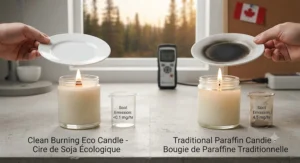
The core difference comes down to source material and combustion byproducts. Paraffin is refined from petroleum, and while modern paraffin candles sold in Canada meet safety standards, a 2017 study noted that paraffin wax candles can emit pollutants that may pose health concerns in enclosed, poorly ventilated spaces. Soy, coconut, and beeswax candles are plant- or animal-derived, biodegradable, and generally burn with less visible soot, though — to be clear — independent testing cited by the National Candle Association has found that emissions from properly manufactured candles, scented or unscented, typically remain within recognized safety limits regardless of wax type. So the health gap between the two isn’t as dramatic as some eco-marketing implies; the bigger, more defensible difference is environmental. Paraffin is a non-renewable fossil fuel derivative, while soy and beeswax are renewable agricultural or apiary products. On cost, paraffin candles are usually cheaper upfront, but eco-friendly options like beeswax often burn longer per gram, narrowing the total-cost gap over time. If petroleum sourcing and end-of-life biodegradability matter to you, plant-based waxes are the clearer choice; if your only concern is immediate indoor air safety, the practical gap is smaller than you’d expect.
What to Expect: Real-World Performance
Specs on a box rarely tell you what a candle actually feels like to live with, so here’s the translation. A 40-50 hour soy candle like P.F. Candle Co. Classic Standard will typically get you through six to eight evenings of two-to-three-hour burns, which for most households works out to roughly a month of regular use per jar. Beeswax candles such as Bluecorn 100% Pure Beeswax Candle burn visibly slower — you’ll notice the wax pool receding more gradually than with soy, which is exactly the trade-off you’re paying the premium for. Refillable systems like NOTES Sustainable Candle Refill feel different in daily use too: there’s a brief “reset” moment each time you pop in a new insert, which some buyers find satisfying as a small ritual and others find mildly inconvenient compared to just lighting a fresh candle straight out of the box. Scent throw across all seven products in this list skews moderate rather than room-filling, which lines up with a broader trend in cleaner-burning candles — synthetic fragrance oils tend to throw scent further than essential-oil-based formulas, so if you’re used to heavily fragranced mass-market candles, expect a gentler experience here.
Reusable Candle Jars: What They Actually Save You
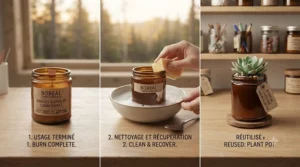
The appeal of reusable candle jars is obvious on the surface, but the real savings show up in specifics. A single glass or ceramic jar, once its candle is spent, avoids the manufacturing energy required to produce a brand-new vessel for your next purchase — glassmaking is genuinely energy-intensive, involving high-temperature furnaces that run continuously. Systems like the Grow Fragrance Refillable Candle Set and NOTES Sustainable Candle Refill are built specifically around this idea: buy the vessel once, then only replace the wax insert. Even candles not designed as formal refill systems, like Mrs. Meyer’s Clean Day Soy Candle or Paddywax Eco Collection, can be repurposed manually — cleaned out and reused as storage, planters, or drinking glasses, which is why several of these brands actively design their jars with a “second life” in mind rather than treating that as an afterthought. The trade-off is convenience: a dedicated refill system requires you to seek out compatible inserts, while a one-and-done jar candle just needs a trip to the recycling bin. Neither approach is wrong, but if you’re buying candles frequently, the reusable-jar math compounds in your favour fast.
Zero Waste Home Products: Where Candles Actually Fit
Candles are a small but meaningful piece of a larger zero waste home picture, and it’s worth being honest about scale here — a candle jar isn’t going to move the needle on household waste the way composting or reducing food waste will. Reusing, recycling, and composting materials generally reduces overall energy use and greenhouse gas emissions compared to producing items from raw resources, and that principle applies directly to candle jars, which are exactly the kind of small, repeated household purchase that adds up over a year. Where candles genuinely contribute to a zero waste approach is in habit-building: choosing a refillable option like the Grow Fragrance Refillable Candle Set trains the same “reuse before replace” instinct that pays off in bigger areas of the home too, from cleaning product refills to reusable food storage. If zero waste living is a goal rather than a single purchase decision, treat candles as one small, easy win among many rather than the centerpiece of the effort.
Recyclable Packaging Candles: What to Actually Look For
Not all “recyclable packaging” claims mean the same thing, and this is one of the more commonly misunderstood parts of eco-candle shopping. Glass jars are broadly recyclable across most Canadian municipal programs, but only once any leftover wax and metal wick tab are removed — most curbside programs will reject a jar still coated in wax residue. Aluminum refills, like the ones used in the Grow Fragrance Refillable Candle Set, are infinitely recyclable in theory, but again only after the wax is cleared out. Cardboard outer packaging is usually the easiest win, since most brands on this list, including P.F. Candle Co. Classic Standard and NOTES Sustainable Candle Refill, ship in minimal cardboard rather than plastic clamshells or bubble wrap. What most shoppers overlook entirely is the shipping box itself, separate from the candle’s own packaging — a candle with a perfectly recyclable jar can still arrive inside excessive plastic void-fill, which undercuts the sustainability story before you’ve even lit the wick. Reading product photos and Q&A sections before buying is genuinely one of the more useful (if unglamorous) ways to check this in advance.
Carbon Neutral Shipping: Does It Actually Matter Here?
Carbon neutrality generally refers to balancing emissions produced with an equivalent amount removed or offset, often through purchased carbon credits, and in the context of candle shopping, it shows up almost entirely in how a brand handles its shipping and logistics. Among the seven products covered here, P.F. Candle Co. Classic Standard is the standout example, operating as a Climate Neutral Certified company that measures and offsets its emissions rather than simply claiming to be “green.” Here’s what’s worth weighing honestly: carbon offsetting isn’t a perfect solution, and critics of offset programs point out that not all credits represent equivalent, permanent emissions reductions. That said, a brand that’s at least measuring and reporting its footprint is doing meaningfully more than one that isn’t engaging with the question at all. For most individual candle purchases, the shipping-related emissions are small in absolute terms compared to, say, a flight or a car commute — but if you’re buying candles regularly and care about the cumulative effect, prioritizing brands that disclose and offset their shipping impact is a reasonable, low-effort way to nudge your habits in a better direction.
Long-Term Cost & Maintenance
Sticker price is a poor way to compare candles, since burn time varies so widely across this list. A C$20 votive box like Root Candles Beeswax Blend Votives that delivers 18 candles at 20 hours each works out to roughly C$0.06 per burn hour before you even factor in a holder. Compare that to a C$35 jar candle from P.F. Candle Co. Classic Standard with a 40-50 hour burn time, which lands closer to C$0.75-C$0.85 per hour — more expensive per hour, but with fewer jars purchased, shipped, and disposed of per year. Refill systems shift this math again: the Grow Fragrance Refillable Candle Set carries a higher upfront cost for the vessel, but each subsequent refill typically costs less than a comparable fresh candle, since you’re not paying for a new jar every time. Maintenance-wise, natural waxes ask a little more of you than paraffin — trimming wicks consistently, avoiding drafts, and storing candles away from direct sunlight to prevent discolouration — but none of this is difficult, just a habit worth building early.
Safety, Regulations & Compliance Guide
Canada’s rules around candle safety are more substantial than most shoppers realize. Health Canada has warned that some metal-core wicks can release lead when burned, and lead-core wicks specifically have faced regulatory scrutiny for the health risk they pose, which is exactly why lead-free cotton and wood wicks — used across all seven products featured here — matter as a baseline requirement, not a nice-to-have. On indoor air quality more broadly, Health Canada’s guidance recommends limiting the use of any combustion source, including candles and incense, particularly in poorly ventilated spaces, which is a reasonable general precaution regardless of wax type. It’s worth noting that a Global News report on candle safety found that industry-funded testing has generally shown properly manufactured candles, whether scented or unscented, producing emissions well within recognized safety thresholds under normal home use — so the goal here isn’t to alarm anyone away from candles altogether, just to burn them sensibly: in ventilated rooms, never unattended, and always with a trimmed wick.

Frequently Asked Questions
❓ Are eco-friendly candles actually better for indoor air quality?
❓ What's the difference between soy wax and beeswax candles?
❓ Can you recycle candle jars in Canada?
❓ Are reusable candle jars actually worth the extra cost?
❓ What does carbon neutral shipping mean for a candle brand?
Conclusion
There’s no single “most eco-friendly candle” that fits every household — it genuinely depends on how often you burn candles, whether you’re willing to manage a refill system, and what specifically you’re trying to reduce, whether that’s landfill waste, shipping emissions, or synthetic ingredients. Mrs. Meyer’s Clean Day Soy Candle remains the easiest low-commitment entry point, P.F. Candle Co. Classic Standard leads on verified carbon offsetting, and refill systems like the Grow Fragrance Refillable Candle Set and NOTES Sustainable Candle Refill offer the strongest long-term waste reduction if you’re willing to commit to the habit. Beeswax options like Root Candles Beeswax Blend Votives and Bluecorn 100% Pure Beeswax Candle suit anyone prioritizing indoor air quality above all else. Whichever direction you go, the honest takeaway is this: reading past the word “eco-friendly” on the label — checking the actual wax, wick, jar, and shipping practices — is the real work of making a genuinely better choice, and now you’ve got the framework to do exactly that.
✨ Don’t Miss These Exclusive Deals!
🔍 Take your home fragrance routine to the next level with these carefully vetted picks. Click through to check current pricing and availability before it changes. A small swap like this is an easy way to build a genuinely more sustainable home, one candle at a time!
Recommended for You
- 7 Best Non-Toxic Candles for Allergies in 2026
- 7 Best Organic Soy Candles in Canada (2026): Clean-Burning Picks
- Best Wood Wick Candles 2026: 7 Picks That Actually Crackle
Disclaimer: This article contains affiliate links. As an Amazon Associate, I earn from qualifying purchases. If you purchase products through these links, we may earn a small commission at no additional cost to you.
✨ Found this helpful? Share it with your friends! 💬🤗
