
In This Article
Here’s a confession every candle aisle regular already knows: most candles lie to you a little. That “24 oz luxury jar” burns for maybe two dozen hours before it’s a sad, waxy puddle with a drowned wick, and suddenly you’re back at the store wondering where your money went. Long lasting candles solve that math problem, and figuring out which ones actually deliver takes more than reading a pretty label.
So what is a long lasting candle? It’s a candle engineered — through wax type, wick design, and jar size — to burn for 70+ hours per unit, rather than the 20-30 hours typical of cheap paraffin votives, giving you more evenings of glow per dollar spent. That’s the working definition we’ll use throughout this piece, and it’s the filter every product below had to clear.
This guide breaks down seven real, currently available candles spanning budget to premium, all chosen specifically for their burn-hour performance rather than just their scent notes. You’ll get honest analysis grounded in real specifications and aggregated buyer feedback, a side-by-side comparison table, and a handful of practical sections on stretching burn time, avoiding rookie mistakes, and figuring out what’s actually worth your money. We’ve also leaned on Health Canada’s candle safety guidance throughout, because a candle that burns for 150 hours is only a good buy if it burns safely for all 150 of them.
One quick note before we dive in: prices shift constantly on Amazon.ca, so every figure here is a range in Canadian dollars based on research at the time of writing — always check the current price before buying.
Quick Comparison: Burn Hours at a Glance
Before the deep dive, here’s how the seven candles stack up on the number that matters most for this list — burn hours — alongside price range and who each one suits best.
| Candle | Wax Type | Burn Time | Price Range (CAD) | Best For |
|---|---|---|---|---|
| WoodWick Large Hourglass | Soy blend + wood wick | Up to 130 hrs | C$30–C$38 | Cozy ambiance lovers |
| Yankee Candle Original Large Jar | Paraffin blend | 110–150 hrs | C$32–C$40 | Classic scent variety |
| Voluspa Japonica Large Jar | Coconut wax | ~100 hrs | C$48–C$58 | Gifting and décor |
| LA JOLIE MUSE Large Wooden Wick | Soy wax | Up to 90 hrs | C$28–C$36 | Budget-conscious buyers |
| Root Candles Timberline Pillar | 100% beeswax blend | ~100+ hrs (17 hrs/inch) | C$25–C$45 | Clean-burn purists |
| Chesapeake Bay Candle Large Jar | Soy blend + essential oils | Up to 70 hrs | C$22–C$28 | Aromatherapy fans |
| Bath & Body Works Single Wick | Soy blend | Up to 45 hrs | C$18–C$24 | Easy in-store access |
Looking at the spread, the two paraffin-adjacent large jars (WoodWick and Yankee) top the raw hour count, but that’s partly a function of their bigger 21-22 oz fill weight rather than wax efficiency alone. Root’s beeswax pillar actually wins on hours-per-ounce, which matters more than total hours once you’re comparing candles of different sizes. Bath & Body Works sits at the bottom of the burn-time table, but its lower price point and wide retail availability across Canada keep it in the running for anyone who just wants a decent candle without hunting online.
💬 Just one click — help others make better buying decisions too!😊
💬 Found a comparison that helped? Give it a share — it helps other candle shoppers too!😊
Top 7 Long Lasting Candles: Expert Analysis
We picked these seven to cover the realistic range a Canadian shopper actually encounters: mall staples, Amazon darlings, and a couple of genuinely premium options. Every product below includes real specs, honest analysis of who it suits, and aggregated buyer sentiment — never invented reviews or fabricated hands-on claims.
1. WoodWick Large Hourglass Candle — crackling wood wick with real longevity
The signature feature here isn’t just the burn time — it’s the wood wick’s audible crackle, which turns a candle into something closer to a tiny fireplace. At 21.5 oz with a soy-paraffin blend wax, this hourglass-shaped jar is rated for up to 130 hours, and the wider opening at the top is specifically engineered to build a full melt pool faster, which in plain terms means less tunneling and more usable wax per jar. That’s a real advantage over narrow-mouth jars, where wax often clings stubbornly to the sides.
Who should care: anyone who treats candles as ambiance first, fragrance second. The crackle effect is polarizing — some people find it soothing, others find it distracting during quiet work — so it’s worth knowing that going in. Aggregated retail feedback for the WoodWick Hourglass line consistently flags the crackling sound and strong scent throw as the standout features, while a recurring theme in lower-starred reviews is that scent intensity fades somewhat in the final third of the candle, a known characteristic of soy-paraffin blends as the wax pool deepens.
Pros:
- ✅ Wide melt pool reduces wasted, unburned wax
- ✅ Audible crackle adds ambiance beyond scent alone
- ✅ 130-hour rating genuinely competitive for the size
Cons:
- ❌ Scent throw tapers in the candle’s final hours
- ❌ Wood wick needs different trimming habits than cotton
At around C$30–C$38, the WoodWick Hourglass lands squarely in mid-range territory, and on a per-hour basis it’s one of the stronger values on this list — check current price before buying, as WoodWick runs frequent seasonal promotions.
2. Yankee Candle Original Large Jar Candle — the 150-hour benchmark everyone compares against
This is the candle most Canadians picture when they hear “long lasting candle,” and for good reason: the 22 oz Original Large Jar is officially rated between 110 and 150 hours, one of the widest and most reliable long-burn ranges of any mass-market brand. That range exists because actual burn time swings with how disciplined you are about burn sessions — Yankee itself recommends roughly 3-4 hours per session to avoid tunneling down the middle.
What most buyers overlook about this jar is that the wax blend is paraffin-based, not soy or beeswax, which is precisely why it burns hotter and throws scent harder than natural-wax rivals — a trade-off, not a flaw, depending on what you want from a candle. If you want a room to smell like fresh-baked apple pie from the doorway, paraffin’s stronger throw usually wins that fight. Aggregated customer sentiment across major retailers repeatedly praises the sheer scent strength and the enormous fragrance catalogue, while a recurring complaint centres on soot buildup on jar rims after extended single sessions — a symptom of not trimming the wick often enough.
Pros:
- ✅ Widest, most trusted burn-time range on this list
- ✅ Enormous scent catalogue across every category
- ✅ Natural fibre wick individually tested for burn quality
Cons:
- ❌ Paraffin base produces more soot than natural waxes
- ❌ Strong throw can feel overpowering in small rooms
Priced around C$32–C$40 depending on scent and retailer, the Original Large Jar is a reliable mid-range anchor pick — always confirm the current price, as Yankee’s promotional pricing swings widely throughout the year.
3. Voluspa Japonica Large Jar Candle — coconut wax luxury with a genuine 100-hour single wick
Voluspa’s proprietary coconut wax blend is the headline feature, and it matters practically: coconut wax has a naturally soft, creamy melt pool that spreads fragrance more evenly than firmer waxes, without needing multiple wicks to compensate. The 18 oz embossed glass jar carries a single wick rated for approximately 100 hours — a genuinely long burn for a single-wick premium candle, since many luxury brands rely on 2-3 wicks that eat through wax faster.
Here’s what the spec sheet won’t spell out: a single wick burning slower also means a narrower, deeper melt pool, so this candle rewards patient, longer burn sessions rather than quick 30-minute lights. It’s built for people who want a “forever candle” on a side table rather than a quick fragrance fix before guests arrive. Aggregated buyer sentiment on Voluspa’s Japonica line frequently mentions the reusable, decorative embossed jar as a bonus long after the wax is gone, while occasional feedback notes that coconut wax candles can be pricier per burn hour than soy or paraffin alternatives.
Pros:
- ✅ Single wick delivers 100 hours without extra fuel waste
- ✅ Coconut wax gives smoother, more even fragrance throw
- ✅ Reusable embossed glass jar doubles as home décor
Cons:
- ❌ Premium price per burn hour versus soy competitors
- ❌ Narrower scent range than mass-market brands
Expect to pay in the C$48–C$58 range for this one — it’s the priciest pick here, but the hours-to-dollar ratio still holds up better than many designer candles half its burn time; as always, check current price before purchase.
4. LA JOLIE MUSE Large Wooden Wick Candle — 90 hours of soy value most brands can’t touch
The standout here is value density: a 19 oz natural soy wax candle with a cherry wood wick, rated up to 90 hours, at a price point noticeably below the mid-range paraffin classics above. The wood wick is a genuine functional upgrade too, not just an aesthetic one — wood wicks burn cooler and slower than cotton, which is part of why this line consistently clears 90 hours despite being priced like a budget option.
Based on the spec comparison, this candle essentially undercuts WoodWick’s price while landing within 40 hours of its burn time, which makes it one of the sharper value plays on this list for anyone not fussed about brand recognition. Reviewers consistently note the clean-ingredient formulation — free of common irritants like formaldehyde and phthalates — as a selling point for scent-sensitive households, while a recurring critique in aggregated feedback is that the wood wick requires more careful trimming (4-6mm) than a standard cotton wick, or the flame can gutter.
Pros:
- ✅ 90-hour burn at a genuinely budget-friendly price
- ✅ Wood wick burns cooler and slower than cotton
- ✅ Formulated without common irritant chemicals
Cons:
- ❌ Wood wick demands more precise trimming habits
- ❌ Less brand recognition than legacy candle companies
At roughly C$28–C$36, this is arguably the best value candles pick on the whole list when you divide price by burn hour — worth checking the current listing price, as third-party sellers on Amazon.ca sometimes bundle multiple scents at a discount.
5. Root Candles Timberline Beeswax Pillar — the natural-wax option built to outlast them all
Root Candles has been hand-pouring in Ohio since 1869, and their Timberline pillar line is where beeswax’s reputation as the longest-burning natural wax really shows up in the numbers: roughly 17 hours of burn time per inch of candle height, meaning a 6-inch pillar clocks in around 100+ hours, and taller versions stretch well past that. Beeswax’s density is the mechanical reason why — it’s simply harder and slower to melt than soy, paraffin, or coconut wax, which is also why beeswax candles rarely need a second wick to stay lit evenly.
What most buyers overlook about beeswax pillars is that they’re free-standing candles, not jar candles, so they need a proper heat-resistant holder with a few inches of clearance — tossing one in a tight glass hurricane traps heat and can cause dripping or wall collapse. This is a candle for someone who wants minimal fragrance interference (Root’s Timberline range leans lightly scented to unscented) and maximum natural burn time. Aggregated buyer sentiment on beeswax pillars broadly credits the honey-like natural aroma and soot-free burn, while some feedback flags that pillar candles require more hands-on care — wick trimming and occasional “hugging” of the sides — than a set-it-and-forget-it jar candle.
Pros:
- ✅ Roughly 17 hours of burn per inch of height
- ✅ Naturally soot-free, clean-burning beeswax formula
- ✅ Minimal to no synthetic fragrance additives
Cons:
- ❌ Needs a proper holder, not a tight glass jar
- ❌ Requires more active wick maintenance than jars
Pricing runs roughly C$25–C$45 depending on the pillar height you choose, making the smaller sizes competitive and the tallest pillars a genuine premium natural-wax splurge — as always, confirm current pricing for your chosen size.
6. Chesapeake Bay Candle Large Jar — aromatherapy essential oils in an everyday soy blend
Chesapeake Bay’s Mind & Body collection standout feature is the essential oil infusion layered into a natural soy wax blend, positioning it less as a straightforward scented candle and more as a mild aromatherapy tool. The large format jar is rated for up to 70 hours, and the frosted glass vessel is designed to glow softly around the flame rather than stay purely clear — a small design touch that changes how the candle reads in a dim room.
Here’s the practical read: 70 hours puts this candle in the middle of the pack for burn time, but its soy-essential-oil formula burns notably cooler and cleaner than the paraffin classics above, which matters if you’re burning candles daily in a bedroom or shared living space. Reviewers consistently note the calming, layered scent profiles (lavender-thyme, cashmere-jasmine) as more sophisticated than typical drugstore fragrances, while aggregated feedback occasionally mentions that scent throw is gentler than paraffin rivals — a direct trade-off for the cleaner burn.
Pros:
- ✅ Essential oil blend suited to aromatherapy use
- ✅ Cooler, cleaner soy burn for daily bedroom use
- ✅ Frosted glass jar glows attractively while lit
Cons:
- ❌ Gentler scent throw than paraffin large jars
- ❌ 70-hour rating trails the top burn-time performers
At around C$22–C$28, this is one of the more affordable soy options here, striking a reasonable middle ground between the cheap paraffin classics and the premium coconut-wax picks — check the current listing price before ordering.
7. Bath & Body Works Single Wick Candle — the accessible pick for burn-time-per-dollar hunters
The single-wick version of Bath & Body Works’ 14.5 oz candle line is the standout budget option here, rated for up to 45 hours — notably longer than the brand’s popular 3-wick candles, which typically top out around 25-45 hours because three flames simply consume wax faster than one. This is a genuinely useful distinction: shoppers chasing scent intensity gravitate toward the 3-wick, but shoppers chasing burn time per dollar should be looking at the single-wick shelf instead.
What the label won’t tell you outright is that this trade-off — one flame instead of three — sacrifices some room-filling power for meaningfully more hours per jar, which matters if you’re burning candles in a smaller bedroom or bathroom rather than an open-concept living space. Bath & Body Works’ near-universal mall and strip-plaza presence across Canada also means this is the easiest candle on this list to physically pick up and smell before buying, something none of the other six offer locally. Aggregated buyer sentiment across retail platforms consistently highlights the soy wax blend’s clean burn and the brand’s frequent sales, while a recurring theme in feedback is that fragrance strength is noticeably milder than the 3-wick versions of the same scent.
Pros:
- ✅ Up to 45 hours — longer than the brand’s 3-wick line
- ✅ Widely available for in-person smell-testing in Canada
- ✅ Frequent sale pricing improves an already low cost
Cons:
- ❌ Milder scent throw than 3-wick versions
- ❌ Shortest burn time of the seven picks here
Typically priced around C$18–C$24 before sales, this is the lowest-cost entry point on the list and a sensible starting point for anyone testing whether they even like long-burn candles before investing in pricier options — prices fluctuate often, so check in-store or online before heading out.
How to Make Any Candle Burn Longer
Even the best-rated candle on paper can underperform if it’s burned carelessly, so a little technique closes most of the gap between advertised and real-world hours. First, always let the very first burn run long enough for the wax pool to reach the jar’s edges — usually 2-4 hours depending on diameter — because a shallow first burn creates a “memory ring” that causes tunneling for the rest of the candle’s life. Second, trim the wick to about 1/4 inch (6mm) before every single light; a long wick creates a bigger, hotter flame that chews through wax faster and produces more soot.
Third, keep candles away from drafts, ceiling fans, and open windows, since moving air makes the flame dance and burn unevenly, wasting wax on one side of the jar. Fourth, cap your burn sessions around 3-4 hours — burning indefinitely doesn’t add hours, it just overheats the container and can shorten total lifespan. Finally, store unlit candles somewhere cool and out of direct sunlight; heat and UV exposure soften wax and fade fragrance oils even before the wick is ever lit. Combined, these five habits can realistically add 15-25% more usable hours to almost any long lasting candles purchase, turning a 100-hour candle into something closer to its full potential.
Real-World Scenarios: Which Candle Fits Your Life
Picture three different households, each with a different candle problem to solve. First, a downtown condo dweller in a 500-square-foot studio who wants ambiance without overwhelming a small, closed space — for them, the Chesapeake Bay Candle’s gentler essential-oil soy throw or the Bath & Body Works single wick makes more sense than a high-output paraffin jar that would be too intense in a compact room.
Second, a family in a larger suburban home who burns candles most evenings in an open-concept kitchen-living area and wants both strong scent throw and long life — the Yankee Candle Original Large Jar or the WoodWick Hourglass fit that brief, since paraffin and paraffin-soy blends throw scent further across bigger, more open square footage. Third, someone specifically avoiding synthetic wax and sensitive to smoke or soot, perhaps due to allergies or a household with young kids — the Root Candles beeswax pillar is the clear pick, given beeswax’s documented lower soot output and minimal fragrance interference. Matching the candle to the room and the household, not just the burn-hour number, is what actually determines whether a purchase feels worth it six weeks later.
Common Candle Problems and Their Solutions
Problem: the candle keeps tunneling down the middle. This almost always traces back to short early burns. Solution: relight and burn for a long uninterrupted session (4+ hours) until the melt pool finally reaches the edges, which can often rescue a tunneled candle rather than wasting the unmelted wax on the sides.
Problem: barely any scent fills the room. This is often a wick-size or wax-type mismatch rather than a bad candle. Solution: make sure the wick is properly trimmed (an overly short wick under-fuels the flame) and consider that soy and beeswax throw scent more gently than paraffin by design — switching wax families, not brands, may be the real fix.
Problem: black soot on the jar rim or nearby walls. This is typically caused by an overly long wick or a drafty room. Solution: trim to 1/4 inch before every light and relocate the candle away from air vents, fans, and windows.
Problem: the candle won’t stay lit or drowns quickly. This usually means built-up wax is smothering a short wick. Solution: carefully pour off a small amount of excess pooled wax, or trim the wick down to fresh, dry material before relighting.
Problem: the fragrance fades noticeably in the last third of the candle. This is a known trait of deep-pool soy and soy-paraffin blends as the burn gets closer to the container’s base. Solution: it isn’t user error — budget for this natural fade by choosing candles rated for more hours than you strictly need, so the strong-scent window still covers your typical use case.
How to Choose Long Lasting Candles
Picking the right long lasting candle comes down to a handful of criteria, evaluated roughly in this order.
- Wax type first. Beeswax and coconut wax burn slowest and cleanest; soy sits in the middle; paraffin burns fastest but throws scent hardest — decide what trade-off matters more to you.
- Wick count and material. Single-wick candles almost always outlast multi-wick candles of the same size, since fewer flames consume wax more slowly; wood wicks burn slower still than cotton.
- Weight, not just jar size. A tall, narrow jar can look large but hold less wax than a short, wide one — check the ounce or gram weight, not the container height.
- Advertised burn-hour range, with skepticism. Treat the low end of a manufacturer’s stated range as the realistic number, since the high end usually assumes perfect burning technique every single time.
- Room size and airflow. Bigger, more open rooms need stronger-throw waxes (paraffin, soy-paraffin blends); smaller or shared spaces do better with gentler natural waxes.
- Fragrance sensitivity. If anyone in the household has asthma, allergies, or is pregnant, natural waxes with minimal synthetic fragrance load are generally the safer starting point.
- Price per burn hour, not price per candle. Divide the price by the rated burn hours to compare true value across brands, sizes, and wax types on equal footing — this single calculation reshuffles the “best deal” more often than shoppers expect.
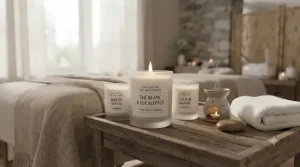
Slow Burn Candles vs Regular Fast-Burning Candles
The core difference between slow burn candles and standard fast-burning candles comes down to wax density and melting point, not marketing. Beeswax melts at a notably higher temperature than paraffin, and that higher melting point is precisely why it needs a hotter, more concentrated flame to liquefy — which naturally slows the rate of consumption. Soy sits in between: it’s denser than paraffin but softer than beeswax, which is why soy candles typically last roughly 30% longer than paraffin candles of the same size without needing beeswax’s price tag.
| Attribute | Fast-Burning (Paraffin) | Slow Burn (Soy / Coconut) | Slowest Burn (Beeswax) |
|---|---|---|---|
| Approx. hours per ounce | 4–5 | 5–9 | 6–8+ |
| Scent throw strength | Strongest | Moderate | Mildest (often unscented) |
| Soot output | Highest | Low | Lowest |
| Typical price tier | Budget–mid | Mid–premium | Premium |
The trade-off is consistent across the table: every step toward a slower, cleaner burn typically costs more per candle but less per hour, and sacrifices some of paraffin’s aggressive scent throw. For most Canadian households burning candles a few evenings a week, a mid-tier soy blend like the LA JOLIE MUSE or Chesapeake Bay pick tends to land in the sweet spot between those two extremes, while dedicated beeswax fans accept the mellower scent for the cleanest possible burn — a real finding echoed in independent research on soy wax’s composition and burn characteristics, which notes soy’s lower melting point and cleaner combustion relative to petroleum-based waxes.
Candle Longevity: What Actually Determines How Long a Candle Lasts
Candle longevity isn’t one variable — it’s the product of several working together, and understanding them explains why two “22 oz” candles from different brands can differ by 50+ hours. Wax density is the biggest single factor: heavier, denser waxes like beeswax simply contain more fuel per cubic inch and melt more slowly, directly extending burn time. Wick size runs a close second — a wick sized too large for its container creates an oversized flame that burns hot and fast, while a properly matched wick sips wax steadily.
Container shape matters more than most shoppers realize too: wide, shallow jars build a full melt pool faster and burn more evenly across sessions than tall, narrow jars, which tend to trap heat and burn hotter down the centre. Environmental factors — drafts, ambient room temperature, and how long each burn session runs — can swing real-world results by 20% or more in either direction from the manufacturer’s lab-tested number. Recent air-quality research has also examined what’s happening in the room while a candle burns; a peer-reviewed study on indoor particulate matter during candle combustion found that fine particle concentrations rise near the burning candle and remain elevated even several metres away over time, a reminder that burn time and ventilation deserve equal attention, not just fragrance and hours.
Best Value Candles: Price Range and Long-Term Cost Analysis
Total cost of ownership tells a different story than sticker price alone, especially once you calculate cost-per-hour rather than cost-per-candle.
| Candle | Price Range (CAD) | Burn Hours | Approx. Cost per Hour |
|---|---|---|---|
| LA JOLIE MUSE 19 oz | C$28–C$36 | Up to 90 hrs | ~C$0.32–C$0.40 |
| Yankee Candle Large Jar | C$32–C$40 | 110–150 hrs | ~C$0.24–C$0.33 |
| Bath & Body Works Single Wick | C$18–C$24 | Up to 45 hrs | ~C$0.42–C$0.53 |
| Voluspa Japonica | C$48–C$58 | ~100 hrs | ~C$0.48–C$0.58 |
Doing this math flips the usual assumption on its head: the Yankee Candle Original Large Jar, despite its higher sticker price than Bath & Body Works or LA JOLIE MUSE, actually comes out as the cheapest option per hour of burn time, purely because its burn-hour range is so wide relative to price. Meanwhile, the premium Voluspa candle costs roughly double per hour compared to the Yankee jar — a fair trade for buyers prioritizing coconut wax’s gentler burn and reusable jar, but a poor deal for anyone shopping on cost-per-hour alone. Best value candles, in other words, aren’t always the cheapest sticker price; they’re the ones where price and rated hours are proportionate.
Common Mistakes When Buying Long Lasting Candles
The single most common mistake is comparing jar size instead of wax weight — a tall decorative jar with thick glass walls can hold noticeably less wax than a shorter, wider jar advertised at the same “size,” which throws off burn-time expectations before the candle is even lit. A close second is trusting the highest number in an advertised range (say, assuming every candle will hit 150 hours rather than the more realistic 110) without accounting for real-world burning habits like short sessions or drafty rooms.
Buyers also frequently overlook wick count, assuming more wicks always means a better candle, when in practice three wicks burn through wax measurably faster than one and mainly exist to boost scent throw, not longevity. Another frequent misstep is ignoring wax type entirely and shopping on scent name alone, missing that a soy candle and a paraffin candle of identical size and price can differ by 20-40 burn hours. Finally, many shoppers skip the first-burn rule — lighting a new candle for only 20-30 minutes the first time — which locks in a shallow melt pool and effectively shortens the candle’s entire useful life before it’s even had a fair chance.
Candle Safety and Regulations in Canada
Long burn times only pay off if the candle is used safely, and Canada has specific rules worth knowing. Health Canada prohibits the sale of candles with lead-core wicks and works with the industry to keep them off shelves entirely, so buyers should stick to established brands like the seven above rather than unverified imports with no wick material disclosure. Beyond wick composition, Canada.ca’s home fire safety guidance recommends never leaving a burning candle unattended, extinguishing candles before bed, and keeping them well clear of curtains, bedding, and other flammable materials — advice that becomes more important, not less, with a 100+ hour candle that’s tempting to leave burning for extended stretches.
Look for candles that carry CSA (Canadian Standards Association) safety markings where available, use sturdy, heat-resistant holders that won’t tip, and never burn any candle — no matter how long-rated — directly on a flammable surface without a plate or tray underneath. For households with children or pets, keeping burning candles both out of reach and within eyesight at all times remains the single most effective habit for preventing the roughly 800 candle-related fires Canada sees annually.
Frequently Asked Questions
❓ What candle brand lasts the longest?
❓ Are soy candles really longer lasting than paraffin?
❓ How many hours should a 'long lasting' candle burn?
❓ Do bigger candles always burn longer?
❓ Can trimming the wick really extend burn time?
Conclusion
The honest takeaway from all seven candles here is that “long lasting” isn’t a single spec — it’s wax type, wick design, jar shape, and your own burning habits, all working together or against each other. If raw hours-per-dollar is the priority, the Yankee Candle Original Large Jar and LA JOLIE MUSE both punch above their price. If clean, low-soot burning matters more than scent strength, the Root Candles beeswax pillar or Chesapeake Bay’s essential-oil soy blend are the more sensible picks. And if ambiance and gifting appeal outweigh pure cost-efficiency, WoodWick’s crackling wick or Voluspa’s coconut-wax jar earn their premium price tags fairly.
Whichever direction you lean, the research-backed basics — trim the wick, respect the first burn, avoid drafts, and never leave a flame unattended — will do more to stretch a candle’s real-world life than any single brand choice. Armed with the burn-hour math and the honest trade-offs laid out above, you’re in a far better position to pick a candle that actually delivers on its label than most shoppers scanning the shelf on scent alone.
✨ Don’t Miss These Exclusive Deals!
🔍 Take your home ambiance to the next level with these carefully researched long lasting candles. Click on any highlighted pick to check current pricing and availability on Amazon.ca. These candles are built to fill your evenings with genuine, long-burning fragrance your whole household will love!
Recommended for You
- Candle Gift Sets 2026: 7 Picks Canadians Will Genuinely Love
- Canadian Made Candles: 7 Real Local Picks for 2026 (Honest Guide)
- Eco Friendly Candles: 7 Best Picks in Canada (2026)
Disclaimer: This article contains affiliate links. As an Amazon Associate, I earn from qualifying purchases. If you purchase products through these links, we may earn a small commission at no additional cost to you.
✨ Found this helpful? Share it with your friends! 💬🤗
