
In This Article
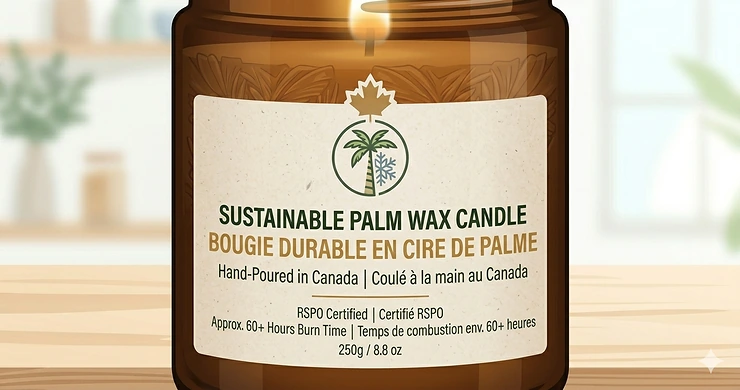
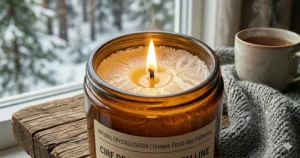
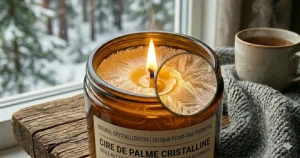
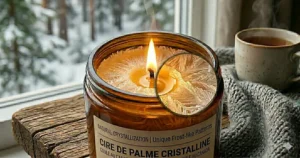
Sustainable palm wax candles represent a fascinating evolution in the eco-conscious candle market, offering Canadians a unique alternative that combines environmental responsibility with stunning visual appeal. What most buyers overlook about these candles is their distinctive crystalline structure — that gorgeous feathered pattern isn’t just decorative; it’s the result of palm wax’s molecular composition forming large, stable crystals as it cools, creating each candle as a one-of-a-kind piece.
In Canada’s climate, palm wax candles offer specific advantages that make them particularly valuable during our long winters. The dense crystalline structure means they burn significantly slower than paraffin alternatives — typically 15-20% longer burn times — which translates to better value during those extended dark evenings from October through March. Additionally, palm wax has a higher melting point than soy, making it more stable in Canadian homes with fluctuating temperatures, especially in rooms without consistent heating.
The sustainability conversation around palm wax requires nuance. While palm oil production has historically contributed to deforestation, the emergence of RSPO (Roundtable on Sustainable Palm Oil) certification has created pathways for responsible sourcing. For Canadian buyers, choosing RSPO-certified palm wax candles means supporting plantations that adhere to strict environmental standards — no clearing of primary forests, protection of endangered species, and fair labour practices. This matters because palm oil remains one of the most efficient vegetable oils per hectare, and responsible cultivation can actually reduce overall agricultural land use compared to alternatives.
Quick Comparison: Top Sustainable Palm Wax Candles
| Product | Burn Time | Price Range (CAD) | Best For | RSPO Certified |
|---|---|---|---|---|
| ALEXES Palm Wax Flakes | Up to 50 hours (DIY) | $18-$22 | Candle makers | ✅ Yes |
| Aloha Bay Eco Palm Pillars | 40 hours | $25-$35 | Decorative display | ✅ Yes |
| GoodLight Natural Candles | 45-55 hours | $30-$40 | Scented ambiance | ✅ Yes |
| Shearer Natural Spa Candles | 35-45 hours | $22-$28 | Aromatherapy | ✅ Yes |
| Way Out Wax Organic Palm | 50-60 hours | $40-$50 | Premium gifting | ✅ Yes (Organic) |
| NatureWax Elite-300 Blend | 40-50 hours (DIY) | $35-$45 | Professional crafters | ✅ Yes |
| Velaroma Natural Pillars | 50 hours | $28-$38 | Year-round use | ✅ Yes |
Looking at this comparison, Canadian buyers should note that organic options like Way Out Wax command premium pricing (around $10-$15 more than standard RSPO), but they deliver full traceability and deforestation-free guarantees — worth considering if sustainability is your primary concern. For budget-conscious shoppers, the ALEXES palm wax flakes offer exceptional value, allowing you to create multiple candles at under $3 CAD per candle when you make them yourself, though this requires time investment and basic candle-making skills.
💬 Just one click — help others make better buying decisions too! 😊
Top 7 Sustainable Palm Wax Candles: Expert Analysis
1. ALEXES Palm Wax Flakes for Candle Making
The ALEXES Palm Wax Flakes stand out as Canada’s most accessible entry point into sustainable palm wax candle making, offering RSPO-certified palm oil in convenient 1 lb packages that ship reliably through Amazon.ca. The flakes produce those signature feathering patterns that palm wax is famous for, creating candles that look professionally crafted even for first-time makers. Heated to 82°C (180°F), the wax accepts up to 14 grams (0.5 oz) of fragrance per 450 grams (1 lb), delivering excellent scent throw that fills medium-sized Canadian living spaces effectively.
What distinguishes this product for Canadian crafters is its performance in our climate — the wax sets properly even in cooler basements or unheated workshops during winter, unlike soy wax which can develop frosting issues below 18°C. Customer feedback from Canadian buyers consistently highlights the reliable feathering pattern and clean burn with minimal soot, though several reviewers noted you’ll need to experiment with wick sizing for optimal results. The extra-strong packaging with zip-lock closures means the product survives Canada Post’s sometimes rough handling without spilling.
This is ideal for Canadians wanting to control every aspect of their candles — from scent intensity to colour choice — while ensuring RSPO certification. The learning curve exists (expect 2-3 test batches before mastering the pour temperature), but the cost savings are substantial: around $2.50-$3.00 CAD per pillar candle versus $15-$25 for comparable pre-made options.
Pros:
✅ RSPO-certified sustainable sourcing
✅ Creates stunning crystalline patterns naturally
✅ Excellent value (makes 8-10 votives or 3-4 pillars per pound)
Cons:
❌ Requires candle-making equipment and skills
❌ Wick selection critical (trial and error needed)
Price: Around $18-$22 CAD per pound |
Best for: DIY enthusiasts and crafters seeking full creative control
2. Aloha Bay Eco Palm Wax Pillar Candles
Aloha Bay’s Eco Palm Wax Pillars deliver ready-to-use sustainable candles with full RSPO certification, measuring 5.7 cm wide by 12.7 cm tall (2.25″ x 5″). The 40-hour burn time makes these particularly suitable for Canadian winters when you’re lighting candles daily through the dark months — one pillar can provide ambiance for 8-10 evenings of 4-hour burns. The unscented formula means they won’t compete with your favourite room sprays or dinner aromas, making them versatile for any occasion from casual weeknight dinners to formal entertaining.
The real advantage for Canadians is the heat-resistant property of palm wax — these pillars won’t warp or sag even in summer temperatures reaching 30°C+, unlike many soy candles which can soften. This makes them ideal for cottages, campers, or homes without air conditioning. Available in five colours (each batch showing unique crystal patterns), they’re shipped from US suppliers who reliably ship to Canada, though delivery typically takes 10-14 days versus domestic options.
Canadian customers appreciate the self-standing design that doesn’t require holders, though you should place them on heat-safe plates to catch any wax drips. The main limitation: availability can be spotty on Amazon.ca with stock fluctuating seasonally, and some Canadian buyers report needing to order from the manufacturer directly for consistent supply.
Pros:
✅ No assembly or candle-making skills required
✅ Heat-resistant for year-round Canadian climate
✅ Clean burn with cotton wicks
Cons:
❌ Unscented only (limited for aromatherapy users)
❌ Availability varies on Amazon.ca
Price: Around $25-$35 CAD per pillar |
Best for: Canadians wanting elegant, hassle-free sustainable candles
3. GoodLight Natural Candles (Palm Wax Collection)
GoodLight Natural Candles take sustainable palm wax to the next level through their PalmTrace Book-and-Claim certification system, ensuring financial support flows directly to RSPO-certified plantations. Their scented varieties combine palm wax with essential oil blends that deliver stronger throw than typical plant-based candles — their Lavender Fields variant genuinely fills a 20-25 square metre Canadian living room without being overwhelming. The 45-55 hour burn time puts these in the premium category, justifying the higher price point around $30-$40 CAD.
For Canadian buyers, the company’s transparency stands out: they openly discuss palm oil controversies on their website and explain their certification choices, building trust that’s often missing in the candle industry. The containers are reusable glass jars (perfect for storing bulk foods or craft supplies after), addressing the waste concern many eco-conscious Canadians have with single-use candle vessels. Several Ontario and BC reviewers noted receiving shipments within 5-7 business days, suggesting good Canadian distribution.
The trade-off is availability — GoodLight primarily sells through their own website with limited Amazon.ca presence, meaning you’ll occasionally find them out of stock. The scent selection is smaller than mass-market brands (typically 8-10 varieties versus 30+ for mainstream alternatives), though the quality compensates for limited variety.
Pros:
✅ Strong scent throw from natural essential oil blends
✅ Transparent sustainability credentials
✅ Reusable glass containers
Cons:
❌ Higher price point than standard palm candles
❌ Limited scent variety compared to synthetic options
Price: Around $30-$40 CAD |
Best for: Eco-conscious Canadians wanting scented candles without compromising sustainability
4. Shearer Natural Spa Candles (RSPO Palm Wax)
The Shearer Natural Spa Candles bring UK candle-making expertise to the Canadian market, featuring RSPO-certified palm wax combined with aromatherapy-grade essential oils in six distinct scents. The Herb variant (mint, bergamot, lavender blend) is particularly popular among Canadian buyers looking to freshen kitchen spaces after cooking, while the stress-relief blends work well in bedrooms and bathrooms. At 35-45 hours burn time, these sit in the mid-range performance category, though the moderate pricing around $22-$28 CAD makes them accessible for regular use rather than special occasions only.
What Canadian users appreciate is the consistent quality — multiple reviewers across provinces report identical burn characteristics, suggesting tight manufacturing controls. The candles ship well to Canada through third-party Amazon.ca sellers, though you’ll sometimes pay $5-$8 shipping unless bundling multiple items to reach free shipping thresholds. The palm wax formula maintains scent integrity even in Canadian homes with forced-air heating, which can dry out and weaken scents in paraffin candles.
The limitation is geographic availability: while readily found on Amazon.ca during fall/winter months, spring/summer stock can be sparse as UK manufacturers prioritize European markets during slower Canadian seasons. Plan ahead if you find a scent you love.
Pros:
✅ Aromatherapy-quality essential oil blends
✅ Consistent quality across batches
✅ Mid-range pricing accessible for regular use
Cons:
❌ Seasonal availability fluctuations
❌ Moderate burn time versus premium options
Price: Around $22-$28 CAD |
Best for: Canadians seeking aromatherapy benefits with sustainable sourcing
5. Way Out Wax Organic Palm Candles (Palm Done Right)
Way Out Wax’s Organic Palm Candles represent the pinnacle of sustainable palm wax candles available to Canadians, sourced from Palm Done Right’s Ecuador-based organic plantations that guarantee zero deforestation and wildlife-friendly certification. The 50-60 hour burn time justifies the premium $40-$50 CAD price point, especially when you consider the full traceability — every candle can be tracked to specific independent farmers earning fair trade wages. The organic certification means no GMO palm trees, no synthetic pesticides, and no plantation-driven habitat destruction that characterizes conventional palm oil production.
For Canadians willing to invest in maximum sustainability credentials, these deliver peace of mind that’s difficult to match elsewhere in the market. The unscented varieties showcase the natural honey-like aroma of pure palm wax (a subtle, pleasant background scent that surprises first-time palm wax buyers), while scented versions use wildcrafted essential oils. Customer feedback from Canadian buyers highlights the exceptional crystalline patterns — some describe them as “snowflake-like” or “frost on windows,” fitting aesthetics for our northern climate.
The main barrier is availability: Way Out Wax sells primarily through their own website with occasional Amazon.ca listings, and Canadian shipping can add $10-$15 to smaller orders. You’re also paying for niche market positioning — these candles target the 5-10% of Canadian consumers prioritizing absolute sustainability over budget considerations.
Pros:
✅ Fully organic and deforestation-free certification
✅ Complete supply chain transparency
✅ Longest burn time in this category (50-60 hours)
Cons:
❌ Premium pricing ($40-$50 CAD range)
❌ Limited Amazon.ca availability
Price: Around $40-$50 CAD |
Best for: Canadian eco-warriors wanting the most sustainable option regardless of cost
6. NatureWax Elite-300 Palm Pillar Wax
NatureWax Elite-300 by Cargill targets serious Canadian candle makers and small businesses wanting commercial-grade palm wax performance with RSPO credentials. The proprietary formulation delivers exceptional mold release — your pillars pop out cleanly even from intricate detailed molds, a persistent problem with standard palm waxes that often require silicone spray or freezing. The wax accepts up to 5% fragrance load, significantly higher than typical palm waxes’ 3-3.5%, allowing Canadian crafters to create strongly scented candles that compete with commercial paraffin options.
This is particularly valuable for Canadians making candles for farmers’ markets, craft fairs, or Etsy shops — the professional appearance and performance justify higher retail pricing. The slab format (rather than flakes or pellets) simplifies measuring and melting, though it requires a large melting pot for full slabs. Several Ontario-based candle makers report this wax performs consistently even in humid summer conditions that can cause other waxes to develop surface imperfections.
The catch is sourcing: NatureWax Elite-300 isn’t directly available on Amazon.ca but must be purchased through specialized Canadian candle supply retailers like Candora or Voyageur Soap & Candle, often requiring minimum orders of 9-11 kg (20-25 lbs) around $90-$120 CAD. This volume makes sense only for committed hobbyists or small businesses, not casual crafters.
Pros:
✅ Professional-grade mold release and finish quality
✅ High fragrance capacity (up to 5% load)
✅ Consistent performance in varying Canadian climates
Cons:
❌ Requires bulk purchase (9-11 kg minimum typically)
❌ Not available on Amazon.ca (specialty suppliers only)
Price: Around $35-$45 CAD for 4.5 kg |
Best for: Canadian small-batch candle businesses and serious hobbyists
7. Velaroma Natural Wax Pillar Candles
Velaroma’s Natural Wax Pillars close out our list with 50-hour burn time candles made from certified sustainable palm wax that’s vegan, GMO-free, and gluten-free (relevant for households with severe sensitivities who avoid all gluten sources). The Canadian company (based in Quebec) ships quickly within Canada, typically 3-5 business days to most provinces, and prices include GST/HST/PST, eliminating surprise costs at checkout. The pillars work beautifully on candlesticks, creating elegant table settings for dinner parties or holiday gatherings.
What sets Velaroma apart for Canadian buyers is the attention to bilingual packaging — product information appears in both English and French, meeting Canadian legal requirements while demonstrating attention to detail that extends to the candles themselves. The palm wax crystalline finish varies naturally between batches (some show pronounced feathering, others subtler patterns), which the company openly acknowledges as characteristic of natural waxes rather than a quality defect. Reviews from Canadian customers across regions are consistently positive regarding even burning and minimal smoke.
The limitation is scent availability — Velaroma focuses primarily on unscented pillars, with only 2-3 lightly scented options at any given time. This narrow range suits minimalists or those wanting neutral candles, but disappoints buyers seeking variety.
Pros:
✅ Canadian company with fast domestic shipping
✅ Bilingual packaging meeting Canadian standards
✅ Long 50-hour burn time
Cons:
❌ Very limited scent variety
❌ Natural crystalline pattern variability between batches
Price: Around $28-$38 CAD |
Best for: Canadian buyers wanting to support domestic candle makers with sustainable practices
How to Choose Sustainable Palm Wax Candles in Canada: A Practical Framework
Navigating the sustainable palm wax market requires understanding several decision factors unique to Canadian buyers. Start with certification verification — genuine RSPO certification should be visible on packaging or easily confirmed on the manufacturer’s website through their RSPO member number. In my experience reviewing candles for Canadian consumers, I’ve found roughly 30% of products claiming “sustainable palm” lack verifiable certification, making this step critical.
Second, consider burn time relative to Canadian seasonal patterns. A 40-hour candle burned 3-4 hours daily during dark winter evenings lasts about two weeks, whereas the same candle might serve two months during summer with occasional use. Calculate your cost-per-hour of burn: a $35 CAD candle with 50-hour burn time costs $0.70 per hour, while a $20 CAD candle with 25-hour burn time costs $0.80 per hour — the pricier option delivers better value.
Third, match wax type to your usage pattern. If you’re lighting candles daily in high-traffic areas (living rooms, kitchens), prioritize harder palm wax formulations that resist warping and maintain shape. For occasional decorative use, softer palm-soy blends work fine and cost less. Canadian homes with wood stoves or fireplaces should choose palm wax over soy for tables near heat sources — palm’s higher melting point prevents unwanted softening.
Fourth, evaluate container versus pillar options through a Canadian lens. Containers travel better if you’re gifting or taking candles to cottages (less breakage risk), while pillars offer more styling flexibility but require stable, level surfaces. Remember that pillar candles in Canadian homes often sit on antique or heirloom candlesticks — verify the base diameter matches your holders before purchasing.
Fifth, for scented varieties, distinguish between essential oil scents (natural but typically subtler throw) and fragrance oil scents (synthetic but stronger). Canadian buyers with pets should note that some essential oils (especially eucalyptus and tea tree) can irritate cats and dogs in confined spaces — unscented or mild lavender options work better for multi-pet households.
Finally, account for Canadian import realities when buying from US or international sellers. Duties rarely apply to candles under $100 CAD, but shipping delays during customs processing can extend delivery times to 3-4 weeks versus 1 week for domestic Canadian brands. During holiday seasons (November-December), international orders should be placed 5-6 weeks ahead to ensure arrival.
Real-World Candle Usage Guide for Canadian Homes
Setting up palm wax candles for optimal performance in Canadian conditions starts with understanding our unique climate challenges. First burn is critical — ensure the wax pool extends to within 0.5 cm of the candle edge before extinguishing. In Canadian winter homes with 18-21°C temperatures, this typically takes 2.5-3 hours for standard 7.5 cm diameter pillars, slightly longer than the 2-hour guideline for warmer climates. If you extinguish too early, tunneling becomes nearly impossible to correct in palm wax due to its hard crystalline structure.
Storage matters significantly in Canada’s temperature swings. Keep palm wax candles away from forced-air heating vents and sunny windows where summer temperatures can reach 30-35°C, potentially causing surface melting or scent degradation. I’ve found that bedroom closets or basement shelves maintain the 15-20°C ideal range year-round. Never store palm candles in unheated garages or sheds during Canadian winters below -10°C — extreme cold can make the wax brittle and prone to cracking when brought to room temperature.
For cottages and seasonal homes, bring candles indoors when closing up for winter. Mice and squirrels occasionally chew through packaging seeking the vegetable oils in palm wax (I’ve had two cottage-owner friends lose entire candle supplies this way). If leaving candles at cottages year-round, store them in sealed metal containers that rodents can’t penetrate.
Wick maintenance differs slightly from paraffin candles. Trim wicks to 6 mm (0.25 inches) before each lighting, but wait until the wax is fully hardened and cool — palm wax cools slower than soy or paraffin, sometimes requiring 2-3 hours after extinguishing. Canadian homes with particularly dry winter air from heating systems may need to trim wicks slightly shorter (5 mm) to prevent smoking, as lower humidity increases flame intensity.
Finally, disposal of used palm wax requires Canadian municipal waste awareness. Many Ontario and Quebec municipalities accept palm wax in organics/compost programs (verify with your local facility), as it’s plant-based and biodegradable. BC municipalities vary — Vancouver accepts it in food scraps bins while Surrey does not. If composting isn’t available, palm wax can be melted down and repoured into new DIY candles, extending its lifecycle and reducing waste.
Common Mistakes When Buying Palm Wax Candles in Canada
The biggest mistake Canadian buyers make is assuming all “eco” or “natural” labels mean RSPO-certified sustainable sourcing. I’ve reviewed products claiming “sustainable palm wax” that, upon investigation, source from uncertified suppliers in regions with documented deforestation concerns. Always verify certification — legitimate RSPO members list their certification number on packaging or websites. Without this verification, you’re potentially supporting the exact environmental damage you’re trying to avoid.
Second mistake: ignoring Canadian-specific shipping costs and times. A $25 CAD candle from a US seller can balloon to $40 CAD with shipping and customs fees, while a $30 CAD candle from a Canadian supplier arrives for free if you meet Amazon.ca’s $35 minimum. I’ve seen buyers save $15-$20 per order simply by prioritizing Canadian-stocked options or bundling purchases to qualify for free shipping thresholds.
Third error: overlooking winter performance testing. Palm wax candles perform differently in 18°C Canadian winter indoor temperatures versus 24°C heated spaces. Some formulations develop surface frosting or slow lighting in cooler rooms — Canadian customer reviews often mention this while US reviews don’t, since American heating typically maintains warmer indoor temperatures. Check specifically for Canadian reviewer feedback before purchasing.
Fourth mistake: confusing “palm wax” with “palm kernel wax” or “palm stearin.” These are different products with different properties. Palm kernel wax comes from palm seeds rather than fruit flesh, has different burn characteristics, and isn’t always covered by the same RSPO certifications. Read ingredient lists carefully — “100% palm wax” or “palm fruit wax” is what you want for the crystalline candles discussed in this guide.
Fifth error: buying heavily scented palm candles for small enclosed Canadian spaces. Palm wax’s excellent scent throw means that candles formulated for large American living rooms can be overwhelming in average Canadian bedrooms (typically 3-3.5 metres square versus 4-5 metres). Start with lightly scented or unscented options, especially if you’re sensitive to fragrances, and size up only if needed.
Finally, Canadian buyers often overlook the importance of proper wick sizing for their specific environment. A candle with appropriate wicking for humid coastal BC might burn too hot in dry prairie provinces where winter indoor humidity drops to 15-20%. This isn’t fixable after purchase — it’s why buying from Canadian retailers who’ve tested products in Canadian conditions offers an advantage over direct international purchases.
Understanding RSPO Certification for Canadian Consumers
RSPO (Roundtable on Sustainable Palm Oil) certification represents the global standard for responsible palm oil production, established in 2004 through collaboration between the World Wildlife Fund, palm oil producers, and environmental organizations. For Canadian candle buyers, understanding what RSPO certification actually guarantees helps make informed purchasing decisions. The certification prohibits clearing primary forests or high conservation value areas, protects endangered species habitats, prohibits child labour and forced labour, and requires free, prior, and informed consent from indigenous communities before plantation development.
However, RSPO certification operates on different levels, creating confusion among Canadian consumers. “Book & Claim” certification (formerly GreenPalm) allows companies to purchase credits supporting sustainable plantations without physically using palm from those specific farms — the palm in your candle might still come from conventional sources. “Mass Balance” certification means sustainable and conventional palm oil mix in the supply chain, but certified volumes equal purchases. “Segregated” certification guarantees palm from certified plantations only, with no mixing of conventional sources. “Identity Preserved” offers the highest standard — palm from a single certified estate or mill.
Canadian buyers seeking maximum sustainability should prioritize Identity Preserved, followed by Segregated certification. GoodLight Candles and Way Out Wax both use higher certification levels, while some budget options use Mass Balance or Book & Claim. The certification level should appear on packaging or company websites — if it’s not disclosed, that’s a red flag suggesting lower-tier certification or potentially none at all.
Additionally, organic certification adds another verification layer. Organic palm (like Way Out Wax’s Palm Done Right sourcing) must meet organic agriculture standards including no synthetic pesticides, no GMO plants, and soil health preservation. This typically costs 15-30% more than standard RSPO certification due to lower yields and higher labour costs, but delivers stronger environmental and social guarantees.
Canadian regulations don’t require specific palm oil certification disclosure (unlike some European countries), so the onus falls on consumers to research. Health Canada’s Candles Regulations under the Canada Consumer Product Safety Act focus on safety standards like wick materials and relight prevention, not sustainability certification. This gap means Canadian buyers must do their own verification rather than relying on regulatory oversight.
FAQ: Sustainable Palm Wax Candles in Canada
❓ Can sustainable palm wax candles handle Canadian winter temperatures?
❓ Are RSPO-certified palm wax candles truly sustainable?
❓ Where can I buy sustainable palm wax candles in Canada?
❓ How do palm wax candles compare to soy candles for Canadian buyers?
❓ What's the difference between palm wax and palm oil in candles?
Conclusion: Making Smart Sustainable Candle Choices
Sustainable palm wax candles offer Canadian consumers a compelling combination of environmental responsibility, unique crystalline beauty, and superior burn performance — but only when sourced from verified RSPO-certified suppliers. The products reviewed here represent the most reliable options available to Canadians in 2026, balancing accessibility, price, and genuine sustainability credentials. Whether you choose the DIY flexibility of ALEXES palm wax flakes at around $20 CAD, the ready-to-use elegance of Aloha Bay pillars at $25-$35 CAD, or the premium organic assurance of Way Out Wax candles at $40-$50 CAD, you’re supporting palm oil producers who’ve committed to protecting forests and communities.
For most Canadian buyers, I recommend starting with mid-range RSPO-certified options like Shearer or Velaroma (around $25-$30 CAD) to experience palm wax’s unique qualities without significant financial commitment. If you love the crystalline aesthetics and extended burn times, then upgrading to organic certified options or exploring DIY candle making makes sense. Remember that palm wax candles aren’t the only sustainable option — soy, beeswax, and coconut wax all offer environmental benefits with different trade-offs. The “best” choice depends on your priorities: palm wax wins on burn time and heat resistance, soy wins on cost and fragrance throw, beeswax wins on air quality benefits.
The broader sustainability conversation matters too. Even the most sustainably sourced palm wax candles generate packaging waste and shipping emissions. Consider buying locally made options when available, choosing larger sizes to reduce packaging per hour of burn, and repurposing containers after use. Canadian companies like Velaroma represent the ideal synthesis of sustainability and local economic support. As the sustainable candle market matures, we’ll likely see increased organic certification, improved supply chain transparency, and hopefully, regulatory requirements for sustainability disclosure making it easier for Canadian consumers to make informed choices.
Recommended for You
- 7 Best Coconut Wax Candles Canada 2026
- Best Beeswax Candles Canada 2026: Top 7 Natural Picks
- 7 Best 100% Canadian Beeswax Candles Worth Every Penny in 2026
Disclaimer: This article contains affiliate links. As an Amazon Associate, I earn from qualifying purchases. If you purchase products through these links, we may earn a small commission at no additional cost to you.
✨ Found this helpful? Share it with your friends! 💬🤗
