
In This Article
There’s a particular kind of magic in walking through your own front door and being greeted by a scent that actually feels intentional — not the ghost of last week’s takeout, not “whatever the cat did,” just a clean, curated hello. That’s the pitch behind a smart home scent diffuser, and honestly, it delivers more often than you’d expect from a category that used to mean plugging a plastic oil warmer into the wall and forgetting about it for eight months.
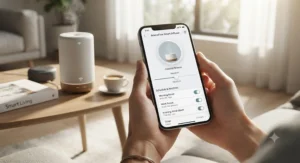
A smart home scent diffuser is a Wi-Fi or Bluetooth-connected fragrance device that lets you control intensity, timing, and scent selection from a smartphone app instead of a manual dial. Unlike a candle or a basic plug-in, it can learn your schedule, sync with other devices, and run unattended for weeks. That single shift — from “set it and hope” to “set it and forget it, correctly” — is why this category has exploded from a niche gadget-show curiosity into something genuinely useful for Canadian homes navigating long winters spent mostly indoors.
We dug into seven real, currently available devices spanning app controlled scent diffuser basics, full smart fragrance system builds, and everything in between, so you can pick based on your space, your budget, and how deep you want to go into home automation ecosystems. Every claim below is grounded in verified specs and aggregated review sentiment — no invented testing, no fabricated five-star quotes, just an honest, Canadian-focused breakdown of what’s actually worth plugging in.
Quick Comparison: Smart Home Scent Diffusers at a Glance
Before the deep dive, here’s the shape of the market in one table. Coverage area, control method, and price band tell you almost everything you need to know before you even look at scent quality.
| Product | Control | Coverage | Price Range (CAD) | Best For |
|---|---|---|---|---|
| Pura 4 Smart Fragrance Diffuser | App + Wi-Fi 6, Alexa/Google routines | Medium-large rooms | C$65-C$110 | Balanced smart home integration |
| Aera Smart Diffuser | App + Wi-Fi | Large open-concept spaces | C$270-C$330 | Maximum scent throw |
| Moodo Smart Aroma Diffuser | App, Alexa, Google, Siri, IFTTT | Medium rooms | C$230-C$270 | Custom scent blending |
| Govee Smart Aroma Diffuser | App, Alexa/Google, Home Assistant | Small-medium rooms | C$55-C$80 | DIY smart home tinkerers |
| ASAKUKI Smart Wi-Fi Essential Oil Diffuser | Tuya app, Alexa/Google | Medium rooms | C$40-C$65 | Budget app control |
| Maxcio Smart Essential Oil Diffuser | Tuya app, Home Assistant compatible | Small-medium rooms | C$35-C$55 | Local smart home builds |
| Sierra Modern Home Smart Wi-Fi Diffuser | App, Alexa/Google | Medium-large rooms | C$45-C$70 | Design-conscious budget buyers |
Looking at the spread, the split is stark: the top three rows are true fragrance-brand ecosystems built around proprietary scent capsules, while the bottom four are Tuya-based ultrasonic diffusers that happen to be smart — and cost a third of the price. Neither approach is “wrong,” but Aera Smart Diffuser and Moodo Smart Aroma Diffuser buyers are paying for scent engineering, while ASAKUKI Smart Wi-Fi Essential Oil Diffuser and Maxcio Smart Essential Oil Diffuser buyers are paying for the smart layer bolted onto a commodity diffuser. Knowing which one you’re actually buying changes how you should evaluate “value” here.
💬 Just one click — help others make better buying decisions too!😊
Top 7 Smart Home Scent Diffusers: Expert Analysis
We picked these seven to cover budget, mid-range, and premium tiers, plus a mix of capsule systems, ultrasonic mist units, and design-forward pieces — because “best” depends heavily on whether you want a set-and-forget appliance or a genuine automated home scenting hobby.
1. Pura 4 Smart Fragrance Diffuser — best all-around smart home integration
The standout here is how unfussy the whole system feels once it’s set up. The Pura 4 Smart Fragrance Diffuser is a wall plug-in unit that holds two proprietary fragrance vials at once, and it uses Wi-Fi 6 connectivity paired with adaptive diffusion that adjusts output based on the ambient temperature of the room it’s in.
Specs translate to real behaviour here: a single vial reportedly lasts up to roughly 120 hours per the brand’s Puralast claims, and the dual-band Wi-Fi 6 radio means it holds a connection more reliably than older single-band smart plugs that drop off busy home networks. That reliability matters more than it sounds — a diffuser that silently disconnects from Wi-Fi is a diffuser that just stops scenting your home without telling you.
Based on the spec comparison against cheaper Tuya diffusers, the Pura 4 Smart Fragrance Diffuser‘s real advantage is polish: automatic vial detection, app-based intensity and scheduling, and voice assistant routines that actually fire reliably. Reviewers consistently note that the app is one of the more intuitive ones in this category, and that switching between two loaded scents takes seconds rather than a full teardown and refill.
Pros:
- ✅ Wi-Fi 6 support holds a stable connection better than older units
- ✅ Adaptive diffusion adjusts to room temperature automatically
- ✅ Two vials let you switch or blend scents without opening the unit
Cons:
- ❌ Proprietary vials cost more per hour than DIY oil refills
- ❌ Currently limited to select fragrance house partnerships
At around C$65-C$110 for the diffuser itself, plus separate vial costs, this sits at the accessible end of the “real smart home ecosystems” tier — a reasonable middle ground for anyone not ready to commit to Aera-level pricing.
2. Aera Smart Diffuser — best for large or open-concept rooms
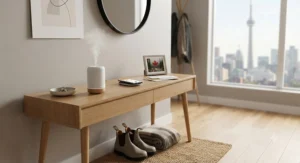
If your issue is that other diffusers just get lost in a big, open-plan living room, the Aera Smart Diffuser is built to solve exactly that. It uses patented microdroplet technology rather than heat or basic ultrasonic misting, and fragrance capsules are rated for roughly 800 hours of use per the manufacturer.
What that 800-hour figure means in practice: compared to a typical candle burning 50 to 80 hours, one Aera Smart Diffuser capsule can outlast ten candles, which reframes the C$75-C$85 CAD-equivalent capsule cost as considerably less painful over a season than it first appears. The trade-off, and reviewers are consistent on this, is audible white noise while the unit is actively diffusing — noticeable enough that light sleepers may want it outside the bedroom.
Here’s what most buyers overlook about this model: the app scheduling is genuinely the feature people keep using long after the novelty wears off, letting you have the house smell like something specific the moment you walk in from work, rather than just “always on.”
Pros:
- ✅ Exceptional scent throw across large or open floor plans
- ✅ App scheduling for time-of-day and intensity control
- ✅ Capsules last far longer per dollar than most candles
Cons:
- ❌ Noticeable operating noise during active diffusion
- ❌ Capsules and device both sit at the premium end of pricing
Expect to pay in the C$270-C$330 range for the device, with capsules running separately — a genuine investment, but one aimed squarely at buyers who’ve already tried cheaper diffusers and found them underwhelming in bigger spaces.
3. Moodo Smart Aroma Diffuser — best for custom scent blending
The Moodo Smart Aroma Diffuser takes a completely different approach from the vial-and-capsule crowd: it holds four scent capsules simultaneously and lets you blend them in the app, essentially turning fragrance into a mixing board rather than a single on/off toggle.
The specs back up the “smart” label more thoroughly than most competitors — it supports Alexa, Google Assistant, Siri, and IFTTT, which is a wider assistant net than almost anything else on this list, and it includes a rechargeable battery good for roughly seven hours of cordless use. What most buyers overlook about this model is how much that IFTTT support unlocks: you can trigger a specific blend when a smart lock disengages, or scale intensity down automatically when a window sensor detects fresh air coming in.
Aggregated review sentiment is genuinely mixed here rather than uniformly glowing — some users report the app can be finicky during initial pairing, and the capsule delivery system uses more fragrance per session than expected if you’re not careful with fan-speed settings. The scent blending capability itself, though, is consistently the feature people highlight as unique to this device.
Pros:
- ✅ Blends up to four scents into custom combinations
- ✅ Broadest smart assistant support: Alexa, Google, Siri, IFTTT
- ✅ Battery-powered portability for up to seven hours cordless
Cons:
- ❌ App setup and pairing can be inconsistent per user reports
- ❌ Capsules can burn through faster than expected at high fan speeds
Priced around C$230-C$270 CAD-equivalent, it’s positioned as a mid-to-premium pick specifically for people who want to tinker — this is not a “plug in and ignore” device, and it shouldn’t be bought as one.
4. Govee Smart Aroma Diffuser — best for DIY smart home builds
For anyone already running Home Assistant or a Homey hub, the Govee Smart Aroma Diffuser solves a real problem: most fragrance-brand diffusers are locked into their own closed apps, while this one plugs into broader smart home platforms via documented local and cloud APIs.
The practical upshot is significant. The Govee Smart Aroma Diffuser supports standard smart home actions — power toggling, work-mode switching, nightlight control — through both Govee’s own cloud API and, for Pro hub users, local-only control that doesn’t depend on the internet staying up. If you’ve ever had a smart device go dark during a Wi-Fi outage, that local-control option is the spec sheet detail that quietly matters most.
Based on the spec comparison, this device won’t out-throw an Aera Smart Diffuser in a big room, and its scent-quality reputation doesn’t match brand-name capsule systems. But for someone building a genuinely unified home automation ecosystems setup — lights, plugs, sensors, and scent all responding to the same triggers — it’s one of the only fragrance devices that plays nicely outside its own walled garden.
Pros:
- ✅ Works with Home Assistant and Homey, not just a single app
- ✅ Local API option avoids full cloud dependency
- ✅ Reasonably priced for a genuinely open smart device
Cons:
- ❌ Scent throw and refinement trail premium capsule brands
- ❌ Local features are gated behind Pro-tier hub hardware
At an estimated C$55-C$80 CAD range, it’s a strong mid-tier value pick precisely because of what it connects to, not because of raw fragrance performance.
5. ASAKUKI Smart Wi-Fi Essential Oil Diffuser — best budget app controlled scent diffuser
The ASAKUKI Smart Wi-Fi Essential Oil Diffuser is the clearest example of the “bolt smarts onto a commodity diffuser” approach, and it does it about as well as this price bracket allows. It runs on the Tuya Smart platform, supports a 500-700ml water tank depending on the version, and connects to both Alexa and Google Home for voice control.
What the spec sheet won’t tell you, but user reports suggest, is how genuinely painless Tuya pairing has become — scan, connect to 2.4GHz Wi-Fi, and Alexa typically discovers the new device within seconds without any manual skill-linking fuss. The seven-colour LED and dual mist-level settings are fairly standard for this category, but the ability to build a weekly schedule directly in the Tuya app, rather than relying on a physical countdown dial, is the actual upgrade over a non-smart diffuser at a similar price.
Reviewers consistently report that the diffuser is quiet, under roughly 35 decibels in most accounts, and that the tank’s larger capacity means fewer overnight refills than smaller ultrasonic units. The honest caveat: it’s an ultrasonic mist diffuser at heart, not a nebulizing or waterless system, so oil concentration and mist consistency will vary more than with the premium capsule-based options above.
Pros:
- ✅ Full Tuya app scheduling, colours, and mist control
- ✅ Alexa and Google Home voice control out of the box
- ✅ Large tank reduces overnight refill frequency
Cons:
- ❌ Ultrasonic mist performance varies more than capsule systems
- ❌ Build quality feels notably more budget than brand-name picks
Sitting around C$40-C$65 CAD, this is the entry point for anyone who wants a genuine app controlled scent diffuser without committing to premium capsule pricing.
6. Maxcio Smart Essential Oil Diffuser — best for local smart home tinkerers
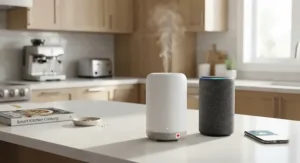
The Maxcio Smart Essential Oil Diffuser covers similar ground to the ASAKUKI pick — 400ml tank, Tuya-based app control, colour-changing LED, auto shut-off — but it’s earned a specific niche among people running fully local, cloud-independent smart homes.
The reason: it’s documented as compatible with Tuya Convert, a community project that flashes alternative firmware onto Tuya-based devices so they run entirely on a local network via Home Assistant, without phoning home to a manufacturer’s cloud server at all. For anyone who’s already down that rabbit hole with switches and plugs, being able to fold a diffuser into the same local ecosystem — no cloud dependency, no risk of a discontinued app bricking the hardware — is a genuinely rare feature in this product category.
For everyone else, the honest answer is that the stock Tuya app experience is nearly identical to its budget competitors: scheduling, mist-level toggling, and Alexa integration, nothing more. Reviewers who kept the stock firmware report over two years of reliable daily use, which is a solid sign for a device in this price bracket, though the light show and Alexa integration are exactly what you’d expect and nothing beyond that.
Pros:
- ✅ Compatible with Tuya Convert for fully local smart home control
- ✅ Reported multi-year reliability from long-term stock-firmware users
- ✅ Simple Alexa integration and app-based scheduling
Cons:
- ❌ Advanced local features require technical setup most buyers will skip
- ❌ Fragrance throw is basic ultrasonic performance, nothing special
At roughly C$35-C$55 CAD, this is less about scent quality and more about which buyers it uniquely serves — and for local-only smart home builders, that niche fit is worth the modest premium over a truly generic diffuser.
7. Sierra Modern Home Smart Wi-Fi Wireless Essential Oil Aromatherapy Diffuser — lightest in its class on design compromise
Rounding out the list, the Sierra Modern Home Smart Wi-Fi Wireless Essential Oil Aromatherapy Diffuser targets buyers who want a device that doesn’t look like a gadget on a shelf. It ships in wood-tone finishes rather than the glossy plastic look common to this price tier, while still offering a full 400ml tank rated for roughly 12 hours of continuous mist.
The specs land squarely in familiar Tuya-diffuser territory: app-based scheduling, Alexa and Google Home compatibility, and adjustable LED lighting that can be dimmed for bedroom use. Based on the spec comparison against the ASAKUKI and Maxcio picks, there’s no meaningful performance gap here — the differentiator is purely aesthetic, and for a device that’s likely to sit visibly on a console table or nightstand, that’s a legitimate reason to pick it over a functionally identical but plainer-looking competitor.
Reviewers consistently frame this one as a “living room” pick rather than a “utility room” pick, precisely because the wood-grain housing blends into home decor in a way most smart diffusers don’t bother attempting. The honest analytical take: you’re paying a modest premium for styling, not for smarter smarts.
Pros:
- ✅ Wood-tone housing that doubles as visible home decor
- ✅ Full app scheduling with Alexa and Google Home support
- ✅ Large 400ml tank rated for roughly 12 hours of mist
Cons:
- ❌ Functionally near-identical to cheaper, plainer Tuya diffusers
- ❌ No unique smart-home features beyond standard voice control
Priced around C$45-C$70 CAD, it’s the pick for anyone whose living room aesthetic is doing at least as much work as the fragrance itself.
Practical Usage Guide: Setting Up Your Smart Diffuser Right
Getting a smart home scent diffuser running well on day one avoids most of the frustration people report in the first month. Start by placing the unit somewhere air actually circulates — a corner behind a couch or inside a cabinet will trap fragrance and make you crank the intensity higher than necessary, wasting oil or vials fast. Most manufacturers recommend open floor space, roughly waist height, away from direct airflow from HVAC vents that would disperse scent unevenly.
During setup, connect to your home’s 2.4GHz Wi-Fi band specifically — nearly every budget Tuya-based diffuser, including the ASAKUKI Smart Wi-Fi Essential Oil Diffuser and Maxcio Smart Essential Oil Diffuser, cannot see 5GHz networks at all, which is the single most common “my diffuser won’t connect” complaint in user reviews. If your router broadcasts a combined SSID, you may need to temporarily split the bands in your router settings just for pairing.
A common first-30-days mistake is running a new diffuser at maximum intensity from day one. Fragrance sensitivity builds a “nose blindness” effect fast, so what smells perfect on day one often gets cranked louder within a week, burning through vials or oil at an accelerating rate. Start at the lowest intensity setting and increase gradually over several days instead. For maintenance, ultrasonic models like the Sierra Modern Home Smart Wi-Fi Wireless Essential Oil Aromatherapy Diffuser benefit from a monthly wipe-down with diluted alcohol to prevent oil residue buildup on the ultrasonic plate, which otherwise reduces mist output over time.
Real-World Scenarios: Matching a Smart Fragrance System to Your Home
Picture a one-bedroom Toronto condo where the main complaint is cooking smells lingering into the living room. That’s a strong case for something like the ASAKUKI Smart Wi-Fi Essential Oil Diffuser scheduled to run a short, higher-intensity burst thirty minutes after typical dinner hours — small space, moderate budget, and scheduling solves the actual problem without needing premium scent throw.
Now picture a family home in the suburbs with an open-concept kitchen-living-dining space that swallows scent whole. This is where the Aera Smart Diffuser earns its premium price tag — its microdroplet technology is specifically built to fill larger volumes, and the app scheduling means it can ramp up before guests arrive without anyone manually adjusting a dial.
Finally, consider a smart home enthusiast who’s already got Home Assistant running lights, locks, and sensors and wants scent folded into existing automations — say, a specific fragrance triggering when the front door unlocks after work. That’s precisely the buyer the Govee Smart Aroma Diffuser or Maxcio Smart Essential Oil Diffuser were built for, since their compatibility with broader home automation ecosystems is the whole point, not an afterthought.
How to Choose a Smart Home Scent Diffuser
What is a smart home scent diffuser? It’s a fragrance device that connects to Wi-Fi or Bluetooth, letting you control scent intensity, timing, and scheduling through a smartphone app or voice assistant instead of manual dials, and often integrating with broader home automation ecosystems.
Here’s how to narrow the field with expert reasoning at each step:
- Measure your room first. Coverage claims vary wildly, and an app controlled scent diffuser rated for a 300-square-foot bedroom will underperform badly in an 800-square-foot open living area.
- Decide between capsule systems and DIY oil refills. Capsule-based devices like Pura 4 Smart Fragrance Diffuser cost more per hour but need zero measuring or spillage; ultrasonic oil diffusers cost less but require you to manage your own oil blends.
- Check the app’s assistant support. If you’re already deep in one ecosystem — Alexa, Google, or Apple — confirm the device actually integrates with it rather than requiring its own separate app forever.
- Confirm the Wi-Fi band requirement. Most budget Tuya diffusers need 2.4GHz specifically; skipping this check is the number one setup headache reported in reviews.
- Weigh noise tolerance for bedroom use. Devices with active fans or misting mechanisms, notably the Aera Smart Diffuser, produce audible operating noise that some light sleepers find disruptive.
- Price out the refill economics, not just the device. A cheaper diffuser with expensive proprietary refills can cost more over a year than a pricier device with commodity oil.
- Look for smart plug compatibility as a fallback. Even a basic, non-app diffuser can gain scheduling power when plugged into a smart plug, which matters if you decide a full smart fragrance system isn’t worth the premium.
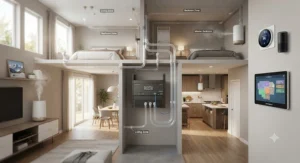
App Controlled Scent Diffuser vs Traditional Reed & Plug-In Diffusers
The comparison isn’t really about scent quality — a well-made reed diffuser or wax warmer can smell just as good as any smart device. It’s about consistency and control over time. A traditional reed diffuser fades gradually and unevenly as oil wicks up and evaporates, meaning the scent intensity on day one and day twenty are noticeably different, with no way to correct that drift. An app controlled scent diffuser, by contrast, maintains programmed intensity levels regardless of how much fragrance remains until the tank or vial actually runs dry.
| Factor | Reed Diffuser | Plug-In Air Freshener | Smart Home Scent Diffuser |
|---|---|---|---|
| Scent consistency over time | Fades unevenly | Fades unevenly | Stays consistent via app control |
| Scheduling | None | None or basic timer | Full app or voice scheduling |
| Remote control | None | None | Yes, via smartphone |
| Best For | Small bathrooms, closets | Renters, single rooms | Whole rooms with automation needs |
Reading the table, the trade-off is clear: reed diffusers and plug-ins win on upfront simplicity and cost, while a smart fragrance system wins on control precision — you decide exactly when and how strong the scent runs rather than accepting whatever a wick or heating element happens to release that day. For renters specifically, plug-in air fresheners remain the lowest-commitment option since nothing needs Wi-Fi credentials or an app account tied to a device you might not take with you.
Smart Plug Compatibility and Home Automation Ecosystems
Not every good diffuser needs to be “smart” out of the box. Smart plug compatibility is the workaround that lets a basic, non-connected diffuser gain scheduling and remote control anyway — plug it into a Wi-Fi smart plug from any major brand, and suddenly you can turn it on and off from an app or voice command, even though the diffuser itself has no idea it’s part of a smart home.
The catch is real: a smart plug only controls power, not intensity, mist level, or scent-blending features baked into an actual smart diffuser like the Moodo Smart Aroma Diffuser. You get on/off scheduling and nothing more nuanced. Where this genuinely shines is with cheap ultrasonic diffusers that already have manual intensity dials — set the dial once, then let a smart plug handle the timing entirely.
For anyone building a broader system, the rise of the Matter standard is worth watching. As iPhone in Canada has reported, major platforms including Apple, Google, Amazon, and Samsung have progressively rolled out Matter support across their ecosystems, which is gradually reducing the compatibility guesswork between brands. A diffuser or smart plug that supports Matter today is a safer long-term bet than one locked into a single manufacturer’s app that might not exist in five years.
Scheduling Scent Release: Building an Automated Home Scenting Routine
Good scheduling scent release habits come down to matching intensity and timing to actual daily rhythm rather than running any diffuser continuously. A morning burst thirty minutes before you typically wake up, timed through the app on something like the Pura 4 Smart Fragrance Diffuser, means you walk into a already-scented space rather than starting a device cold.
For homes with pets or young children, shorter, more frequent bursts at lower intensity tend to outperform one long continuous run — it uses less fragrance overall and avoids the sensory overload of a room that’s been steadily accumulating scent for hours. Evening scheduling before guests arrive is where automated home scenting earns its keep most obviously: set a 45-minute pre-arrival burst once, and never think about it again for that occasion.
One scheduling mistake worth flagging: setting the exact same schedule year-round. Winter homes are sealed tighter with less air exchange, so the same intensity that felt subtle in summer can feel overwhelming once windows stay shut for months. Revisiting your schedule seasonally, dropping intensity in winter and reserving high settings for the more ventilated warmer months, keeps automated home scenting from becoming a source of the same discomfort occupational health guidance from Canada’s Centre for Occupational Health and Safety warns can affect the fragrance-sensitive.

Features That Actually Matter (And Those That Don’t)
Cutting through the marketing noise: app scheduling, reliable 2.4GHz Wi-Fi connectivity, and a tank or vial size that matches your room are the features that genuinely change day-to-day experience. Everything else in the spec sheet is secondary at best.
Colour-changing LED lighting, present on nearly every budget Tuya diffuser including the ASAKUKI Smart Wi-Fi Essential Oil Diffuser, is pure aesthetic filler that has zero bearing on scent performance — nice to have, irrelevant to the buying decision. Similarly, “voice control” sounds impressive on a box, but in practice it usually only toggles power on and off; intensity and scheduling still happen in the app regardless of what the packaging implies.
What actually matters and gets underplayed: tank material and cleaning ease. A diffuser with a narrow-necked ultrasonic reservoir is genuinely harder to clean thoroughly than a wide-mouth design, and oil residue buildup is the leading cause of reduced mist output reported across budget diffuser reviews. Similarly, auto shut-off when water runs dry — standard on most models here but worth double-checking — protects the ultrasonic plate from burning out, a failure mode that ends a diffuser’s life far faster than normal wear.
Common Mistakes When Buying a Smart Fragrance System
The most frequent mistake is buying based on room-coverage marketing claims without checking whether that number reflects a single-oil-drop light scent or a fully-loaded strong setting — manufacturers rarely specify which, and the difference matters enormously for open-concept spaces.
A second common error: ignoring the 2.4GHz-only Wi-Fi limitation until after purchase. Many newer mesh router systems default to a combined band name, and without splitting bands temporarily during setup, budget devices like the Maxcio Smart Essential Oil Diffuser simply won’t appear during pairing, leading to returns that could have been avoided with five minutes of router research beforehand.
Third, buyers frequently underestimate ongoing refill costs when comparing a premium capsule system against a cheaper oil-based unit. Running the numbers over a full year, rather than just comparing sticker prices, often flips which option is actually cheaper — and skipping that math is how people end up feeling burned by an “affordable” device that turns out to have expensive consumables.
Long-Term Cost & Maintenance
Total cost of ownership diverges sharply across this category, and it’s worth running the actual math before deciding. A premium capsule system like the Aera Smart Diffuser costs more upfront and per-refill, but at roughly 800 hours per capsule, the effective cost per hour of use is often lower than continuously buying essential oil bottles for a budget ultrasonic unit running daily.
| Tier | Device Price (CAD) | Refill Cost | Best For |
|---|---|---|---|
| Budget (ASAKUKI, Maxcio) | C$35-C$65 | Standard oil, low per-bottle cost | Occasional or light daily use |
| Mid-range (Govee, Sierra Modern Home) | C$45-C$80 | Standard oil, low per-bottle cost | Daily use, DIY ecosystems |
| Premium (Pura 4, Moodo, Aera) | C$230-C$330 | Proprietary vials/capsules, higher per-unit cost | Heavy daily use, hands-off refills |
Interpreting this table honestly: budget ultrasonic diffusers win on upfront cost every time, but oil consumption scales with how often you actually run the unit, so heavy daily users may find the math closes the gap with premium systems faster than expected. Maintenance-wise, ultrasonic plates need monthly cleaning regardless of price tier to avoid mineral or oil buildup, while capsule systems like Pura 4 Smart Fragrance Diffuser largely avoid that chore entirely since the fragrance never touches the misting mechanism directly.
Safety, Certification & Regulations for Home Scenting in Canada
Electrical safety certification matters more than most buyers think about when shopping for any plug-in device in Canada. Products carrying the CSA mark have been independently tested against Canadian Electrical Code requirements, and as CSA Group explains, that certification is what signals a product has actually been verified against recognized safety and energy-efficiency standards rather than simply claiming compliance on the box. When comparing near-identical budget diffusers, checking for this certification is a genuinely useful tiebreaker.
Beyond electrical safety, there’s a health-and-consideration angle worth taking seriously, particularly for shared or multi-person households. Fragrance sensitivity is a documented issue, and running any diffuser — smart or not — at excessive intensity in a home with guests, roommates, or family members who have respiratory sensitivities can cause real discomfort. Keeping intensity moderate and scheduling runs rather than leaving a unit on continuously is a simple, low-cost way to avoid that problem entirely, whether or not anyone in your household has flagged a concern yet.
FAQ
❓ Can a smart home scent diffuser work without Wi-Fi?
❓ Do smart diffusers work with existing smart plugs?
❓ How long do fragrance capsules or vials actually last?
❓ Is a smart home scent diffuser safe to leave running overnight?
❓ Which smart fragrance system works best with Alexa and Google Home together?
Conclusion
After weighing scent throw, app reliability, and how well each device plays with broader home automation ecosystems, the honest takeaway is that there’s no single universal winner here — just a genuinely good fit depending on your space and how deep you want to go. If you want a balanced, reliable entry into real smart fragrance systems, the Pura 4 Smart Fragrance Diffuser earns its spot through polish and Wi-Fi 6 stability. If your problem is a stubbornly large room that swallows scent whole, the Aera Smart Diffuser‘s microdroplet throw solves that specific issue better than anything else on this list.
Budget-conscious buyers shouldn’t feel like they’re settling, either — the ASAKUKI Smart Wi-Fi Essential Oil Diffuser and Maxcio Smart Essential Oil Diffuser deliver genuine app control and voice assistant support at a fraction of the premium-tier price, and for anyone building a local, cloud-independent smart home, the Maxcio Smart Essential Oil Diffuser‘s Tuya Convert compatibility is a legitimately rare feature worth seeking out.
Whichever tier you land in, the real upgrade over a traditional diffuser isn’t the fragrance itself — it’s the control. Scheduling, remote adjustment, and app-based intensity turn home scenting from a chore you forget about into a background system that just quietly works, the same way good lighting or a well-tuned thermostat does.
Recommended for You
- Battery Operated Diffuser For Travel: 7 Best Picks 2026
- Cordless Scent Diffuser: 7 Best Picks Ranked For Canada 2026
- 7 Best Wi-Fi Enabled Scent Diffuser Picks For 2026 (Smart; Proven)
✨ Found this helpful? Share it with your friends! 💬🤗
