
In This Article
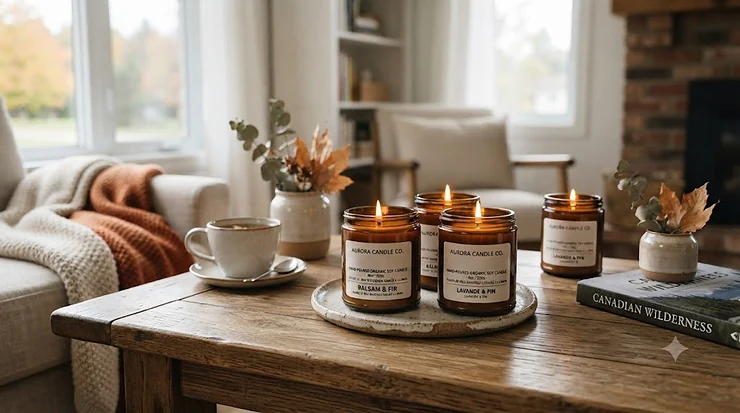
There’s a particular kind of disappointment that comes from lighting a candle you thought was “clean” and getting a headache twenty minutes later. If that’s happened to you, you’re not imagining things, and you’re also not alone — it’s the reason so many Canadians go hunting for organic soy candles in the first place. What is an organic soy candle? In plain terms, it’s a candle made primarily from soybean-derived wax, typically paired with a lead-free cotton or wood wick and fragranced with essential oils or phthalate-free fragrance oils, positioned as a gentler alternative to petroleum-based paraffin. The word “organic” gets used loosely in this category (more on that later), but the intent is consistent: fewer synthetic inputs, cleaner combustion, and ingredients you can actually picture coming from a farm rather than a refinery.
This guide exists because the candle aisle — online or in-store — makes it genuinely hard to tell a thoughtfully made soy candle from a marketing exercise with a leaf on the label. We dug into real product specifications, aggregated customer feedback, and Canadian safety regulations so you’re not left guessing. You’ll get a full breakdown of seven real, currently available options spanning budget to premium, a look at how organic soy candles compare with natural beeswax candles, and straight answers on wick safety, phthalate-free candles, and plant-based wax in general. Somewhere around your third or fourth candle purchase, you start noticing which brands are consistent and which ones just smell nice for the first two burns before the scent throw collapses — this article should save you a few of those trial-and-error rounds. Let’s get into it.
Quick Comparison Table
Before the deep dive, here’s the lay of the land. Every one of these candles leans on soy, palm, or beeswax rather than paraffin, and every one avoids lead-core wicks, which have been prohibited under Canada’s Candles Regulations for over two decades — a rule the Wikipedia entry on soy candles contextualizes well alongside how soy wax is actually produced through hydrogenation of soybean oil.
| Candle | Wax Type | Approx. Burn Time | Price Range (CAD) | Best For |
|---|---|---|---|---|
| Mrs. Meyer’s Clean Day Soy Aromatherapy Candle | Soy/vegetable wax blend | 25–35 hrs | Under C$20 | Budget everyday scenting |
| Chesapeake Bay Candle Balance + Harmony | Natural soy wax blend | Up to 50 hrs | C$20–C$30 | Value-conscious long burns |
| Sweet Water Decor Soy Candle | 100% US-grown soy wax | 40+ hrs | C$25–C$35 | Sensitive households wanting phthalate-free candles |
| LA JOLIE MUSE Vanilla Coconut Candle | Natural soy wax, wood wick | Up to 90 hrs | C$35–C$45 | Ambiance and large-room scent throw |
| Aloha Bay Organic Palm Wax Candle | Organic palm/coconut wax | 20–40 hrs | C$10–C$25 | 100% essential-oil, GMO-free purists |
| Big Dipper Wax Works Pure Beeswax Pillar | 100% pure beeswax | 60–90 hrs | C$20–C$35 | Allergy-conscious, unscented preference |
| Bluecorn Beeswax 3-Wick Candle | 100% pure beeswax | 25–35 hrs | C$45–C$60 | Premium air-purifying glow |
Looking at this spread, the range in burn time alone should tell you something: LA JOLIE MUSE Vanilla Coconut Candle‘s wood-wick 19 oz jar can outlast three of the smaller budget options combined, which matters more than the sticker price once you calculate cost-per-hour. Meanwhile, the two beeswax entries — Big Dipper Wax Works Pure Beeswax Pillar and Bluecorn Beeswax 3-Wick Candle — sit apart from the soy crowd entirely, since pure beeswax burns hotter and slower and is worth considering even if “soy” is what brought you here. If your priority is verified phthalate-free candles for a household with kids, pets, or fragrance sensitivities, Sweet Water Decor Soy Candle and Aloha Bay Organic Palm Wax Candle are the two worth reading closely first.
💬 Just one click — help others make better buying decisions too!😊
Top 7 Organic Soy Candles: Expert Analysis
Coverage below spans budget, mid-range, and premium tiers, plus wax-type variants (soy, palm, and beeswax) so you can weigh trade-offs honestly rather than just picking whatever’s cheapest.
1. Mrs. Meyer’s Clean Day Soy Aromatherapy Candle — best budget pick for everyday scenting
Mrs. Meyer’s Clean Day Soy Aromatherapy Candle built its reputation on being the candle you can grab at the grocery store without agonizing over it, and that accessibility is genuinely its strongest asset. It’s made from a soy and vegetable wax base, paired with a lead-free cotton wick rated for roughly 25 to 35 hours depending on the scent and jar size (4.9 oz or 7.2 oz). The practical upshot: a 7.2 oz jar can realistically get you through a full month of evening burns if you’re lighting it three or four times a week, which is hard to beat at this price tier. Based on the spec comparison with pricier soy candles in this list, what you’re sacrificing is scent complexity — Mrs. Meyer’s leans on straightforward garden-inspired notes (Honeysuckle, Lavender, Basil) rather than layered fragrance profiles, and that’s a deliberate trade-off for accessibility over nuance. Reviewers consistently report that the scent throw is moderate rather than room-filling, which actually suits smaller spaces like bathrooms or home offices better than open-concept living rooms. This candle is for the person who wants “clean-ish” without ceremony: not certified organic, but transparent about ingredients and a known quantity at checkout after checkout.
Pros:
- ✅ Reliable lead-free cotton wick with consistent 25–35 hour burn
- ✅ Widely available and easy to reorder favourite scents
- ✅ Recyclable glass jar doubles as storage after use
Cons:
- ❌ Scent throw is modest compared to premium soy blends
- ❌ Not certified organic despite “clean” branding
Priced under C$20 at the time of research, this is the entry point of the list, and the value verdict is straightforward: it’s the safe, sensible choice if you’re testing whether soy candles suit your home before committing to pricier options.
2. Chesapeake Bay Candle Balance + Harmony — best 50-hour burn for the price
Chesapeake Bay Candle Balance + Harmony takes a different approach than Mrs. Meyer’s: instead of keeping things minimal, it leans into aromatherapy positioning, with fragrance profiles built around wellness themes like calm, clarity, and confidence. The candle uses a natural soy wax blend with a self-trimming wick, and the medium-jar format is rated for up to 50 hours of burn time — nearly double what you’d get from a comparably priced paraffin candle. Here’s what the spec sheet won’t tell you outright: that 50-hour figure assumes disciplined burning (roughly 3 to 4 hours per session, letting the wax pool reach the jar’s edge each time), so impatient burners who blow it out after twenty minutes will see meaningfully shorter real-world life. What most buyers overlook about this model is the frosted glass jar design, which isn’t just aesthetic — it diffuses the flame’s glow more evenly than clear glass, making it a strong pick for anyone using candles as ambient lighting rather than pure fragrance delivery. Aggregated review sentiment points to strong scent throw in living-room-sized spaces, with the Water Lily Pear and Lavender Thyme variants getting the most consistent praise for balance between floral and grounding base notes.
Pros:
- ✅ Up to 50-hour burn time beats most mid-range competitors
- ✅ Frosted jar design doubles as ambient home décor
- ✅ Strong, consistent scent throw in medium to large rooms
Cons:
- ❌ Soy wax blend, not 100% soy — check label if that distinction matters to you
- ❌ Wellness-themed scent names can feel gimmicky to some buyers
Sitting in the C$20 to C$30 range, this is the candle to reach for when you want a genuine value-per-hour advantage without stepping up to premium pricing.
3. Sweet Water Decor Soy Candle — best phthalate-free pick for sensitive homes
If your household includes someone with fragrance sensitivities, asthma, or a general aversion to synthetic candle chemistry, Sweet Water Decor Soy Candle deserves to be at the top of your shortlist. It’s made from 100% US-grown soy wax with a 100% cotton wick that’s explicitly lead- and zinc-free, and the brand states its entire candle line is gluten-free, phthalate-free, and non-GMO — claims that are consistent across its product listings rather than isolated to one flagship item. The 9 oz jar format burns for roughly 40-plus hours, and reviewers consistently note that the scent throw holds up well through the final third of the candle, which is where a lot of cheaper soy candles start to fade. On paper this means you’re getting a candle that satisfies both halves of the “organic candles no chemicals” search intent: plant-based wax and a wick free of the metal cores that used to be common in imported candles. Where it earns extra credit is transparency — Sweet Water Decor publishes its “phthalate free” claims prominently rather than burying them, which matters when you’re trying to verify rather than just trust a label.
Pros:
- ✅ Explicitly phthalate-free, gluten-free, and lead-free across the line
- ✅ 100% US-grown soy wax with consistent scent throw to the last burn
- ✅ Woman-owned small business with transparent sourcing claims
Cons:
- ❌ Fragrance oils, not pure essential oils, in most scents
- ❌ Smaller 9 oz jar means more frequent reordering than the 15 oz matte line
At roughly C$25 to C$35, this candle earns its place through documentation as much as performance — it’s the pick for buyers who want to actually verify what “clean” means rather than take it on faith.
4. LA JOLIE MUSE Vanilla Coconut Candle — best wood-wick option for ambiance
LA JOLIE MUSE Vanilla Coconut Candle is the largest and longest-burning entry on this list, and it’s built for people who treat candles as a room feature rather than a quick fragrance boost. The 19 oz jar uses a natural soy wax base with a cherry wood wick, rated for approximately 90 hours of burn time — nearly triple what you’d get from the Mrs. Meyer’s entry above. What most buyers overlook about wood wicks specifically is that they create wider, shallower wax pools than cotton wicks, which is why this candle throws scent so effectively in larger rooms: more surface area means more fragrance released per hour. Reviewers consistently mention the distinctive crackle sound the wood wick produces, which some find genuinely relaxing and others find unnecessary — it’s a legitimate personal-preference fork, not a defect either way. Based on the spec comparison with the rest of this list, the brand’s claim of paraben-free, cruelty-free soy wax is credible and matches its documented ingredient positioning, though it’s worth noting this candle blends soy with other natural waxes rather than being single-source soy.
Pros:
- ✅ Roughly 90-hour burn time, longest on this list
- ✅ Wood wick creates a wider wax pool for stronger scent throw
- ✅ Recyclable glass jar and paper packaging
Cons:
- ❌ Wood wick crackle is a love-it-or-hate-it feature
- ❌ Higher upfront price than single-wick soy competitors
In the C$35 to C$45 range, the cost-per-hour math actually favours this candle over several cheaper options once you divide price by burn time — a detail easy to miss if you’re only comparing sticker prices.
5. Aloha Bay Organic Palm Wax Candle — best 100% essential-oil, GMO-free pick
Aloha Bay Organic Palm Wax Candle takes a genuinely different technical approach than the rest of this list, and it’s worth understanding why. The brand has been vocal that it prefers palm-based wax over “genetically modified, chemically distilled, commercially grown soy wax,” using RSPO-certified palm and fair-trade coconut wax blends instead, scented exclusively with essential oils rather than synthetic fragrance oils. Here’s what the spec sheet won’t tell you but the ingredient philosophy makes clear: this is the closest thing on this list to a true “no synthetic chemistry” candle, since essential oils are steam-distilled plant extracts rather than lab-formulated fragrance compounds. That comes with a real trade-off, though — reviewers consistently note that essential-oil scent throw is noticeably softer and shorter-lived than fragrance-oil candles, so if you’re expecting a Sweet Water Decor-level room fill, recalibrate your expectations. The smaller votive format (around 2 oz) burns for roughly 20 hours, while larger pillar formats extend well beyond that. What most buyers overlook is that Aloha Bay’s GMO-free and fair-trade sourcing claims are backed by actual certifications (RSPO, WFTO membership) rather than just marketing language, which is genuinely rare in this category.
Pros:
- ✅ Scented with 100% essential oils, not synthetic fragrance
- ✅ RSPO-certified palm wax and fair-trade sourcing credentials
- ✅ GMO-free, paraffin-free, and soy-free for buyers avoiding soy specifically
Cons:
- ❌ Subtler scent throw than fragrance-oil competitors
- ❌ Smaller format sizes mean shorter total burn life per purchase
Ranging from roughly C$10 for small votives to C$25 for larger formats, this is the pick for the purist who wants ingredient transparency over room-filling projection.
6. Big Dipper Wax Works Pure Beeswax Pillar Candle — best beeswax alternative for allergy-prone homes
Big Dipper Wax Works Pure Beeswax Pillar Candle steps outside soy entirely, and it’s included here because so many people searching for organic soy candles are really searching for “the cleanest possible candle,” and beeswax is a legitimate contender for that title. Made from 100% pure beeswax sourced partly from British Columbia beekeepers, with a cotton wick and no added fragrance, this 3-inch pillar burns for roughly 60 hours with a natural, faint honey aroma rather than an added scent. On paper this means zero fragrance-oil chemistry whatsoever — a genuinely different proposition from every soy candle on this list. Reviewers consistently describe the burn as dripless and soot-free, which tracks with beeswax’s naturally higher melting point compared to soy or paraffin. What most buyers overlook is that pure beeswax candles also function as mild natural ionizers, releasing negative ions as they burn that some research suggests can bind to airborne particulates — though it’s worth hedging honestly here, since the air-quality claims around beeswax candles are more anecdotal than rigorously proven in independent studies. For households managing fragrance sensitivities or asthma, the unscented format removes an entire category of potential irritant.
Pros:
- ✅ 100% pure beeswax with no synthetic fragrance whatsoever
- ✅ Roughly 60-hour burn time in a compact pillar format
- ✅ Naturally dripless, soot-free burn reported consistently
Cons:
- ❌ No fragrance option for those who want scented candles
- ❌ Higher cost per ounce than soy wax equivalents
At approximately C$20 to C$35 depending on pillar size, this candle is less about matching soy candles head-to-head and more about offering the next tier up in ingredient simplicity for buyers willing to skip fragrance entirely.
7. Bluecorn Beeswax 3-Wick Candle — best premium splurge for air-purifying glow
Closing out the list is Bluecorn Beeswax 3-Wick Candle, the premium ceiling of this comparison. Made from 100% pure beeswax with explicit paraffin- and soy-free labelling, the 10 oz three-wick format is designed to throw more light and warmth than a single-wick candle of comparable size, burning for roughly 25 to 35 hours across all three wicks combined. Based on the spec comparison with Big Dipper Wax Works Pure Beeswax Pillar Candle, the three-wick design trades total burn time for a bigger, brighter flame footprint — better suited to open living spaces or dining tables than a single steady glow. Reviewers consistently highlight the American-made sourcing and the noticeably warmer light temperature compared to soy candles, which several attribute to beeswax’s naturally golden hue diffusing through the flame. What most buyers overlook about premium beeswax pricing is that you’re paying for a slower supply chain — beeswax yields are far lower per hive than soybean crop yields per acre, which is the honest economic reason these candles cost roughly double their soy counterparts. If your budget allows one splurge purchase from this list, this is the one that photographs best and burns longest per gram of raw material used.
Pros:
- ✅ Three-wick design throws significantly more light than single-wick options
- ✅ Explicitly paraffin-free and soy-free for beeswax purists
- ✅ American-made with traceable sourcing
Cons:
- ❌ Premium price point, roughly double comparable soy candles
- ❌ Unscented, so it won’t replace a fragrance-focused soy candle
Expect to pay in the C$45 to C$60 range at the time of research, positioning this candle firmly as a gift-tier or special-occasion purchase rather than a weekly staple.
Practical Usage Guide: Getting the Most From Your Organic Soy Candle
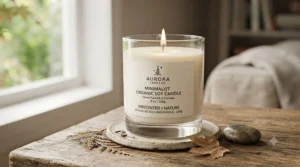
Soy and beeswax candles reward a bit of technique that paraffin candles are more forgiving about skipping. On the first burn, let the wax pool reach the full diameter of the jar before extinguishing — this can take one to two hours depending on jar width, and skipping it causes “tunneling,” where the candle burns a narrow well down the middle and leaves wasted wax clinging to the sides for the rest of its life. Trim the wick to a quarter inch before every single light, not just the first one; soy wax in particular tends to build up a mushroomed wick tip that causes uneven, sooty flames if left untrimmed for multiple burns. In the first 30 days, the most common mistake buyers make is over-fragrancing a room by burning multiple candles simultaneously in a small space, which paradoxically dulls your nose to any single scent rather than intensifying it — one candle per room, burned for a controlled two-to-four-hour window, actually delivers a stronger perceived fragrance than several candles burning at once.
For maintenance beyond the burn itself, keep soy and beeswax candles away from direct sunlight and heat sources between uses, since both wax types are softer than paraffin and can discolour or warp in a hot car or a sunny windowsill. If you’re using a wood-wick candle like LA JOLIE MUSE Vanilla Coconut Candle, resist the urge to trim the wick shorter than a quarter inch — an overly short wood wick struggles to sustain a flame and will repeatedly self-extinguish, which frustrates a lot of first-time wood-wick owners who assume the product is defective. Once you’re down to about half an inch of wax remaining in a jar candle, stop burning it; the glass gets dangerously hot at that stage and the reduced wax depth increases fire risk. Rinse and reuse the empty jars for pantry storage or as small planters once the wax and wick residue is fully removed — most of these vessels are genuinely nice enough to have a second life beyond the recycling bin.
Real-World Scenarios: Which Candle Fits Your Life?
The apartment-dwelling renter on a tight budget. If you’re in a smaller space and lighting candles a few times a week rather than daily, Mrs. Meyer’s Clean Day Soy Aromatherapy Candle is genuinely well-matched to that use pattern — its moderate scent throw won’t overwhelm a studio apartment, and the lower price point means restocking doesn’t strain a student or early-career budget.
The household managing fragrance sensitivities. For a home where someone reacts to synthetic fragrance, pairing Sweet Water Decor Soy Candle for lightly scented rooms with Big Dipper Wax Works Pure Beeswax Pillar Candle for fully unscented spaces like bedrooms gives you flexibility without gambling on an unfamiliar brand’s chemistry.
The host who entertains regularly. If your living and dining rooms need to smell intentional when guests arrive, LA JOLIE MUSE Vanilla Coconut Candle‘s long burn time and strong scent throw make it a low-maintenance choice you can light an hour before company arrives and trust to carry the room, while Bluecorn Beeswax 3-Wick Candle doubles as a genuine centerpiece for a dinner table thanks to its wider flame spread.
How to Choose Organic Soy Candles
- Check the wax composition, not just the front label. “Soy wax blend” and “100% soy wax” are different products with different burn behaviour — the ingredients list on the back tells you more than marketing copy on the front.
- Confirm the wick material explicitly. Look for “cotton,” “wood,” or “hemp” wick language; lead-core wicks have been banned in Canada since the early 2000s, but imported novelty candles can still slip through, so verifying rather than assuming is worth the extra thirty seconds.
- Match burn time to your actual usage pattern. A 90-hour candle is wasted money if you only burn candles occasionally and the fragrance degrades before you finish it — shorter-burning, smaller jars sometimes deliver better real value for infrequent users.
- Decide whether phthalate-free candles matter enough to verify. If fragrance sensitivity is a household concern, prioritize brands that explicitly state phthalate-free status rather than assuming “natural” implies it.
- Weigh essential oil versus fragrance oil scenting. Essential oils feel more “pure” but throw scent more subtly and cost more per ounce; fragrance oils throw stronger and last longer but introduce more synthetic compounds, even when phthalate-free.
- Factor in jar reusability and packaging. Glass jars you’ll actually repurpose add real value beyond the burn itself, while intricate multi-material packaging often just becomes landfill.
- Set a price-per-hour benchmark before you shop. Divide the price by the stated burn time for a couple of candles you’re considering — it reframes “expensive” and “cheap” in a way sticker price alone can’t.
Common Mistakes When Buying Organic Soy Candles
The single most common mistake is assuming “soy” automatically means “organic” or “chemical-free.” As covered in the honest breakdown above, soy wax itself typically isn’t certified organic even when soybeans were organically grown, because the hydrogenation process used to solidify soybean oil into wax isn’t compatible with organic certification standards — so treat “organic soy candle” as a marketing category rather than a guaranteed certification. A second frequent error is ignoring burn time entirely and comparing candles purely on jar size or price; a large jar with a short-burning wick can actually cost more per hour of use than a smaller candle engineered for efficiency. Buyers also commonly overlook fragrance oil disclosure — a candle can be labeled “phthalate-free” while still containing dozens of other synthetic fragrance compounds, so phthalate-free is a meaningful but incomplete safety signal, not a blanket “chemical-free” guarantee. Finally, plenty of shoppers skip reading the wick material specification altogether, which matters more than it should given that lead-core wicks, while illegal in Canada, have occasionally turned up in Health Canada recall notices for imported novelty products sold through third-party online marketplaces.
Organic Soy Candles vs Traditional Paraffin Candles
| Factor | Organic Soy Candles | Traditional Paraffin Candles |
|---|---|---|
| Source material | Renewable soybean crop | Petroleum byproduct |
| Burn cleanliness | Lower soot, cleaner glass | Higher soot buildup over time |
| Melting point | Lower (49–82°C), softer wax | Higher, more heat-resistant |
| Typical price | Moderate to premium | Generally lower |
| Best For | Health-conscious buyers wanting renewable wax | Budget buyers prioritizing lowest upfront cost |
The efficiency and cleanliness gap here isn’t marketing spin — soy wax’s lower melting point genuinely does correlate with less soot deposit on jars and nearby surfaces over repeated burns, which is part of why so many soy converts say their walls and lampshades stay cleaner. That said, paraffin’s higher melting point gives it a practical edge in hot climates or sunny rooms, where soy and beeswax candles can soften or sweat. If pure economics is your only filter, paraffin still wins on shelf price; but factor in that soy candles from this list, like Sweet Water Decor Soy Candle, consistently deliver 40-plus hours per jar, narrowing the real cost-per-hour gap considerably.
✨ Ready to switch your candle drawer over to cleaner-burning options?
🔍 Take your home fragrance routine to the next level. Browse the full lineup above and click through to check current pricing and availability on your favourites. A cleaner-burning candle rotation is a small swap that adds up to genuinely fresher-smelling air over time.
Natural Beeswax Candles: How They Stack Up Against Soy
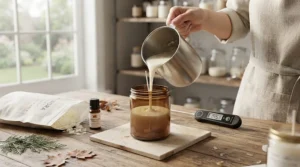
Natural beeswax candles occupy a different tier than soy in this category, and it’s worth being direct about why some buyers researching organic soy candles end up switching to beeswax entirely. Beeswax has a naturally higher melting point than soy wax, which translates to longer burn times per gram and a wax that holds its shape better in warm rooms — both Big Dipper Wax Works Pure Beeswax Pillar Candle and Bluecorn Beeswax 3-Wick Candle demonstrate this with burn times that rival or exceed several soy entries despite smaller overall wax volume. Beeswax also burns with a naturally warm, golden flame and a faint honey scent even when unfragranced, whereas unscented soy wax tends to be closer to odourless. The trade-off is cost and scent versatility: beeswax is significantly more expensive per ounce because it’s harvested from bee colonies rather than farmed at industrial scale, and because beeswax has its own natural aroma, it doesn’t take on added fragrance as cleanly as soy does — which is why heavily scented candles are almost always soy, coconut, or paraffin-based rather than pure beeswax. If your priority is the absolute minimum ingredient list, beeswax edges out soy; if you want strong, specific fragrance experiences, soy remains the more practical plant-based choice.
Cotton Wick vs Lead Wick: What Canadian Shoppers Need to Know
This is a topic worth getting factually precise about rather than just repeating internet folklore. Metal-core wicks — often containing lead, though sometimes zinc or tin instead — were once used in candle manufacturing because the rigid core helped the wick stand upright in softer waxes. Health Canada moved decades ago to address this: as reported at the time by the Globe and Mail’s coverage of the federal crackdown on candle hazards, regulators found that a meaningful share of tested candles contained wick cores that were more than half lead by weight, prompting labelling and composition rules under the Hazardous Products Act. That regulatory groundwork was later folded into the Candles Regulations under the Canada Consumer Product Safety Act, which continues to govern what can legally be sold as a candle in Canada today. Every candle featured in this article uses a cotton or wood wick rather than a metal core, which is standard practice among reputable soy and beeswax candle makers and consistent with what current Canadian rules require.
Here’s what the spec sheet won’t tell you: even though lead-core wicks are illegal, Health Canada has issued recent recall notices for imported novelty and relight candles sold through third-party marketplace sellers on major platforms, which is a reminder that “sold in Canada” doesn’t automatically mean “compliant with Canadian regulations” when the seller is a foreign third party rather than the platform itself. Reviewers consistently note that reputable soy candle brands disclose wick material directly on the product listing — if a candle’s description is vague about wick composition, that’s a reasonable signal to look elsewhere rather than assume compliance.
Plant-Based Wax Explained: Soy, Coconut, Palm & Beeswax
“Plant-based wax” is an umbrella term covering several genuinely different materials, and understanding the differences helps explain why the seven candles above vary so much in price and performance. Soy wax, used in most of the candles on this list, is produced by fully hydrogenating soybean oil, a process that converts the oil’s natural fatty acids into a solid, waxy structure with a melting point typically between 49°C and 82°C. Coconut wax, used in blends by LA JOLIE MUSE Vanilla Coconut Candle and Aloha Bay Organic Palm Wax Candle, is prized for exceptionally strong cold-throw (the scent you smell from an unlit candle) but is pricier and often blended with soy or palm rather than used alone. Palm wax, Aloha Bay’s primary base, has a naturally crystalline texture that gives pillar candles a distinctive frosted appearance and a firmer structure than pure soy, though sourcing sustainability varies enormously by producer — which is why RSPO certification (used by Aloha Bay) matters more in palm wax than in almost any other wax category. Beeswax, covered in the section above, is the outlier of the group: not a “plant-based” wax at all in the strictest sense since bees produce it, but grouped alongside plant waxes in most “natural candle” conversations because it shares the key trait that matters most to buyers — it isn’t derived from petroleum.
Organic Candles, No Chemicals: Reading Labels Like a Pro
The phrase “organic candles no chemicals” shows up constantly in search behaviour, and it deserves an honest unpacking rather than a marketing-friendly dodge. Strictly speaking, no candle is entirely “no chemicals” — wax itself is a chemical compound, and combustion of any kind produces some byproducts, whether from soy, beeswax, or paraffin. What buyers actually mean, almost always, is “no synthetic additives I’d rather avoid”: no phthalates, no lead, no parabens, no synthetic dyes, and ideally fragrance sourced from essential oils rather than lab-formulated fragrance oils. Reading labels effectively means looking for four specific disclosures rather than trusting the word “organic” alone: the exact wax composition (100% soy versus a blend), the wick material, whether fragrance is essential oil or fragrance oil, and explicit phthalate-free or paraben-free claims. Among the candles reviewed here, Aloha Bay Organic Palm Wax Candle comes closest to a genuine “no synthetic chemistry” product because of its 100% essential-oil scenting and GMO-free wax sourcing, while Sweet Water Decor Soy Candle offers the clearest documented phthalate-free and lead-free claims in the fragrance-oil category. Honesty matters here: a candle labeled “natural” or “clean” without specifics on wax, wick, and fragrance source is giving you branding, not information — and it’s worth treating vague labelling as a reason to dig deeper rather than a reassurance in itself.
Phthalate-Free Candles: Why It Matters More Than “Organic”
If you have to prioritize one label claim over another when shopping this category, phthalate-free candles arguably matter more than “organic” for most households, and here’s the honest reasoning. Phthalates are a family of chemical compounds historically used to help fragrance oils bind and disperse more evenly, and some phthalates have been restricted in Canada for use in children’s products due to health concerns, as outlined in federal announcements on chemical restrictions in consumer goods. Candles aren’t children’s products under that specific regulation, but the underlying health rationale — reducing unnecessary exposure to compounds with documented developmental health concerns — is exactly why phthalate-free labelling in the candle industry emerged as a consumer-driven standard rather than a legal requirement. On paper this means phthalate-free claims are voluntary, which cuts both ways: reputable brands like Sweet Water Decor Soy Candle publish these claims prominently and consistently across their catalogue, which is a stronger trust signal than a single product page mentioning it once. What most buyers overlook is that phthalate-free doesn’t mean fragrance-free or even fully synthetic-free — it’s a specific, meaningful exclusion, not a blanket safety certification, so pairing a phthalate-free claim with a documented wick material and wax composition gives you the fullest picture.
Long-Term Cost & Maintenance
Running the numbers on cost-per-hour reshapes how “expensive” and “cheap” actually look in this category. At the budget end, Mrs. Meyer’s Clean Day Soy Aromatherapy Candle costs roughly C$0.50 to C$0.70 per hour of burn time at a 7.2 oz size burning 30-plus hours, which is genuinely competitive even against big-box paraffin options. At the premium end, Bluecorn Beeswax 3-Wick Candle runs closer to C$1.50 to C$2.00 per hour once you account for its shorter 25-to-35-hour window against its higher price tag — you’re paying a real premium for the light output and beeswax purity, not getting a better per-hour deal. The maintenance-cost consideration that’s easy to miss: candles burned incorrectly (short sessions, untrimmed wicks) waste 15 to 25 percent of their total wax in unusable tunneled residue, effectively inflating your real cost-per-hour regardless of which candle you bought. Reusable glass jars offer a small but real long-term value offset — several candles on this list, particularly Chesapeake Bay Candle Balance + Harmony and LA JOLIE MUSE Vanilla Coconut Candle, come in jars sturdy enough for years of secondary use as storage containers, which is worth factoring into a genuine total-cost-of-ownership comparison rather than treating the candle as a single-use purchase.
Safety, Regulations & Compliance in Canada
Every candle sold in Canada is subject to the Candles Regulations under the Canada Consumer Product Safety Act, which governs wick composition (prohibiting lead cores), stability requirements, and labelling standards, according to the Justice Laws Website’s published Candles Regulations. Health Canada also actively monitors online marketplaces for non-compliant imports, and its recall database has flagged relight novelty candles sold through third-party sellers on major e-commerce platforms as recently as this year — a useful reminder that regulatory compliance isn’t automatically guaranteed just because a listing appears on a Canadian storefront. For anyone wanting to dig into the fuller regulatory framework, the Canada Consumer Product Safety Act guide published by Health Canada lays out exactly what “danger to human health or safety” means under federal law and which product categories, including candles, fall under specific regulation.
Practically, this means Canadian buyers have more built-in protection than the “wild west” reputation candles sometimes get online, but it doesn’t remove the need for basic vigilance. Always burn candles on a stable, heat-resistant surface, keep them within sight, trim wicks before each use, and stop burning once about half an inch of wax remains — these aren’t soy-specific precautions, but they matter more with softer waxes that can pool unevenly if left unattended near drafts.
FAQ
❓ Are soy candles actually better for you than regular candles?
❓ Can organic soy candles be certified organic in Canada?
❓ What is the safest wick material for candles?
❓ Do phthalate-free candles still have a scent?
❓ How long do organic soy candles typically last?
Conclusion
If there’s one honest takeaway from this comparison, it’s that “organic soy candle” is more of a starting filter than a finish line — the real differentiators are wax purity, wick material, and fragrance sourcing, and those three factors vary more between brands within the soy category than most shoppers expect. For everyday, low-stakes scenting, Mrs. Meyer’s Clean Day Soy Aromatherapy Candle remains the sensible default. For households prioritizing verified phthalate-free candles, Sweet Water Decor Soy Candle backs its claims with consistent labelling across its catalogue. And if you’re willing to step outside soy entirely, the two beeswax entries — Big Dipper Wax Works Pure Beeswax Pillar Candle and Bluecorn Beeswax 3-Wick Candle — represent the cleanest possible ingredient lists on this list, at a real cost premium. None of these candles are flawless, and none of them are magic; they’re honest, well-documented products with specific strengths that match specific households. Match the candle to your actual burning habits and sensitivities rather than the prettiest label, and you’ll get more genuine value out of whichever one comes home with you.
Recommended for You
- Best Wood Wick Candles 2026: 7 Picks That Actually Crackle
- Long Burning Tea Lights: 7 Top Picks for Canadians (2026)
- Votive vs Tealight Candles: 7 Real Picks for Canada (2026)
Disclaimer: This article contains affiliate links. As an Amazon Associate, I earn from qualifying purchases. If you purchase products through these links, we may earn a small commission at no additional cost to you.
✨ Found this helpful? Share it with your friends! 💬🤗
