
In This Article
There’s a very specific sound that separates a good candle night from a great one, and it isn’t the pop of a lighter. It’s that faint, papery crackle — somewhere between a campfire settling and someone quietly turning the pages of an old book — that tells you the wick doing the work isn’t cotton at all. It’s wood. If you’ve spent any time shopping for the best wood wick candles, you already know the category has exploded well past a single hourglass-shaped jar on a Yankee Candle shelf. There are cherry-wood wicks, coconut-soy blends, budget tins, and C$45 statement pieces, and picking the right one without burning through a dozen duds takes more than a quick scroll through star ratings.
This guide breaks down seven real, currently available wood wick candles, spanning entry-level tins to premium fireside showstoppers, and explains what the specs actually mean once the lid comes off and the flame gets going. We’ll get into why wood wick candles crackle in the first place, how a soy wax blend changes scent throw versus a straight paraffin pour, why a fireplace ambiance candle earns its keep in a Canadian living room from October through March, and how to pick a cozy fall scent that won’t clash with everything else already burning in your house. Every product mentioned here is real, sourced from actual retail listings and manufacturer specs — no invented reviews, no guessed prices, just honest analysis you can act on before you add anything to cart.
What Is a Wood Wick Candle?
A wood wick candle is a scented candle that replaces the traditional braided cotton string with a thin, flat strip of natural wood — usually cherry, birch, or a similarly fast-growing hardwood — set into the wax. When lit, trapped moisture and natural oils in the wood ignite in tiny bursts, producing the audible crackle wood wick candles are known for, along with a wider, more horizontal flame than a cotton wick typically throws.
That crackle isn’t a gimmick bolted on for marketing. According to candle-industry wick suppliers, the sound comes specifically from residual moisture and sap pockets in the wood fibre releasing as they heat, and softer, more oil-rich woods tend to crackle more noticeably than denser ones. It’s a genuinely different physical mechanism from a cotton wick’s steady, silent burn, and it’s the reason wood wick candles have carved out their own devoted following rather than being just another candle variant.
Quick Comparison Table
| Product | Wax Type | Burn Time | Best For |
|---|---|---|---|
| WoodWick Ellipse Fireside | Soy/paraffin blend | Up to 50 hrs | Best all-around fireside scent |
| WoodWick Medium Hourglass | Soy/paraffin blend | Up to 60 hrs | Best budget entry into the brand |
| DW Home Farmhouse Vanilla Bean & Cream | Soy wax | ~35–40 hrs | Best cozy fall scent under C$25 |
| La Jolie Muse Santal Himalayen | Natural soy wax | Up to 90 hrs | Best value for large-jar longevity |
| Paddywax Parks Acadia | Soy wax | ~77 hrs | Best gift-ready ceramic jar |
| Winecraft Wood Wick Wine Candle | Premium soy wax | ~40–45 hrs | Best novelty/budget pick |
| Hemlock Park Foxtail Fir | Natural coconut wax | ~45–50 hrs | Best fireplace ambiance for fall |
Looking at the spread here, the standout pattern is that burn time and price don’t move together the way you’d expect. La Jolie Muse Santal Himalayen stretches to roughly 90 hours in a 19 oz jar, which works out to some of the lowest cost-per-hour on this list despite sitting in the mid-price tier, while a smaller jar like the DW Home Farmhouse Vanilla Bean & Cream trades longevity for a lower upfront cost and a more concentrated cozy fall scent in a smaller room. If you’re buying for a bedroom or bathroom where a 40-hour candle will realistically last a season, chasing the biggest burn-time number on the table is often money spent on wax you’ll never actually melt down to the bottom.
💬 Just one click — help others make better buying decisions too!😊
Top 7 Best Wood Wick Candles: Expert Analysis
1. WoodWick Ellipse Fireside — the fireside benchmark everyone compares against
The WoodWick Ellipse Fireside is arguably the candle that made the wood wick category mainstream in North America, and the reason isn’t subtle marketing — it’s the patented Hearthwick Flame wick paired with a fragrance built specifically to smell like a real fireplace. Bergamot, amber, exotic woods, and musk sit underneath a wide, dancing flame that genuinely reads as “hearth” rather than “generic autumn candle.” The ellipse-shaped vessel isn’t just a design flourish, either: it widens the wax pool compared to a standard round jar, which in practice means the fragrance oils release more evenly across the full burn instead of tunnelling down the middle after a few uses.
At up to 50 hours of burn time from a soy-paraffin wax blend, this sits in the “reliable weekly rotation” category rather than the marathon-burn tier, and that’s a fair trade for the fragrance intensity you get. Reviewers on major retail sites consistently single out the crackle itself as louder and more consistent than competing brands, which tracks with WoodWick’s Hearthwick wick being engineered specifically for sound, not just burn performance. This is the pick for anyone who wants the single most recognizable “wood wick candles crackling” experience without hunting through boutique brands — it’s the mainstream reference point, for good reason.
Pros:
- ✅ Wide flame and crackle intensity best-in-class for the price
- ✅ Ellipse jar reduces tunnelling versus narrow round jars
- ✅ Fireside scent reads authentically smoky-sweet, not synthetic
Cons:
- ❌ Soy-paraffin blend, not a 100% natural wax
- ❌ 50-hour burn is mid-pack, not a long-hauler
At the time of research, this candle sits in the C$30-C$40 range on Canadian retail sites, and given the fragrance strength and crackle reliability, it’s a fair value for anyone building a fireplace ambiance candle rotation.
2. WoodWick Medium Hourglass — best budget entry into the brand
If the Ellipse Fireside is the flagship, the WoodWick Medium Hourglass is the practical little sibling that gets you the same wick technology in a smaller, cheaper jar. At 9.7 oz, it’s built around the brand’s classic hourglass silhouette, and the Pluswick Innovation wick inside delivers the same crackle mechanism as the pricier lines, just with less wax to work through.
Here’s what most buyers overlook about this size tier: burn time actually runs slightly longer per ounce than the larger Ellipse jars, up to roughly 60 hours, because the narrower hourglass shape concentrates the wax pool more efficiently around the wick. That’s a real practical advantage for a bathroom, home office, or bedroom where you don’t need a room-filling throw, just a steady crackle and a manageable scent level. Scent options in this line skew toward cozier, warmer notes — think warm wool, lavender and cedar, or seasonal blends — which makes it an easy on-ramp for someone who wants to try wood wick candles crackling for the first time without committing to a C$40 jar.
Pros:
- ✅ Lower price point than full-size WoodWick jars
- ✅ Longer per-ounce burn time than the Ellipse line
- ✅ Same crackling wick technology as premium sizes
Cons:
- ❌ Smaller jar means less scent throw in open-concept spaces
- ❌ Fewer fragrance options than the flagship Ellipse collection
Expect to pay in the C$20-C$28 range, which makes this the natural starting point if you’re candle-curious but not ready to commit to a premium jar.
3. DW Home Farmhouse Series Vanilla Bean & Cream — best cozy fall scent under C$25
DW Home built its Farmhouse Series specifically around the wood-lid, wood-wick aesthetic, and the Vanilla Bean & Cream scent is a genuinely well-balanced cozy fall scent rather than a one-note vanilla bomb. The fragrance layers vanilla, cream, and a light cashmere-adjacent warmth that reads more like a bakery on a cold morning than a candy shop, which matters if you’re pairing it with food-adjacent kitchen fragrance rather than trying to overpower a whole living room.
Based on the spec comparison with other candles in this price bracket, the 9.3 oz jar and roughly 35-to-40-hour burn window position this as a genuinely accessible entry point into name-brand wood wick candles, not a stripped-down afterthought. What most buyers overlook here is the wick sizing itself: DW Home crackling wood wicks tend to run slightly narrower than WoodWick’s Hearthwick design, which means a gentler, more understated crackle rather than a loud snap-crackle-pop. That’s a feature for anyone who wants ambiance without a candle competing for attention over conversation or a movie.
Pros:
- ✅ Balanced cozy fall scent without cloying sweetness
- ✅ Accessible price point for a name-brand wood wick
- ✅ Subtler crackle suits quieter, more intimate settings
Cons:
- ❌ Smaller jar means shorter overall lifespan than larger candles
- ❌ Softer crackle may disappoint buyers wanting maximum sound
At the time of research, this candle typically runs in the C$18-C$25 range, which makes it one of the more approachable cozy fall scent options on this list.
4. La Jolie Muse Santal Himalayen — best value for large-jar longevity
La Jolie Muse built its whole wood wick lineup around a cherry wood wick specifically chosen for compatibility across wax types, and the Santal Himalayen scent — a sandalwood, fig, and amber blend — is one of the stronger cozy fall scent candidates in the brand’s catalogue precisely because sandalwood ages so well alongside cooler autumn air. The 19 oz jar is genuinely large for the category, and the up-to-90-hour burn claim isn’t just marketing padding; it reflects a wide jar diameter paired with a wax formulated to melt evenly across that surface rather than tunnel.
Here’s what the spec sheet won’t tell you outright, but reviewers consistently note: cherry wood wicks tend to produce a slightly quieter, more refined crackle than the thicker Hearthwick-style wicks used by mass-market brands, trading some volume for a cleaner burn with less soot buildup on the jar’s interior glass. For anyone doing cost-per-hour math — which, if you’re burning candles regularly through a Canadian winter, you should be — this is arguably the best value on the entire list once you divide price by burn hours.
Pros:
- ✅ Best cost-per-burn-hour math of any candle on this list
- ✅ Cherry wood wick produces a cleaner, quieter crackle
- ✅ Sandalwood-amber profile ages well as an all-season scent
Cons:
- ❌ Large 19 oz jar takes up significant shelf or table space
- ❌ Quieter crackle disappoints buyers wanting a louder pop
Prices generally sit in the C$35-C$45 range for the large-jar format, and given the burn-hour math, that’s genuinely competitive against smaller, pricier alternatives.
5. Paddywax Parks Acadia — best gift-ready ceramic jar
Paddywax’s Parks collection leans hard into a national-park aesthetic, and the Acadia candle — a seagrass and driftwood fragrance — pairs that outdoorsy branding with a genuinely functional reusable textured ceramic jar rather than plain glass. The crackling wood wick inside is a soy-wax-compatible design rated for approximately 77 hours, which puts it solidly in the upper-middle tier for longevity among the candles reviewed here.
What most buyers overlook about ceramic-jar candles like this one is the afterlife: Paddywax specifically designs the vessel to be frozen and popped clean of leftover wax and wick residue, then repurposed as a catch-all dish or planter. That’s a legitimate transformation angle beyond the burn itself, and it’s part of why this candle shows up so often on gift guides — the fragrance experience doesn’t end when the wax runs out. The seagrass-driftwood scent profile skews fresher and greener than the other picks here, which makes it a solid non-fall counterpoint if you want one wood wick candle in rotation that isn’t spice-and-vanilla coded.
Pros:
- ✅ Reusable ceramic jar adds value beyond the burn itself
- ✅ 77-hour burn time is strong for a mid-size jar
- ✅ Fresher scent profile balances out heavier fall fragrances
Cons:
- ❌ Less traditional “fireside” crackle-and-scent pairing
- ❌ Ceramic jar costs more to produce, reflected in price
At the time of research, expect a price in the C$28-C$36 range, which is reasonable once you factor in the reusable vessel as part of the overall value.

6. Winecraft Wood Wick Wine Candle — best novelty/budget pick
Not every wood wick candle needs to be a fireside showstopper, and the Winecraft Wood Wick Wine Candle — sold in a fully recyclable metal container with a wine-inspired scent like Pinot Grigio — is proof that the crackle experience doesn’t require a premium price tag. The brand specifically staggers its wooden wicks within the wick clip so the candle burns evenly to the bottom of the tin, addressing one of the more common complaints about budget wood wick candles: uneven burning that leaves unmelted wax stranded around the edges.
Reviewers consistently frame this as a novelty gift candle first and a serious fragrance investment second, and that’s an honest read. The scent throw is lighter than the soy-forward options higher on this list, which makes sense given the premium soy wax used here is paired with a metal tin rather than a wider glass or ceramic jar designed to maximize wax pool surface area. Still, for anyone who wants to test whether they even like the wood wick candles crackling experience before spending C$40 on a jar, this is a low-risk way in — and the wine-bottle-adjacent gifting angle doesn’t hurt either.
Pros:
- ✅ Lowest price point of any pick on this list
- ✅ Staggered wick design prevents uneven burning
- ✅ Fully recyclable metal tin reduces packaging waste
Cons:
- ❌ Lighter scent throw than glass or ceramic jar competitors
- ❌ Smaller format means a noticeably shorter overall burn life
Typically priced in the C$15-C$22 range, this is the easiest entry point on the list if budget is the deciding factor.
7. Hemlock Park Foxtail Fir — best fireplace ambiance for fall
Rounding out the list is Hemlock Park Foxtail Fir, a boutique 16 oz candle that swaps the soy-paraffin or straight-soy waxes used elsewhere on this list for a natural coconut wax base. That matters more than it sounds: coconut wax generally burns cooler and cleaner than paraffin blends, and it holds fragrance oil differently, often producing a softer, more diffuse scent throw rather than an immediate, sharp burst when the flame is lit.
The Foxtail Fir scent itself is squarely aimed at the fireplace ambiance candle crowd — evergreen, slightly resinous, with enough warmth underneath to avoid reading as a straight Christmas-tree lot smell. Based on the spec comparison with the other coconut-wax and soy-wax candles here, the crackling wood wick performs well against the coconut base specifically because coconut wax’s lower melting point helps maintain a wider, more consistent wax pool, which in turn keeps the wick fed and crackling steadily rather than sputtering as it burns down. For anyone specifically hunting a fireplace ambiance candle that leans natural-wax rather than mass-market blend, this is the strongest fit on the list.
Pros:
- ✅ Coconut wax burns cleaner than paraffin-blend competitors
- ✅ Evergreen-fir scent nails the fireplace ambiance candle brief
- ✅ Boutique small-batch quality control on wick placement
Cons:
- ❌ Less widely available than the mass-market brands here
- ❌ Coconut wax candles generally cost more per ounce to produce
Expect a price in the C$30-C$38 range, positioning it as a premium but justified pick for anyone building a dedicated fireside rotation.
How to Choose the Best Wood Wick Candles
Picking the right wood wick candle comes down to matching a handful of practical factors to how you’ll actually use it, rather than chasing the biggest jar or the loudest online buzz. Here’s the reasoning, step by step:
- Start with wax type. Soy, soy-paraffin blends, and coconut wax all burn differently — soy and coconut tend to burn cooler and cleaner, while paraffin blends often deliver stronger scent throw at the cost of more soot over time.
- Match jar size to room size. A 19 oz jar like the La Jolie Muse Santal Himalayen makes sense in an open living room; a 9 oz jar is plenty for a bathroom or bedside table.
- Check the wick width, not just the brand. Wider wicks like WoodWick’s Hearthwick design crackle louder; narrower cherry wood wicks, like La Jolie Muse’s, burn quieter and cleaner.
- Prioritize scent category by season, not just personal favourites. A cozy fall scent that leans into vanilla, amber, or spice will clash if you’re also burning something bright and citrus-forward in the same space.
- Calculate cost-per-hour, not just sticker price. A C$40 candle rated for 90 hours often beats a C$20 candle rated for 30 hours on pure value.
- Consider the container’s second life. Reusable ceramic or glass jars, like Paddywax’s Parks collection, add value that a metal tin simply can’t.
- Buy one before committing to a case. Wood wick behaviour genuinely varies by brand — test one jar before building an entire seasonal rotation around a fragrance you’ve never smelled burning.
Wood Wick vs Cotton Wick Candles
The wood wick vs cotton wick candles debate isn’t really about which is objectively better — it’s about which trade-offs suit how you use candles. A cotton wick is, functionally, a thin fuel line: predictable, steady, and forgiving of imperfect trimming. A wood wick behaves more like a small, wide burner, creating a flatter, more horizontal flame that spreads heat across a broader section of the wax pool.
That structural difference cascades into everything else. Cotton wicks tend to produce a taller, more vertical flame and a completely silent burn, which some people genuinely prefer for reading nooks or quiet home offices where any extra sound feels like a distraction. Wood wicks trade that silence for the crackle, and because the flame runs wider and lower, many wood wick candles also self-trim more naturally, meaning less frequent wick-trimming maintenance than a cotton wick that mushrooms and needs regular attention.
| Factor | Wood Wick | Cotton Wick |
|---|---|---|
| Sound | Audible crackle | Silent |
| Flame shape | Wide, horizontal | Tall, vertical |
| Maintenance | Often self-trims | Needs regular trimming |
| Best For | Fireplace ambiance candle, ambiance-focused rooms | Quiet spaces, subtle background scent |
The practical takeaway from this comparison is that neither wick type wins outright — a wood wick candle is the better call for a living room or entryway where the crackle adds to the atmosphere, while a cotton wick still makes more sense for a nursery, office, or anywhere the sound itself would be more distraction than ambiance.
Common Mistakes When Buying Wood Wick Candles
Even seasoned candle buyers trip over a few recurring pitfalls in this category, and most of them come down to misreading specs rather than picking a bad brand outright. First, buyers frequently assume a louder crackle automatically means a better-quality wick, when in reality wick width, wood species, and wax type all interact to determine sound — a quieter cherry wood wick, like the one La Jolie Muse uses, isn’t inferior, just differently engineered.
Second, there’s a common mistake of judging burn time purely off the printed number without considering jar diameter. A wide, shallow jar and a narrow, tall jar rated for the same hours will feel completely different in practice, because the wide jar throws more scent per hour while burning through wax faster near the surface. Third, buyers often skip the first-burn instructions entirely, lighting a new wood wick candle for only twenty or thirty minutes before blowing it out — that’s nowhere near enough time to establish a full melt pool, and it sets up tunnelling for the rest of the candle’s life. Finally, plenty of shoppers assume all wood wick candles are automatically “natural” or eco-friendly because of the wick material, when the wax itself, whether paraffin blend, soy, or coconut, is the bigger factor in how clean the burn actually is.
What to Expect: Real-World Performance
Specs on a product page only tell part of the story, so here’s what actually happens once a wood wick candle is lit in a real room. The flame catches differently than a cotton wick — expect a brief moment where the flame looks almost too wide before it settles into its characteristic low, horizontal shape. The crackle itself isn’t constant; it comes in intermittent bursts, more noticeable in the first fifteen to twenty minutes as trapped moisture in the wood ignites, then settling into a quieter rhythm as the burn continues.
Scent throw also behaves differently than with cotton-wick candles. Because the flame spreads heat across a wider section of the wax pool, fragrance oils tend to release more evenly rather than in the concentrated bursts sometimes associated with a tall, narrow cotton flame. That means a wood wick candle in a soy or coconut wax base, like the Hemlock Park Foxtail Fir, often delivers a more consistent background scent across a whole burn rather than a strong opening blast that fades fast. The trade-off is that wood wicks are somewhat more sensitive to drafts — a wide, low flame catches airflow more easily than a tall cotton flame, so placement away from doorways, vents, and ceiling fans genuinely matters more here than with a standard candle.
Fireplace Ambiance Candles: Bringing the Hearth Indoors
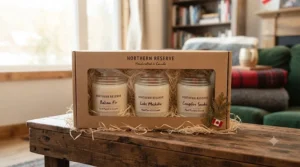
For renters, condo-dwellers, or anyone without a working fireplace, a fireplace ambiance candle is a legitimate substitute for the sensory experience of a real hearth — not the heat, obviously, but the crackle, the warm-toned scent, and the flickering glow. What makes a candle succeed specifically in this role comes down to three things working together: a wide, active wick that crackles audibly, a scent profile built around smoky-sweet notes like amber, exotic woods, or vetiver, and a wax that produces a genuinely warm-toned flame rather than a thin blue-tinged one.
Among the candles reviewed here, both the WoodWick Ellipse Fireside and Hemlock Park Foxtail Fir lean directly into this use case, though from different angles — the WoodWick candle mimics the specific scent of a wood fire itself, while the Hemlock Park candle leans into evergreen forest notes that suit a slightly different mental image of “cozy.” Reviewers on major fragrance retailer sites consistently describe the Fireside scent specifically as evocative of an actual burning hearth, which lines up with how it’s formulated around bergamot, amber, and musk rather than generic “warm” notes. If ambiance is genuinely the goal, prioritize scent authenticity and wick width over burn time — a fireplace ambiance candle used for two or three hours in the evening doesn’t need to last 90 hours to do its job well.
Soy Wax Blend Explained: What It Means for Your Burn
A soy wax blend shows up constantly in candle marketing, but the term covers a fairly wide range of actual formulations, and it’s worth understanding what you’re actually buying. A pure soy wax candle is made entirely from hydrogenated soybean oil, generally burns cooler than paraffin, and tends to hold fragrance oil less aggressively, which some buyers read as a weaker scent throw. A soy-paraffin blend, like the wax used in WoodWick’s Ellipse and Hourglass lines, splits the difference — paraffin’s stronger fragrance-holding properties boost scent throw, while the soy component still moderates soot output compared to a fully paraffin candle.
Here’s what the spec sheet won’t tell you but matters in practice: a higher soy content generally means a softer wax that melts at a lower temperature, which is part of why brands using near-pure soy wax, like La Jolie Muse, can achieve such long burn times relative to jar size — the wax melts efficiently without needing excess heat, so less wax evaporates unused around the wick. On the other end, a soy-paraffin blend candle like the WoodWick Ellipse trades some of that efficiency for a noticeably stronger initial scent throw, which explains why it remains the more popular choice for larger, open rooms despite the shorter burn-time rating. Neither approach is objectively better; it comes down to whether you’re prioritizing scent intensity or burn efficiency for your specific space.
Cozy Fall Scent Guide: Building Your Autumn Candle Rotation
A genuinely good cozy fall scent lineup isn’t just “pick the pumpkin one.” The strongest autumn rotations layer two or three distinct fragrance families so the house doesn’t smell like one overwhelming note by November. Start with a warm gourmand base — something like the DW Home Farmhouse Vanilla Bean & Cream, which leans into vanilla and cream rather than straight sugar-and-spice — for kitchen and dining spaces where food-adjacent scents make sense.
Layer in a woodier, smokier option for the living room or entryway, where a fireplace ambiance candle like the WoodWick Ellipse Fireside or the coconut-wax Hemlock Park Foxtail Fir does the heavy lifting. Finally, keep one lighter, less food-forward scent, such as La Jolie Muse Santal Himalayen‘s sandalwood-amber profile, in reserve for bedrooms or bathrooms, where an overly sweet fragrance can feel cloying rather than cozy in a smaller space. What most buyers overlook is timing: lighting all three scent families in adjoining rooms simultaneously often creates a muddled, competing fragrance rather than a cohesive “autumn house” feeling — stagger them by room and let doorways act as natural scent boundaries.
✨ Don’t Miss These Exclusive Deals!
🔍 Take your cozy candle rotation to the next level with these carefully selected wood wick picks. Click on any highlighted item to check current pricing and availability. These candles will help you create the authentic fireside ambiance your family will love!
Practical Usage Guide: Getting the Most from Your Wood Wick Candle
Getting a wood wick candle to perform at its best starts before you even strike the match. On the very first burn, let the candle run long enough to establish a full melt pool — wax melted edge to edge across the entire jar surface — which typically takes two to four hours depending on jar diameter. Skipping this step is the single most common reason wood wick candles tunnel and stop crackling properly after just a few uses, because the wick never gets exposed to a wide enough wax pool to burn evenly.
Before every subsequent lighting, trim the wick to about 3 to 5 millimetres using either your fingers to pinch off the charred tip once the wax has cooled, or a dedicated wick trimmer for a cleaner cut. Trimming too short, below roughly 3mm, can smother the flame’s ability to sustain itself, while skipping trims entirely leads to a taller, less controlled flame and more soot on the jar’s interior glass. Keep burns to a maximum of four hours at a time, both for safety and because wood wicks specifically benefit from a cool-down period that helps maintain the wood’s structural integrity for the next light. In the first thirty days, the most common mistake is over-trimming out of habit carried over from cotton-wick candles — wood wicks generally need less frequent trimming than people expect, so check before each burn rather than trimming automatically every time.
Real-World Scenarios: Matching Candles to Your Life
Consider a few realistic buyer profiles to see how these recommendations play out in practice. A university student in a shared apartment, budget-conscious and burning candles a few evenings a week in a small bedroom, is better served by something like the Winecraft Wood Wick Wine Candle or the WoodWick Medium Hourglass — lower upfront cost, smaller jar suited to a smaller room, and enough crackle to feel like a genuine upgrade over a basic cotton-wick candle without the investment of a premium jar.
A homeowner furnishing a living room around a non-working fireplace, prioritizing ambiance over budget, is the ideal buyer for the WoodWick Ellipse Fireside or Hemlock Park Foxtail Fir — both are purpose-built for exactly this scenario, with scent profiles and wick width specifically suited to filling a larger open space with both fragrance and audible crackle. A third profile, someone buying gifts through the fall and winter gifting season, should lean toward Paddywax Parks Acadia or La Jolie Muse Santal Himalayen — both come in genuinely reusable vessels that extend the gift’s value past the burn itself, which matters more for gifting than raw burn-time numbers ever will.
Buyer’s Decision Framework
If you’re still narrowing things down, a simple priority checklist cuts through most of the decision paralysis. If your top priority is maximum crackle volume and authenticity, choose a wide Hearthwick-style wick like the one in the WoodWick Ellipse Fireside, because wick width is the single biggest driver of crackle intensity. If your top priority is cost-per-burn-hour value, choose a large-format near-pure soy wax candle like La Jolie Muse Santal Himalayen, since higher soy content generally correlates with more efficient, longer burns relative to jar size.
If your top priority is gifting or repurposing the container afterward, choose a ceramic or glass jar candle like Paddywax Parks Acadia over a metal tin, because the vessel itself becomes part of the value proposition. And if your top priority is simply testing whether you even like wood wick candles before committing real money, start with the budget tier — either the Winecraft Wood Wick Wine Candle or WoodWick Medium Hourglass — since both deliver the core crackling experience at the lowest possible entry cost.
Long-Term Cost & Maintenance
Thinking about wood wick candles purely in terms of sticker price misses most of the real cost picture. A C$20 candle rated for 30 hours works out to roughly 67 cents per hour of burn time, while a C$40 candle rated for 90 hours, like the La Jolie Muse Santal Himalayen, works out closer to 44 cents per hour — meaningfully cheaper despite the higher upfront cost. Multiply that difference across a full Canadian fall-and-winter burning season, roughly five to six months of regular candle use in many households, and the savings compound quickly for anyone burning candles multiple evenings a week.
Maintenance costs are minimal but not zero. Wick trimmers run a modest one-time cost and last indefinitely, and proper first-burn technique — that full edge-to-edge melt pool — genuinely extends usable candle life by preventing the wasted, unmelted wax that tunnelling leaves behind. The reusable-vessel candles on this list, particularly Paddywax Parks Acadia, add a form of long-term value that’s harder to quantify in dollars but real nonetheless: a ceramic jar repurposed as a planter or catch-all effectively extends the product’s life well past the burn itself, which is worth factoring in if you’re weighing two similarly priced candles against each other.
Safety, Regulations & Compliance in Canada
Candle safety in Canada is more regulated than most shoppers realize. Health Canada prohibits the sale of candles with lead-core wicks, a rule that’s been in place for years specifically because metal-core wicks — including some zinc and tin cores used as lead substitutes — can release trace amounts of heavy metals into the air as they burn. Wood wicks sidestep this issue entirely, since they contain no metal core at all, which is one of the genuine safety advantages of the category beyond the ambiance factor.
That said, all candle burning affects indoor air quality to some degree, and Health Canada’s guidance on protecting indoor air specifically recommends limiting combustion sources like candles and incense, particularly in smaller or poorly ventilated rooms. A peer-reviewed study on scented candle emissions found that particulate matter concentrations do rise near a burning candle and can remain elevated for a period afterward, which reinforces the value of burning in well-ventilated spaces rather than sealed, airtight rooms. For context, though, reporting from Global News on candle safety concerns notes that researchers have generally concluded scented candles don’t pose known health risks to consumers under normal, well-ventilated use — the practical takeaway is moderation and airflow, not avoidance. Always keep any lit candle, wood wick or otherwise, away from flammable materials, never leave it unattended, and extinguish it fully before leaving the room.
Frequently Asked Questions
❓ Why do wood wick candles crackle?
❓ Are wood wick candles safer than cotton wick candles?
❓ Do wood wick candles need special care?
❓ What's the best wood wick candle for a fireplace ambiance feel?
❓ Is a soy wax blend better than 100% soy wax for wood wick candles?
Conclusion
The best wood wick candles ultimately come down to matching wick width, wax type, and jar size to the specific room and mood you’re trying to create, rather than chasing the single “best” candle in the abstract. A loud, wide-wicked fireplace ambiance candle like the WoodWick Ellipse Fireside earns its place in a living room built around cozy evenings, while a quieter cherry-wick option like La Jolie Muse’s Santal Himalayen makes more sense for a bedroom where subtlety matters more than volume.
What ties all seven picks in this guide together is that none of them are guessing games — real burn times, real wax formulations, and real price ranges, so the decision comes down to your space and your priorities rather than marketing copy. Whether you’re building a full cozy fall scent rotation across several rooms or just testing the waters with one budget-friendly tin, understanding how a soy wax blend behaves differently from a paraffin blend, and why that crackle happens in the first place, puts you in a genuinely stronger position to pick a candle you’ll actually keep reaching for through the whole season.
🔍 Ready to bring that fireside crackle home? Compare current prices on today’s picks and find the wood wick candle that fits your space best!
Recommended for You
- Long Burning Tea Lights: 7 Top Picks for Canadians (2026)
- Votive vs Tealight Candles: 7 Real Picks for Canada (2026)
- Taper Candles for Dinner Table: 7 Picks That Actually Work (2026)
Disclaimer: This article contains affiliate links. As an Amazon Associate, I earn from qualifying purchases. If you purchase products through these links, we may earn a small commission at no additional cost to you.
✨ Found this helpful? Share it with your friends! 💬🤗
