
In This Article
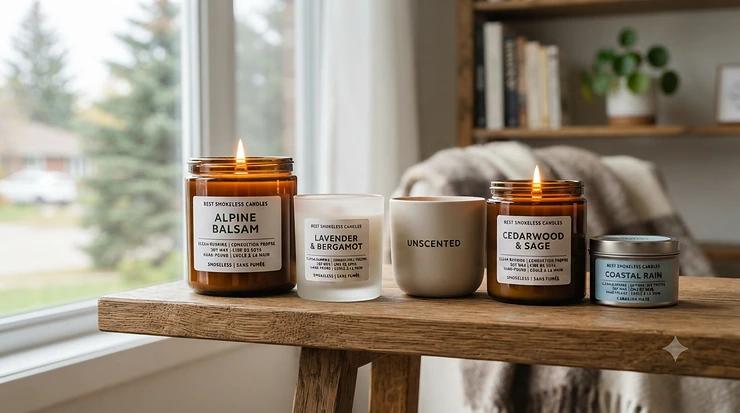
There’s a particular kind of betrayal that happens around hour three of a candlelit evening: you glance up mid-conversation and notice a grey smudge crawling up your wall like it’s trying to escape the room. That’s the moment most people start Googling best smokeless candles, usually while dabbing at a soot mark with a damp paper towel and muttering something ungracious about their favourite candle brand. A smokeless candle, put simply, is one engineered — through wax choice, wick material, and wick trimming — to burn with a small, steady flame that produces little to no visible soot or black residue, unlike traditional paraffin candles with oversized or off-centre wicks. It’s not magic. It’s chemistry, wick engineering, and a bit of user diligence working together. This guide walks through seven real, currently available candles worth your money, why they behave the way they do on a chemical level, and how to keep any candle burning cleaner for longer. We researched specs, aggregated review sentiment, and genuine product data rather than parroting marketing copy, because — and Health Canada backs this up in its own guidance on maintaining indoor air quality — candles and incense are a real, measurable contributor to indoor particulate levels no matter what the label promises. Whether you’re chasing dripless candles for a dinner party, clean burning candles no soot for a nursery, or just tidy burning candles that won’t wreck your white walls, this is your evidence-based shortlist for the Canadian market.
Quick Comparison Table
| Candle | Wax Type | Wick | Best For |
|---|---|---|---|
| La Jolie Muse Rose Noir & Oud | Soy wax | Wood wick | Whisper-quiet, minimal-soot ambiance |
| WoodWick Hourglass (Yankee Candle) | Soy-paraffin blend | Wood “Pluswick” | Fireplace-style crackle without real smoke |
| Chesapeake Bay Candle Medium Jar | Soy wax blend | Self-trimming cotton | Hands-off, low-maintenance burning |
| DEYBBY Beeswax Pillar Set of 2 | 100% beeswax | Cotton | Natural, air-purifying option |
| GreenSpark Palm Wax Pillars | Palm wax | Cotton | Budget-friendly dripless décor |
| Stonebriar Tealights (96-pack) | Paraffin | Cotton | Bulk entertaining and events |
| MontoPack Tea Lights (100-pack) | Paraffin | Cotton | Emergency stash and everyday use |
Looking at this table, you’ll notice a pattern: the candles with the least soot potential either swap paraffin for soy, coconut, or beeswax, or they pair paraffin with an unusually well-matched cotton or wood wick. Budget doesn’t necessarily dictate cleanliness — the bulk tealights hold their own on soot control because their wicks are small and well-matched to a shallow melt pool, even though the wax itself is conventional. The real differentiator across this lineup is less about price and more about whether the wick-to-wax ratio was engineered with a clean burn as a design goal from day one.
💬 Just one click — help others make better buying decisions too!😊
Top 7 Best Smokeless Candles: Expert Analysis
Picking a genuinely low-soot candle means looking past the word “smokeless” printed on the box and into the actual wax-and-wick combination doing the work. Below are seven real, purchasable options spanning budget pillars to premium wood-wick jars, each evaluated on specs, aggregated review sentiment, and practical use-case fit rather than marketing language.
| Product | Size / Burn Time | Price Range (CAD) | Rating Signal |
|---|---|---|---|
| La Jolie Muse Rose Noir & Oud | 10 oz / ~55 hrs | C$30-C$40 | Consistently high in aggregated reviews |
| WoodWick Hourglass | 9.6 oz / ~50-60 hrs | C$25-C$35 | Strong repeat-purchase sentiment |
| Chesapeake Bay Medium Jar | 8-11 oz / ~50 hrs | C$20-C$28 range | Positive on scent balance |
| DEYBBY Beeswax Pillar Set of 2 | 2×4 in / 34-36 hrs each | C$18-C$25 | Favoured for natural-burn feel |
| GreenSpark Palm Wax Pillars | 2.75×4 in, set of 4 / 75 hrs each | C$25-C$35 | Praised for event use |
| Stonebriar Tealights (96-pack) | 6-7 hrs each | Under C$20 | High volume, budget-favourite |
| MontoPack Tea Lights (100-pack) | ~4 hrs each | Under C$20 | Reliable for bulk/emergency use |
Scanning the specs side by side, the wood-wick jars from La Jolie Muse and WoodWick sit at the top of the price range but deliver the longest single-candle burn times, which actually narrows the cost-per-hour gap with cheaper pillar candles more than you’d expect. If your priority is stretching a dollar across a season of nightly burning rather than a one-off event, the beeswax and palm wax pillars from DEYBBY and GreenSpark reward you with reusability, since a pillar candle can be relit dozens of times versus a jar candle that’s finished once the wax is gone.
1. La Jolie Muse Rose Noir & Oud — near-silent wood wick with minimal soot
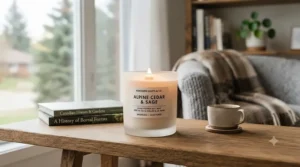
The standout here is the cherry wood wick, which trades the usual faint hiss of a cotton wick for a gentle, almost imperceptible crackle while depositing noticeably less black residue around the jar rim. Made from vegan soy wax paired with that lead-free wood wick, the 10 oz jar is rated for roughly 55 hours and comes packaged in a reusable glass vessel — practically speaking, that translates to about two to three weeks of nightly use before you’re shopping for a refill. Based on the spec comparison against paraffin-blend competitors, the lower burn temperature of soy wax combined with the wood wick’s self-limiting flame height is exactly the combination that keeps soot formation low; wood wicks physically can’t grow as tall and ragged as a poorly trimmed cotton wick can. This candle is best suited to anyone furnishing a bedroom, home office, or reading nook where a quiet, understated burn matters as much as the scent throw. Reviewers consistently report that the fragrance is noticeable without being overpowering, and several note the glass jar looks good enough to repurpose once the wax is gone, though a handful mention the scent fades somewhat in the final third of the candle’s life.
Pros:
- ✅ Wood wick produces a visibly cleaner jar rim over time
- ✅ Reusable glass jar adds value after the wax is gone
- ✅ Long 55-hour burn stretches out replacement cycles
Cons:
- ❌ Premium pricing compared to standard cotton-wick jars
- ❌ Scent throw tapers noticeably by the final burns
At around C$30-C$40 depending on the scent and retailer, this sits solidly in the mid-to-premium bracket, and the value case holds up if a low-soot jar and a repurposable vessel matter to you.
2. WoodWick Hourglass (Yankee Candle) — fireplace crackle without the actual smoke
What most buyers overlook about this model is that the “Pluswick” wood insert isn’t just a gimmick for sound — it’s engineered to widen the flame and speed up the melt pool, which in practice means less time spent tunnelling down the centre and more even wax consumption edge to edge. The 9.6 oz Hourglass jar uses a soy-paraffin wax blend, so it isn’t a pure natural wax like the La Jolie Muse option, but the wood wick still meaningfully reduces the sooting that a poorly wicked paraffin candle would otherwise produce. Here’s what to weigh: the paraffin content boosts scent throw and gives a fuller, warmer glow than soy alone typically manages, which is part of why this is the pick for anyone who wants a genuinely strong fragrance in a larger room rather than a subtle one in a small space. Reviewers consistently note the crackling sound as the signature selling point, and the layered fragrance profiles — like the amber and vetiver blend — get called out favourably, though some review threads flag that black smoke can appear if the wick isn’t trimmed to roughly 3mm before each relight, which is a user-maintenance issue rather than a design flaw.
Pros:
- ✅ Wide flame speeds up full-surface melt pool
- ✅ Strong scent throw suited to larger living spaces
- ✅ Signature crackle adds ambiance cotton wicks can’t match
Cons:
- ❌ Soy-paraffin blend, not a fully natural wax
- ❌ Requires consistent wick trimming to avoid sooting
Priced around C$25-C$35, it’s a mid-range pick, and the value proposition improves considerably if you’re diligent about the maintenance routine WoodWick recommends.
3. Chesapeake Bay Candle Medium Jar — self-trimming wick for hands-off tidiness
The standout feature is the self-trimming natural-fibre wick, which is designed to curl and burn itself down to a manageable length instead of mushrooming into the tall, carbon-caked wick tip that causes most household soot problems. Built from a soy wax blend with essential oils and rated for roughly 50 hours, the frosted glass jar is sized for everyday living spaces rather than large open-concept rooms. On paper this means less user intervention is required to keep the burn clean — you’re not expected to manually trim before every lighting, which matters if you’re the type of candle owner who forgets that step nine times out of ten. This is a strong fit for renters or condo-dwellers who want a low-maintenance clean burning candle no soot experience without babysitting the wick. Aggregated review sentiment is generally positive on the balanced, not-overpowering fragrance blends, with the 50-hour burn time getting mixed feedback — some buyers feel it runs a touch shorter in practice than advertised, which is common across the self-trimming wick category since the wick literally consumes a small amount of itself as it works.
Pros:
- ✅ Self-trimming wick reduces manual maintenance
- ✅ Balanced, not-overpowering fragrance blends
- ✅ Frosted jar glow suits everyday living spaces
Cons:
- ❌ Some buyers report shorter real-world burn times
- ❌ Scent selection skews toward soft, ambient profiles only
At roughly C$20-C$28 per jar, this lands in accessible mid-range territory, with genuine value for anyone prioritizing low-maintenance candles over maximum customization.
4. DEYBBY Natural Beeswax Pillar Candle Set of 2 — naturally dripless with an air-purifying claim
The standout advantage is the wax itself: 100% triple-filtered beeswax has a naturally higher melting point than soy or paraffin, which is precisely why beeswax pillars are so reliably dripless candles even without additives. Each 2×4 inch pillar is rated for 34 to 36 hours, and the set’s total burn time lands around 68 to 72 hours combined — reviewers and beeswax manufacturers alike point out that beeswax burning is associated with negative ion release, though it’s worth noting independent, peer-reviewed confirmation of meaningful air-purifying effects from a single household candle remains limited, so treat that claim as a nice-to-have rather than the main reason to buy. What most buyers overlook is that beeswax’s natural amber colour and honey-like scent mean this candle works unscented, appealing to anyone sensitive to synthetic fragrance. This is a strong option for households doing sensory-friendly decorating, emergency preparedness kits, or anyone who simply prefers ingredient transparency over a mystery fragrance blend. Aggregated review sentiment consistently praises the clean, honey-toned aroma and the genuinely low mess left behind, with a smaller number of reviewers noting the higher price per hour compared to paraffin pillars of similar size.
Pros:
- ✅ Naturally dripless thanks to beeswax’s high melting point
- ✅ Unscented option suits fragrance-sensitive households
- ✅ Reusable and relightable across many sessions
Cons:
- ❌ Higher cost per burn hour than paraffin alternatives
- ❌ Air-purifying claims lack strong independent verification
At around C$18-C$25 for the two-pack, it’s a mid-range investment that pays off if natural ingredients and minimal residue are non-negotiable for you.
5. GreenSpark Palm Wax Dripless Pillars — budget-friendly, no-drip décor pillars
The short version: these are built specifically to prevent dripping and extend melt time, using a plant-based palm wax paired with a pure cotton wick, and the marbled finish means the pillars look considerably more expensive than their price tag suggests. Rated at roughly 75 hours per pillar in a set of four, that’s close to 300 hours of combined burn time, which is what most buyers overlook when comparing sticker price to actual value — this set can easily outlast several jar candles costing twice as much per unit. Based on the spec comparison, palm wax sits between soy and paraffin in melting point, giving it decent dripless behaviour without the premium cost of pure beeswax. This candle earns its keep in multi-use scenarios: wedding centrepieces, restaurant tables, spa rooms, or simply as reliable emergency lighting during a power outage, since pillar candles of this size are explicitly marketed for reuse. Reviewers consistently note the “prevents dripping” claim holds up in practice even in slightly drafty rooms, and the natural white marble finish gets called out as looking more premium than the price implies, though a few reviewers mention the scent-free formula means you’re buying this purely for light and ambiance, not fragrance.
Pros:
- ✅ Genuinely low-drip performance even in mild drafts
- ✅ Excellent combined burn time across the four-pack
- ✅ Marbled finish suits event and décor use
Cons:
- ❌ Unscented, so no fragrance value included
- ❌ Palm wax sourcing transparency varies by brand
Typically priced in the C$25-C$35 range for the set, the cost-per-hour math here is genuinely hard to beat among mess-free candles built for repeated use.
6. Stonebriar Unscented White Tealight Candles (96-Pack) — bulk clean burn for entertaining
The headline feature is sheer volume paired with a genuinely smokeless burn profile: 96 tealights rated at 6 to 7 hours each, unscented, and designed with a small, well-matched cotton wick that rarely grows tall enough to produce visible soot. What most buyers overlook about tealights generally is that their shallow melt pool and small flame size are inherently more forgiving than a tall jar candle — there’s simply less wick and less wax mass for things to go wrong with. Here’s what to weigh: because they’re unscented and paraffin-based, these aren’t the pick for fragrance lovers, but they’re an excellent low-cost solution for weddings, holiday tablescapes, or nightly bath rituals where you’re burning multiple flames at once and soot on the ceiling isn’t an option. This is squarely a tidy burning candles pick for anyone hosting events or simply going through tealights fast enough that per-unit cost matters more than scent complexity. Aggregated review sentiment is strongly positive on consistency across the pack — buyers note that the clear plastic cups don’t warp or leak wax, which is a common complaint with cheaper tealight brands, and the long burn time per unit is frequently called out as better than expected for the price point.
Pros:
- ✅ Reliable, consistent burn across all 96 units
- ✅ Clear cups resist warping and leaking
- ✅ Extremely low cost per burn hour
Cons:
- ❌ Unscented, so no fragrance experience
- ❌ Paraffin wax rather than a plant-based alternative
At under C$20 for the full pack, this is the clear budget champion of the lineup, ideal for anyone who burns candles frequently enough that cost per hour genuinely matters.
7. MontoPack Unscented Tea Light Candles (100-Pack) — dripless votives for everyday and emergency use
The core advantage is the dripless votive design: each of the 100 small candles is rated for about 4 hours and built with a compact wick sized precisely to the wax volume, which is the exact engineering choice that keeps both dripping and sooting to a minimum. Because they’re unscented paraffin, on paper this means you’re trading fragrance complexity for dependable, no-fuss performance — a fair trade if the goal is stocking a drawer for Shabbat candles, power outages, or simply topping up a bathtub ritual without hunting for a lighter every night. What most buyers overlook is that a shorter burn time per unit, paired with dripless construction, actually reduces the odds of an unattended candle burning down into a mess, since you’re less likely to walk away for the full four hours the way you might with a longer jar candle. This is a genuinely practical pick for anyone building an emergency kit or running frequent small gatherings where dozens of small flames need to behave predictably. Reviewers consistently report satisfaction with the sheer quantity-to-price ratio and note the wax reliably stays contained within the cup rather than pooling over the edges, though a few mention the flame can be on the smaller side for anyone hoping for a bright accent light.
Pros:
- ✅ Dripless cup design contains wax reliably
- ✅ Ideal quantity-to-price ratio for bulk needs
- ✅ Shorter burn time reduces unattended-candle risk
Cons:
- ❌ Smaller flame may underwhelm as an accent light
- ❌ No fragrance option included
At under C$20 for 100 units, this is another strong budget entry, particularly well-suited to households that want a no residue candles option always on hand for practical, non-decorative use.
Practical Usage Guide: Getting the Cleanest Burn from Day One
Even the best-engineered smokeless candles can soot up a room if the first burn is mishandled, so a little technique goes a long way. Start by trimming any cotton wick to about 6mm (1/4 inch) before the very first light — most soot problems trace back to an untrimmed wick that’s simply too tall for the wax pool it’s sitting in. For wood-wick candles, trim to roughly 3 to 5mm and gently snap off any charred bits with your fingers once the candle has cooled, since wood wicks accumulate carbon differently than cotton. On the first burn, let the candle run until the melt pool reaches the full diameter of the container, typically one to four hours depending on size; stopping early causes “tunnelling,” where the candle burns a narrow well down the centre and wastes wax along the edges for the rest of its life. A common mistake in the first 30 days is placing a candle near a draft — an open window, a ceiling fan, or an HVAC vent — since airflow disturbance is one of the leading causes of an otherwise clean-burning candle suddenly throwing soot. Keep candles away from drafts, trim before every relight, and extinguish with a snuffer rather than blowing, which can send hot wax droplets outward. Finally, never let any candle burn for more than about four hours in one sitting; beyond that point, the wick and wax both overheat, increasing both soot output and fire risk.
✨ Ready to build your own clean-burn candle routine? Check current pricing on today’s picks before scent options sell out!
Real-World Scenarios: Which Smokeless Candle Fits Your Life
Picture Priya, a grad student in a shared apartment with paper-thin walls and zero tolerance for lingering smoke smell — for her, the DEYBBY Beeswax Pillar Set or the La Jolie Muse Rose Noir & Oud make the most sense, since both minimize both soot and synthetic fragrance load in a small, shared space. Then there’s Marcus, planning an outdoor-turned-indoor wedding reception for 80 guests on a budget that doesn’t stretch to designer candles — the GreenSpark Palm Wax Pillars and Stonebriar Tealights cover both centrepiece ambiance and scattered table accents without blowing the decor budget, and their long combined burn times mean rehearsal dinner and reception can share the same stock. Finally, consider the Chen family, who keep an emergency kit in the basement for winter power outages that are increasingly common across parts of Canada — the MontoPack Tea Lights and a couple of GreenSpark Pillars provide dozens of hours of reliable, low-drip light without the fire risk of an unpredictable, poorly wicked candle. In each case, the “best” smokeless candle isn’t a universal answer; it’s whichever option matches the burn duration, fragrance tolerance, and budget of the actual room it’s going to live in.
Problem → Solution: Fixing Common Smokeless Candle Complaints
Black smoke curling off the flame almost always means the wick is too long — snuff the candle, let it cool, trim to 6mm, and relight. A candle that tunnels down the middle instead of melting evenly needs a longer first burn; if it’s already tunnelled, wrap foil around the top to trap heat and encourage the edges to catch up. Mushrooming wick tips, that carbon blob that eventually falls into the wax and smokes on its way down, should be trimmed off between every single burn, not just occasionally. If a jar candle suddenly starts smoking after weeks of clean burning, check for drafts first, since a candle repositioned near a newly opened window is a frequent, overlooked culprit. And if soot has already landed on a wall, a barely damp microfibre cloth with a little dish soap lifts most residue without smearing paint, though stubborn marks may need a magic eraser—style sponge and some patience.
How to Choose the Best Smokeless Candles
- Check the wax type first. Soy, coconut, and beeswax burn cooler and cleaner than pure paraffin, which is the single biggest lever on soot output.
- Look at wick material and size. A wick matched to the container’s diameter prevents the “too tall, too much fuel” problem behind most sooting.
- Read the burn-time-to-price ratio, not just the sticker price. A pricier candle with double the burn hours can be cheaper per hour than a bargain jar.
- Consider your room’s airflow. Draft-prone spaces call for enclosed jar candles over exposed pillars or tapers.
- Decide if fragrance matters. Scented candles typically use more fragrance oil, which can slightly increase soot versus unscented options.
- Check for a self-trimming or wood wick if low maintenance is the priority. Both reduce the manual upkeep needed for a clean burn.
- Match quantity to use case. Bulk tealights suit events; single jars suit daily ambiance; pillars suit reuse and emergencies.
Smokeless Candles vs Traditional Paraffin Candles
The comparison isn’t as simple as “natural wax good, paraffin bad” — it’s really about wick engineering interacting with wax chemistry. Traditional mass-market paraffin candles often ship with wicks sized for the cheapest possible manufacturing run rather than that specific wax’s optimal melt pool, which is why so many bargain-bin candles smoke within days of purchase. Soy, coconut, and beeswax candles tend to burn at lower temperatures, which naturally limits how large and unstable the flame can get, but a poorly wicked soy candle can still soot, just less dramatically than an equivalent paraffin one.
| Factor | Traditional Paraffin | Smokeless-Engineered Options |
|---|---|---|
| Burn temperature | Higher | Generally lower |
| Typical soot risk | Higher if wick mismatched | Lower with matched wick/wax |
| Scent throw | Often stronger | Moderate to strong, wax-dependent |
| Price per hour | Usually lower | Slightly higher on average |
What the table doesn’t capture is that the combination matters more than either variable alone — a well-wicked paraffin tealight, as we saw with the Stonebriar and MontoPack picks, can genuinely out-perform a poorly made soy candle on soot control. Reviewers consistently note that price alone is a weak predictor of clean burning; the wick-to-wax match is the real signal to look for on any product page.
Common Mistakes When Buying Smokeless Candles
The most frequent mistake is trusting the word “smokeless” printed on packaging without checking the wick material listed in the specifications — it’s an unregulated marketing term, not a certification. A second common error is buying based on jar size alone without checking rated burn hours, since two candles of identical size can differ by 20+ hours depending on wax density and wick efficiency. Shoppers also tend to underestimate how much a drafty room undermines even the best-engineered candle, blaming the product when the real issue is placement near a window or vent. Finally, many buyers skip reading the trimming instructions entirely, then are surprised when a candle that performed cleanly in reviews starts sooting in their own home after a few unwicked burns.
Long-Term Cost & Maintenance
Total cost of ownership for candles hinges on burn-hour efficiency more than sticker price, and pillar-style dripless candles usually win this math over time since they’re relightable dozens of times rather than finished in a single burn cycle.
| Product | Approx. Cost per Burn Hour |
|---|---|
| GreenSpark Palm Wax Pillars | Roughly C$0.08-C$0.12/hr |
| DEYBBY Beeswax Pillars | Roughly C$0.13-C$0.18/hr |
| La Jolie Muse Wood Wick Jar | Roughly C$0.55-C$0.70/hr |
| Stonebriar Tealights | Roughly C$0.03-C$0.05/hr |
The bulk tealights and palm wax pillars deliver dramatically lower cost per hour than premium jar candles, which makes sense given their higher wax-to-price ratio and reusability, but they trade away fragrance complexity and vessel aesthetics to get there. If you’re furnishing a space you’ll photograph or gift from, the premium jars justify their price on presentation alone; if you’re simply trying to keep a room lit affordably and cleanly, the humble tealight remains hard to beat on pure economics.
Features That Actually Matter (And Those That Don’t)
Wick material and wax type genuinely matter — they’re the two variables doing almost all the work in determining soot output. Burn-time ratings matter too, since they directly affect your real cost per use. What matters far less than marketing suggests: candle colour, which has essentially no bearing on burn cleanliness, and vague claims like “eco-friendly” without a specific wax type named, since that phrase carries no regulated meaning in the candle industry. Container material (glass versus tin) affects heat retention and safety slightly but has minimal impact on soot. The spec sheet won’t tell you this, but reviewers note that fragrance oil concentration — often not disclosed numerically — has a real, measurable effect on soot, since heavier fragrance loads can destabilize an otherwise clean-burning wick.
Safety, Regulations & Indoor Air Quality Guide
Candle safety in Canada isn’t governed by a single dedicated “candle law,” but general product safety falls under the Canada Consumer Product Safety Act, and Health Canada actively studies how combustion sources like candles affect residential air quality as part of its indoor air quality program. According to Health Canada’s own guidance, reducing candle and incense use is one of several concrete steps recommended for improving indoor air quality in the home, particularly because particles from combustion can aggravate asthma and other respiratory conditions. University of Saskatchewan researcher Tara Kahan, in comments to CBC News on indoor air quality, noted that everyday activities like burning candles are worth being mindful of, while cautioning that normal household use isn’t a reason for alarm. Practically speaking, that translates into simple habits: burn in well-ventilated rooms, avoid running multiple heavily-scented candles simultaneously in a closed space, and favour CSA-listed candle accessories like warmers or holders where available. If anyone in the home has asthma or another respiratory condition, unscented or lightly-scented options paired with good ventilation are the more cautious choice.
Dripless Candles: What to Look For
True dripless candles usually come down to wax with a higher melting point relative to the wick’s heat output, which is exactly why beeswax and well-formulated palm wax pillars dominate this category — their wax simply doesn’t liquefy as readily around the edges of the flame. When shopping specifically for dripless candles, check whether the product description mentions a wax blend engineered for pillar use, since standard soy wax is actually too soft for reliable drip resistance without additives. Container candles have an inherent advantage here too, since the glass or tin walls physically contain any wax that does liquefy, which is part of why jar candles are rarely marketed on “dripless” claims the way pillars and tapers are — they don’t need to be. If you’re buying for a dinner table or a photographed event setup where dripping wax on linens is a real concern, prioritize pillar candles explicitly labelled dripless over decorative tapers, which remain more drip-prone even in well-formulated versions.
Clean Burning Candles With No Soot: The Science Behind It
Soot forms when a flame doesn’t have enough oxygen to fully combust the carbon in the wax vapour, leaving behind unburned carbon particles that rise on the heat plume and eventually settle as that familiar black residue. Clean burning candles no soot claims genuinely hold up when the wick is properly sized: a smaller, well-trimmed flame burns hotter and more completely relative to its fuel supply than an oversized, ragged flame does. As explained in the Wikipedia entry on soy candles, soy wax’s lower melting point and different fatty acid composition compared to paraffin contributes to a generally cleaner combustion profile, though the wick still has to be matched correctly for that advantage to show up in practice. This is why a premium soy candle with a mismatched wick can still smoke, while a well-made paraffin tealight with a tiny, appropriately-sized wick can burn essentially soot-free for its entire life.
Mess-Free and Low Maintenance Candles for Busy Homes
For anyone who wants ambiance without a maintenance routine, mess-free candles and low maintenance candles overlap significantly with self-trimming wicks and enclosed jar formats. The Chesapeake Bay self-trimming wick design reviewed earlier is a textbook example: it curls and consumes itself at a controlled rate so you’re not expected to trim between burns, which meaningfully lowers the odds of user error introducing soot or dripping. Container candles in general qualify as lower maintenance than open pillars or tapers, since the vessel walls contain wax pooling and reduce the chance of drips landing on furniture. If your household includes kids, pets, or simply a busy schedule that doesn’t leave room for candle-tending rituals, prioritizing self-trimming wicks and jar formats over exposed pillar or taper styles is the single biggest lever for a genuinely low-effort clean burn.
No-Residue, Tidy Burning Candles for Every Room
No residue candles and tidy burning candles both point to the same underlying goal: minimal cleanup, whether that’s soot on the wall or wax on the furniture. Tealights and votives in enclosed cups, like the Stonebriar and MontoPack picks reviewed above, excel here specifically because the small wax volume and contained cup design leave almost nothing behind once the flame goes out — you’re typically disposing of an empty plastic or foil cup rather than scraping wax off a surface. For jar candles, “tidy” largely comes down to burning the full melt pool each time and wiping any residual soot from the jar’s inner rim with a cotton pad between burns, a two-minute habit that keeps the vessel genuinely reusable once the wax is gone. Choosing candles engineered for tidiness upfront — small wicks, contained vessels, dripless waxes — will always outperform trying to manage a messier design after the fact.
Frequently Asked Questions
❓ Are smokeless candles actually smoke-free?
❓ What candles are best for no soot on walls?
❓ Do dripless candles really not drip at all?
❓ How often should I trim a candle wick?
❓ Are soy candles healthier to burn than paraffin candles?
Conclusion
Chasing the best smokeless candles really comes down to matching wax chemistry and wick engineering to how you actually live — a wood-wick soy jar for quiet bedroom evenings, a set of dripless pillars for an event where wax on the tablecloth isn’t an option, or a stash of bulk tealights for reliable, low-cost ambiance night after night. None of the seven picks here are flawless, and that’s the honest takeaway: even genuinely well-engineered candles need a properly trimmed wick and a draft-free spot to perform at their best. What separates a candle that lives up to its “smokeless” label from one that doesn’t is rarely luck — it’s the wax type, the wick match, and a few small habits on your end. Armed with real specs, aggregated review patterns, and Health Canada’s own indoor air guidance, you’re now better equipped to shop past the marketing language and pick something that will actually keep your walls, and your lungs, cleaner over the long run.
✨ Don’t Miss These Exclusive Deals!
🔍 Take your smokeless candle shopping to the next level with these carefully selected products. Click on any highlighted item to check current pricing and availability on Amazon.ca. These picks will help you create a genuinely clean-burning, tidy home your family will love!
Recommended for You
- Long Lasting Candles: 7 Picks That Actually Burn for Days (2026)
- Candle Gift Sets 2026: 7 Picks Canadians Will Genuinely Love
- Canadian Made Candles: 7 Real Local Picks for 2026 (Honest Guide)
Disclaimer: This article contains affiliate links. As an Amazon Associate, I earn from qualifying purchases. If you purchase products through these links, we may earn a small commission at no additional cost to you.
✨ Found this helpful? Share it with your friends! 💬🤗
