
In This Article
Picture this: you’re unwinding after a long Canadian winter day, the room bathed in the warm, golden glow of a candle that smells faintly of wildflower honey. Unlike the synthetic scented candles that leave you with a headache and black soot on your walls, this one burns clean. No chemical smell. No toxic fumes. Just pure, natural light that’s been trusted for over 5,000 years.

That’s the magic of best beeswax candles—and Canadian buyers are catching on fast. While paraffin candles release petroleum-based chemicals and synthetic fragrances trigger allergies, beeswax offers something refreshingly simple: a candle that’s exactly what it claims to be. Made by honeybees from the nectar of millions of Canadian wildflowers, these candles burn longer, cleaner, and with a natural ambiance that synthetic alternatives simply can’t replicate.
Here’s what makes beeswax exceptional for Canadian households. First, these candles perform remarkably well in our challenging climate—they maintain their shape even during summer heat waves and burn consistently through cold winter months. Second, Health Canada has increasingly flagged concerns about indoor air quality from combustion sources, making the cleaner burn of beeswax particularly relevant for Canadian families. Third, with Canada’s push toward sustainable products, beeswax represents a renewable resource that supports local beekeepers and pollinators rather than petroleum industries.
But not all beeswax candles deliver on their promises. Some blend beeswax with paraffin or soy to cut costs. Others use lead-core wicks (banned in Canada but still slipping through from international sellers). The Canadian market also presents unique challenges—shipping costs from US-based sellers can double your price, and not every product available on Amazon.com ships north of the border.
After researching dozens of options available on Amazon.ca and analyzing Canadian customer reviews, I’ve identified the seven best beeswax candles that actually deliver on quality, availability, and value for money. Whether you’re looking for emergency candles for power outages (increasingly common in Canadian winters), hypoallergenic options for family members with sensitivities, or simply want to reduce your exposure to chemical-free candles, this guide has you covered.
Quick Comparison: Top Beeswax Candles Available in Canada
| Product | Type | Burn Time | Price Range (CAD) | Best For | Prime Eligible |
|---|---|---|---|---|---|
| Dutchman’s Gold Votive | Votive | 12-15 hrs each | $20-$28 | First-time buyers | Yes |
| Pure Nature Pillar 6-Pack | Pillar | 210 hrs total | $45-$65 | Long-term value | Yes |
| Canadian Taper Candles | Taper | 8-10 hrs each | $30-$40 | Dinner ambiance | Yes |
| Emergency Pillar 4-Pack | Pillar | 140 hrs total | $35-$50 | Power outages | Yes |
| Canadian Hive Tealights | Tealight | 4 hrs each | $18-$25 | Multi-room use | Yes |
| Maxi Pillar Candle | Large Pillar | 65-75 hrs | $28-$38 | Statement piece | Yes |
| 20-Pack Emergency Set | Small Pillar | 300+ hrs total | $55-$75 | Emergency kit | Yes |
Looking at this comparison, a pattern emerges that’s crucial for Canadian buyers. The sweet spot for value sits between $40-$60 CAD, where you’re getting 140-210 hours of burn time—that’s roughly 20-30 cents per hour of clean, natural light. The Dutchman’s Gold votives excel for testing beeswax quality before committing to larger purchases, while the 6-pack pillar sets deliver the best cost-per-hour performance for regular users. What’s particularly interesting is how Canadian-made options like the taper candles carry a slight premium (usually $5-$10 more), but Canadian buyers report fewer shipping issues and appreciate supporting domestic beekeepers through harsh prairie winters.
💬 Just one click — help others make better buying decisions too!😊
Top 7 Best Beeswax Candles: Expert Analysis
1. Dutchman’s Gold Beeswax Votive Candles (3 Pack)
If you’re dipping your toes into the beeswax world, this Ontario-made trio deserves your attention. Each votive delivers 12-15 hours of burn time—substantially longer than the 6-8 hours you’d get from paraffin equivalents. What sets Dutchman’s Gold apart is their “cappings wax” sourcing method, which collects beeswax from the top layers of honeycombs where purity is highest.
The practical advantage here is versatility. These votives fit standard holders (2.5 cm diameter) that most Canadians already own, eliminating the need to purchase specialty equipment. During Canadian winters when power outages from ice storms become more frequent, having a stash of these provides 36-45 hours of emergency light from just one three-pack. The cotton wicks are lead-free (critical, as Health Canada banned lead wicks but international sellers sometimes slip through), and they’re pre-primed in filtered beeswax for consistent burning.
Canadian customers particularly praise these for seasonal allergies. Several Toronto and Vancouver-based reviewers note reduced respiratory irritation compared to scented candles—a significant benefit in tightly sealed winter homes where indoor air quality suffers. The natural honey scent is subtle enough for scent-sensitive individuals but pleasant enough to mask cooking odours without the chemical undertones of artificial air fresheners.
Pros:
✅ Canadian-made, supports Ontario beekeepers through harsh winters
✅ Perfect size for testing beeswax quality before larger investment
✅ Pre-primed cotton wicks ensure immediate, even burning
Cons:
❌ Glass holders not included (though most Canadians already own suitable options)
❌ Slightly higher price per candle than bulk pillar sets
Expect to pay in the $20-$28 CAD range for a three-pack. That’s about $7-$9 per votive, which represents excellent value when you factor in the 12-15 hour burn time and the fact you’re supporting a Canadian family business that’s been operating since 1981.
2. Pure Nature Beeswax Pillar Candles (6-Pack, 2×4 Inch)
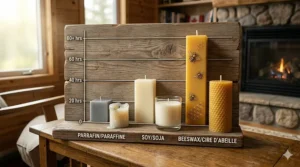
This is where serious value meets serious performance. Six pillars delivering a combined 210 hours of burn time places this set squarely in “best bang for your buck” territory for Canadian households. Each 2×4 inch (5×10 cm) pillar burns for approximately 35 hours—perfect for getting through a long Canadian winter evening or an extended power outage.
The quadruple-filtration process these undergo is worth understanding. Most budget beeswax retains pollen and propolis that can cause uneven burning and smoking. Pure Nature’s filtration removes these flame retardants while preserving the natural golden colour and honey aroma. In practical terms, this means you can burn these in bedrooms overnight without waking to a smoky smell—a common complaint with lower-quality beeswax.
What Canadian buyers specifically appreciate is the dripless performance even in fluctuating temperatures. Our homes swing between -20°C outdoors and +22°C indoors during winter, which can cause cheaper candles to “sweat” or drip irregularly. The higher melting point of pure beeswax (62-65°C versus paraffin’s 46-54°C) combined with the solid construction prevents this issue. Montreal customers report using these successfully even near radiators and heating vents without melting mishaps.
For families concerned about indoor air quality—especially those with members suffering from asthma or chemical sensitivities—these pillar candles offer a practical solution. While the negative ion claims remain scientifically debated, what’s undeniable is the absence of synthetic fragrances, dyes, and petroleum-derived compounds that Health Canada identifies as indoor air quality concerns.
Pros:
✅ Outstanding 210-hour total burn time delivers exceptional value
✅ 2×4 inch size is substantial enough for ambiance yet compact for storage
✅ Quadruple filtration ensures clean, smoke-free burning even in enclosed spaces
Cons:
❌ Larger pillars mean longer commitment per candle (35 hours each)
❌ May develop natural “bloom” (white film) in cold storage—easily wiped off
The $45-$65 CAD range positions these competitively at roughly 22-31 cents per hour of burn time. For context, that’s less than running a 60-watt lightbulb for the same duration, making them cost-effective for both ambiance and emergency preparedness.
3. 100% Pure Beeswax Taper Candles (10 Pack, Handmade in Canada)
Elegant, traditional, and unmistakably Canadian—these 23 cm tapers bring old-world craftsmanship to modern dinner tables. Hand-dipped in small batches in Ontario, each taper burns for 8-10 hours, which translates to 4-5 dinner services from a single pair. What distinguishes these from mass-produced alternatives is the hand-dipping process itself, which creates subtle variations in diameter that actually improve drip resistance.
Here’s the technical advantage Canadian buyers need to know: machine-made tapers often have inconsistent wick placement, causing one-sided burning and excessive dripping. Hand-dipped tapers centre the cotton wick naturally through multiple dipping cycles, resulting in even wax consumption and minimal mess. This matters enormously if you’re using antique candlesticks or linen tablecloths—drips from paraffin candles leave petroleum-based stains that are notoriously difficult to remove, while beeswax drips (rare though they are) brush off once cooled.
The 23 cm length (roughly 9 inches) fits standard Canadian taper holders, though buyers should verify diameter compatibility—these measure approximately 1.3 cm wide at the base, which suits most holders but may be snug in ultra-narrow European designs. For formal dinners, weddings, or holiday celebrations, these deliver the warm, golden glow that synthetic white candles simply cannot replicate. The natural honey scent is subtle enough not to compete with food aromas yet provides a pleasant background note.
Canadian customers from Quebec particularly value these for religious observances and traditional ceremonies where natural materials hold cultural significance. The absence of synthetic additives aligns with requirements for Orthodox Christian services and other faith practices that specify pure beeswax.
Pros:
✅ Hand-dipped in Canada ensures quality control and supports local artisans
✅ 8-10 hour burn time per taper exceeds paraffin equivalents by 2-3 hours
✅ Natural golden colour and subtle honey scent enhance formal dining experiences
Cons:
❌ Higher price point than pillar candles per hour of burn time
❌ Requires proper taper holders (not included), which some households may need to purchase
Budget $30-$40 CAD for a 10-pack, which works out to $3-$4 per taper. While pricier per hour than pillars, the aesthetic and functional advantages justify the premium for special occasions and regular formal dining.
4. Natural Beeswax Pillar Candles (4-Pack Emergency Set, 2×4 Inch)
When the ice storm knocks out power and you’re facing 12-48 hours without electricity—a scenario familiar to Ontario, Quebec, and Maritime residents—this 4-pack becomes your best friend. Marketed specifically for emergency preparedness and prayer use, these pillars deliver a combined 140 hours of reliable light and heat. Each individual pillar burns for 35 hours, giving you nearly a full week of 5-6 hour nightly illumination from a single four-pack.
What emergency preparedness experts appreciate about beeswax for power outages is the safety profile. Unlike liquid fuel lamps that pose spill risks or battery-powered LED lights that fail in extreme cold, beeswax candles perform consistently in temperatures from -30°C to +30°C. The natural wax doesn’t crystallize in cold storage the way soy or palm wax does, meaning these remain ready for immediate use even if stored in an unheated garage or basement for months.
The 2×4 inch dimension offers practical advantages for emergency scenarios. Unlike tapers that require holders and tip easily, these pillars sit stable on any heat-resistant surface. The broad base (5 cm diameter) prevents easy tipping even if bumped in the dark, while the manageable height (10 cm) fits under low shelves in emergency supply kits. Canadian reviewers from rural areas particularly value the modest BTU output—each pillar generates approximately 1,500 BTUs, enough to raise the temperature in a small, enclosed space by 3-5°C, potentially meaning the difference between uncomfortable and dangerous cold exposure during winter emergencies.
For those building 72-hour emergency kits as recommended by Canadian Red Cross, this 4-pack provides approximately 140 hours of light for a single household—well beyond the recommended minimum. Store with weatherproof matches and a heat-resistant plate, and you have a reliable backup light source that won’t degrade over time like chemical light sticks.
Pros:
✅ 140-hour total burn time provides week-long emergency coverage
✅ Stable 2×4 inch dimensions prevent tipping during power outages
✅ Minimal smoke and toxin output safe for enclosed spaces during emergencies
Cons:
❌ Plain design lacks decorative appeal for everyday aesthetic use
❌ Four-pack may be insufficient for larger households or extended outages
The $35-$50 CAD range makes these an affordable insurance policy. For less than the cost of a restaurant dinner, you have a week’s worth of emergency light that never expires, never needs charging, and works reliably when everything else fails.
5. Pure Canadian Beeswax Tealight Candles (10 Pack, Canadian Hive Brand)
Small but mighty, these tealights punch above their weight class. Each burns for 4 hours in its recycled plastic clear cup—double the 2-hour burn time of typical paraffin tealights. The Canadian Hive brand, handcrafted in Ontario, uses 100% pure Canadian beeswax filtered to 1 micron, which removes impurities while preserving the natural golden colour and honey aroma.
The strategic advantage of tealights is flexibility. Need ambient lighting in multiple rooms? Pop one in the bathroom, one in the hallway, one on the kitchen counter. Want to test how beeswax performs before committing to expensive pillars? A 10-pack costs less than $25 CAD and provides 40 hours of combined burn time for evaluation. Concerned about open flames around children or pets? Tealights in glass holders offer the safest candle configuration—low profile, contained flame, and quick to extinguish.
What separates these from budget tealights is the cup material. Canadian Hive uses recycled plastic cups that withstand the 62-65°C melting point of beeswax without warping or releasing plastic fumes—a critical safety feature that cheaper metal-cupped tealights sometimes fail. The clear cups also allow you to monitor wax levels, ensuring safe burning practices recommended by Health Canada’s candle safety guidelines.
Canadian customers living in condos and apartments particularly value tealights for their minimal smoke output. With modern building codes requiring sealed windows for energy efficiency, indoor air quality becomes crucial. These tealights burn clean enough for daily use in tightly sealed spaces without accumulating soot on walls or triggering smoke alarms—a common problem with scented paraffin candles in high-rise buildings.
The compact size makes these ideal for Canadian winters when you want candlelight but can’t safely leave large pillars burning overnight. Set a tealight in the bathroom for a relaxing soak, or use several in the living room for cozy evening ambiance, confident they’ll burn out safely within 4 hours.
Pros:
✅ 4-hour burn time doubles typical paraffin tealight duration
✅ Compact size perfect for multi-room use and testing beeswax quality
✅ Recycled plastic cups prevent warping and plastic fume release
Cons:
❌ Requires suitable tealight holders for safe use (most Canadians own these)
❌ Higher per-hour cost than pillar candles, though still economical
Expect to invest $18-$25 CAD for a 10-pack, delivering 40 hours of combined burn time at roughly 45-63 cents per hour. While more expensive per hour than pillars, the flexibility and safety profile justify the premium for specific use cases.
6. Pure Canadian Beeswax Maxi Pillar Candle (Canadian Hive Brand)
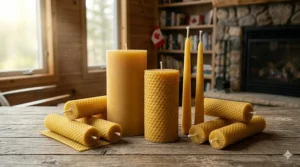
This is the statement piece—the candle you light when you want maximum ambiance and extended burn time. The “Maxi Pillar” designation refers to its substantial dimensions and 65-75 hour burn duration, making it one of the longest-burning single candles available on Amazon.ca. Handcrafted in Canada with cotton wicks and 100% pure beeswax, this pillar delivers the warm, golden glow that transforms any room.
What makes the Maxi Pillar exceptional for Canadian buyers is its performance during long winter evenings. Light this during a weekend cottage getaway, and a single candle provides ambient lighting from Friday evening through Sunday morning. Use it for meditation or yoga practice, and the consistent 65-75 hour burn time means you’re replacing candles monthly rather than weekly—reducing packaging waste and shopping trips.
The substantial size does require candle care knowledge. Unlike smaller pillars that burn down evenly, large pillars benefit from periodic wick trimming (to 0.5 cm) and edge management. Canadian Hive includes instructions for “hugging” the candle—gently folding the outer edges into the molten wax pool as it burns. This technique extends burn time, prevents wax wastage, and maintains an even, attractive appearance throughout the candle’s life.
For those concerned about chemical-free candles, the Maxi Pillar’s purity is reassuring. No synthetic fragrances, no petroleum-derived paraffin, no soy blends—just beeswax, cotton, and the natural honey aroma that Canadian wildflowers impart. This simplicity matters for individuals with multiple chemical sensitivities (MCS) who react to synthetic additives in conventional candles.
The higher price point reflects both the substantial wax content and the handcrafted nature. Mass-produced pillars use molds and automated processes; Canadian Hive pours these in small batches with quality checks at each stage. For Canadian buyers who value craftsmanship and support for local beekeepers, this premium is acceptable.
Pros:
✅ 65-75 hour burn time from a single candle reduces replacement frequency
✅ Substantial size creates statement-piece ambiance for large rooms
✅ Handcrafted in Canada with quality control absent in mass-produced alternatives
Cons:
❌ Requires periodic maintenance (wick trimming, edge hugging) for optimal performance
❌ Higher upfront cost than multi-pack pillar sets
Budget $28-$38 CAD for this centrepiece candle. While the per-candle cost is higher, the 65-75 hour burn time delivers comparable value to multi-pack pillars at 37-51 cents per hour, with the added benefit of supporting Canadian artisans.
7. Emergency Long Burning Beeswax Candles (20-Pack, 15+ Hours Each)
For serious emergency preparedness or remote living situations, this 20-pack represents the ultimate backup light source. Each compact 7.6 cm (3-inch) pillar burns for 15+ hours, delivering a combined 300+ hours of reliable illumination—enough to cover a week-long power outage for an entire household with careful rationing.
What emergency management professionals appreciate about this configuration is the balance between portability and burn time. Unlike single large pillars that commit you to 40+ hour burns, these smaller candles allow precise energy management. Need 3 hours of light this evening? Burn one candle and save the remaining 12 hours for another day. Facing a week-long outage? Ration 2-3 candles per day for consistent lighting.
The compact size also addresses storage challenges familiar to Canadian households. Finding space for emergency supplies in typical urban apartments or older homes with limited storage can be difficult. This 20-pack stores in a shoebox-sized space yet provides more cumulative burn time than bulkier alternatives. For cottage owners maintaining emergency supplies in seasonal properties, the small footprint prevents taking up valuable storage needed for other gear.
Canadian buyers in remote areas (Northern Ontario, rural Prairies, coastal BC) particularly value these for off-grid living and hunting camps. The absence of battery requirements or fuel evaporation makes beeswax superior to alternatives for long-term storage. Store these in a cool, dry location, and they remain ready for immediate use 5-10 years later—something no battery-powered light or liquid fuel can match.
Inside candle lanterns (like the popular UCO candle lanterns many Canadians use for camping), these provide both light and modest heat. The compact size fits standard candle lanterns, extending burn time to 18+ hours while protecting the flame from drafts—essential for Canadian camping conditions where wind is constant.
Pros:
✅ 300+ hours total burn time provides week-long emergency coverage
✅ 20-piece configuration allows precise burn time management
✅ Compact size facilitates storage in limited space
Cons:
❌ Smaller individual candles require more frequent monitoring than large pillars
❌ Bulk packaging may be excessive for urban households with reliable power
The $55-$75 CAD range delivers approximately 18-25 cents per hour of burn time—the most economical option in this roundup. For preppers, remote property owners, or anyone serious about emergency preparedness, this represents exceptional value and peace of mind.
How to Use Beeswax Candles for Maximum Performance in Canadian Conditions
Getting the most from your beeswax candles requires understanding how Canadian climate and housing affect performance. Here’s what 25 years of Canadian beeswax users have learned through trial and error.
First Burn Protocol
The initial lighting session sets the “memory” for all subsequent burns. Before lighting a new pillar or container candle, allow it to reach room temperature—critical if you’ve stored candles in an unheated garage where they may be cold from winter storage. Cold wax doesn’t melt evenly, causing tunneling where only the centre burns down while outer wax remains unused.
For your first burn, commit to letting the wax pool reach the outer edge. With a 5 cm diameter pillar, this takes 2-3 hours. Resist the temptation to extinguish it early—doing so creates a narrow melt pool that the candle will follow for its entire life, wasting 30-40% of the wax. Canadian customers frequently report tunneling issues, and 90% of the time, it stems from inadequate first burns.
Winter Storage and “Bloom” Management
Beeswax develops a white, powdery surface film called “bloom” when stored in cold temperatures—a natural crystallization that proves authenticity. Canadian winters make bloom inevitable if you store candles in unheated spaces. Don’t panic; bloom is harmless and actually indicates pure beeswax rather than blended products.
To remove bloom, gently wipe the candle surface with a soft cloth or briefly warm it with a hairdryer on low setting. The bloom will vanish, restoring the golden appearance. Some Canadians prefer the frosted aesthetic and leave bloom intact—it’s purely cosmetic and doesn’t affect burning performance.
Wick Trimming for Canadian Air Quality
Health Canada recommends limiting candle burn time to 4 hours at a stretch to minimize particulate emissions. For beeswax candles, trimming the wick to 0.5-0.6 cm (roughly 1/4 inch) before each lighting session prevents excessive flame height and the resulting smoke.
In tightly sealed Canadian homes during winter, even clean-burning beeswax produces some particulate matter if the wick grows too long. Trim before lighting, and you’ll maintain the clean burn that makes beeswax preferable to paraffin. Keep nail clippers or dedicated wick trimmers near your candles for convenient maintenance.
Preventing Drips in Temperature Fluctuations
Canadian homes experience dramatic temperature swings—from frigid outdoor air rushing in when doors open to radiator-heated living rooms. These fluctuations can cause even high-quality beeswax to drip if candles are positioned poorly.
Keep pillars and tapers away from heating vents, radiators, and drafty windows. The ideal burning environment maintains 18-22°C with minimal air movement. If you must burn candles near heat sources, choose votives or tealights in glass containers that contain any unexpected melting.
Real-World Scenarios: Which Beeswax Candle Fits Your Canadian Life?
The Urban Condo Dweller (Toronto, Vancouver, Montreal)
Your Challenge: Limited storage, sealed windows for energy efficiency, concern about smoke triggering alarms, proximity to neighbours.
Best Choice: Canadian Hive Tealights (10-pack) plus Dutchman’s Gold Votives (3-pack)
Why: Tealights provide daily ambiance with minimal smoke risk in sealed apartments. The 4-hour burn time means they extinguish safely before bedtime. Votives offer longer burns for weekend relaxation without committing to 35-hour pillars. Combined cost: $38-$53 CAD delivers 76-90 hours of flexible lighting suitable for high-rise living.

The Suburban Family (Calgary, Ottawa, Edmonton)
Your Challenge: Variable power reliability, kids and pets creating safety concerns, desire for chemical-free environment, budget consciousness.
Best Choice: Pure Nature 6-Pack Pillars plus Emergency 4-Pack
Why: The 6-pack provides everyday ambiance and handles family dinners, holiday gatherings, and weekend use. The emergency 4-pack sits in your 72-hour kit, providing peace of mind during Alberta chinook-driven power outages or Ontario ice storms. Combined investment: $80-$115 CAD delivers 350 hours of burn time and comprehensive coverage.
The Rural/Cottage Owner (Muskoka, BC Interior, Maritimes)
Your Challenge: Frequent power interruptions, seasonal property requiring long-term storage solutions, desire to support local beekeepers, need for portability.
Best Choice: 20-Pack Emergency Candles plus Maxi Pillar
Why: The 20-pack handles extended outages and stores compactly at the cottage for years without degradation. The Maxi Pillar provides weekend ambiance and becomes your go-to for long autumn evenings. Combined cost: $83-$113 CAD delivers 365-375 hours of light optimized for off-grid and rural living.
What Most Canadian Buyers Get Wrong About Beeswax Candles
Mistake #1: Expecting Instant Air Purification
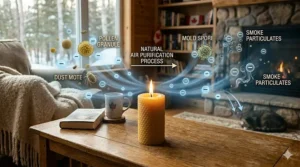
Marketing claims about beeswax candles “purifying the air through negative ions” have become pervasive, but the scientific evidence remains controversial. While some studies show negative ions can reduce airborne particles, multiple atmospheric chemistry experts have stated there’s no evidence beeswax candles produce meaningful quantities of negative ions.
The Reality: Beeswax candles won’t purify your air like a HEPA filter. What they will do is avoid adding pollutants. Unlike paraffin candles that release petroleum-based chemicals identified by Health Canada as indoor air quality concerns, beeswax burns cleanly without synthetic fragrance compounds, soot, or toxic emissions. That’s the real advantage—not what they remove, but what they don’t contribute.
Mistake #2: Ignoring the Bilingual Labelling Requirement
Canada legally requires bilingual product labelling, but some international sellers on Amazon.ca bypass this requirement. If your candles arrive with English-only or foreign-language labels, they may not comply with Canadian consumer protection standards—and worse, might contain undisclosed ingredients.
The Reality: Stick with sellers explicitly stating “Made in Canada” or established Canadian brands like Dutchman’s Gold and Canadian Hive. These comply with bilingual requirements and Health Canada’s ban on lead-core wicks. You’re not just supporting Canadian beekeepers; you’re ensuring the product meets domestic safety standards.
Mistake #3: Storing Beeswax Like Paraffin
Paraffin candles tolerate garage storage, direct sunlight, and temperature extremes without visible changes. Beeswax is more temperamental—it develops bloom in cold, can soften in heat above 25°C, and may lose its honey scent if stored near strong-smelling items.
The Reality: Store beeswax candles in cool (15-20°C), dark spaces away from furnaces, paint, and cleaning products. Many Canadians unknowingly store candles near gasoline cans in garages—the beeswax absorbs petroleum odours, ruining the natural honey scent. A bedroom closet or basement storage room provides ideal conditions.
Mistake #4: Comparing Prices to Paraffin Without Calculating Burn Time
Sticker shock is real when a beeswax pillar costs $12 CAD versus a paraffin equivalent at $4. But run the numbers: the beeswax burns 35 hours while the paraffin burns 12 hours. Suddenly you’re comparing 34 cents per hour versus 33 cents per hour—virtually identical.
The Reality: Calculate cost per hour of burn time, not cost per candle. Beeswax’s longer burn time often neutralizes its higher upfront cost, while delivering superior air quality and avoiding petroleum-based emissions that accumulate in sealed Canadian homes during winter.
Beeswax vs. Soy vs. Paraffin: Understanding the Canadian Candle Landscape
The Paraffin Reality
Paraffin dominates Canadian candle aisles because it’s cheap and consistent. Derived from petroleum refining, it burns reasonably well and takes fragrance readily. But Health Canada research has found paraffin candles can release benzene and toluene—compounds with known health concerns. While the concentrations are typically low in well-ventilated spaces, Canadian winters mean we live in sealed environments where these compounds accumulate.
For households with asthma, allergies, or chemical sensitivities, paraffin’s convenience doesn’t justify the trade-offs. You’re introducing petroleum combustion products into air your family breathes 16+ hours daily during winter months when windows remain closed.
The Soy Complication
Soy candles emerged as the “natural” alternative, marketed as renewable and clean-burning. The reality is more nuanced. Most soy is genetically modified, and Canadian-grown soy faces supply challenges that lead manufacturers to import from the US or South America. Many “soy candles” contain only 30-50% soy blended with paraffin—check labels carefully.
Pure soy candles do burn cleaner than paraffin, but they often require synthetic hardeners to maintain shape in Canadian summer heat. They also produce less light than beeswax (lower luminosity per gram burned) and lack the natural honey scent that eliminates the need for added fragrances.
The Beeswax Advantage
Beeswax requires no chemical processing, releases no petroleum byproducts, and burns with natural honey fragrance that comes from the 200+ wildflower species Canadian bees pollinate. It supports domestic beekeepers whose work maintains pollinator populations critical for Canadian agriculture.
The higher melting point means longer burn times and better performance in Canadian temperature fluctuations. The natural golden glow produces light closer to natural sunlight wavelengths than the cooler tones of paraffin, reducing eye strain during long winter evenings.
Canadian Regulations and Safety Standards for Beeswax Candles
Health Canada maintains strict candle safety regulations under the Canada Consumer Product Safety Act. Understanding these helps Canadian buyers identify compliant products and avoid potentially dangerous imports.
Lead Wick Ban
Canada banned lead-core wicks in 2001 after research linked them to elevated indoor lead levels—particularly concerning for children and pregnant women. Despite this ban, international sellers occasionally list products on Amazon.ca that don’t comply. Verify that your beeswax candles explicitly state “lead-free cotton wicks” or “lead-free wicks.”
Flame Height and Combustion Requirements
Canadian regulations specify that candles must burn with stable flames that don’t exceed certain heights or cause excessive soot. Quality beeswax candles naturally meet these standards due to their clean-burning properties, but cheap blended products marketed as “beeswax” may fail compliance if they contain excessive paraffin or soy.
Bilingual Safety Instructions
All candles sold in Canada must include safety warnings in both English and French. Instructions must cover burn time limits (typically 4 hours maximum), supervision requirements, and proper extinguishing methods. Products lacking bilingual labels may not meet Canadian safety requirements.
For more detailed information about candle safety regulations in Canada, consult Health Canada’s official candle safety guidelines, which outline specific requirements for manufacturers and safety tips for consumers.

The History of Beeswax: From Ancient Egypt to Canadian Homes
Beeswax candles possess a lineage stretching back over 5,000 years, making them one of humanity’s oldest manufactured light sources. According to historical records documented by Wikipedia, ancient Egyptians used beeswax for torches and ceremonial lighting as early as 3,000 BCE, valuing its clean burn and pleasant aroma over the smoky, foul-smelling tallow alternatives.
During the Middle Ages, beeswax candles became synonymous with purity and wealth across Europe. The Catholic Church mandated beeswax for altar candles from the 12th century onward, believing its natural origin from bees—creatures associated with divine providence—made it more suitable for sacred purposes than animal-derived tallow. This religious significance drove the establishment of candlemaking guilds and sustained beeswax production through centuries.
In Canada, early settlers quickly recognized beeswax’s superiority for long winter nights. The Hudson’s Bay Company trading posts stocked beeswax candles as premium goods, while ordinary settlers made do with tallow. The introduction of petroleum-derived paraffin in the 1850s threatened to obsolete beeswax entirely—paraffin was cheaper, more uniform, and readily available even in remote Canadian regions.
Yet beeswax persisted. Its clean burn, natural scent, and connection to sustainable beekeeping maintained a dedicated following through industrialization and into the modern environmental movement. Today’s Canadian revival of beeswax candles represents both a return to traditional values and a practical response to concerns about indoor air quality and petroleum dependency that our ancestors couldn’t have imagined.
How to Spot Fake or Blended “Beeswax” Candles on Amazon.ca
Not all candles labelled “beeswax” contain pure beeswax. Unscrupulous sellers blend beeswax with cheaper paraffin or soy, then market them deceptively. Here’s how Canadian buyers can identify genuine 100% beeswax products:
The Price Reality Check
Pure beeswax costs Canadian beekeepers $12-$18 CAD per kilogram to produce. A 170-gram (6-ounce) pure beeswax pillar therefore contains roughly $2-$3 in raw materials alone, before labour, packaging, and shipping. If you see “beeswax candles” priced at $5 CAD for a 6-pack, they’re not pure beeswax—the mathematics don’t work.
Expect to pay at minimum $8-$12 CAD for a genuine 170-gram pure beeswax pillar from a reputable seller. Anything substantially cheaper is blended, and the seller is counting on you not to calculate the raw material economics.
The Colour and Scent Test
Pure beeswax ranges from pale ivory (from spring wildflowers) to deep golden brown (from late-season blooms and older wax). If candles appear bright white or vibrant colours, they contain bleached wax, dyes, or other additives. Pure beeswax should smell distinctly of honey—sweet, floral, and slightly waxy. No scent or synthetic fragrance indicates blended products.
The Bloom Indicator
As mentioned earlier, authentic beeswax develops white bloom in cold storage—a crystallization process unique to pure beeswax. If you store supposedly “pure beeswax” candles in an unheated Canadian garage through winter and they don’t develop bloom, they likely contain paraffin or soy. This isn’t a perfect test (some heavily filtered beeswax blooms less), but it’s a useful indicator.
Reading Amazon.ca Product Descriptions
Look for specific language: “100% pure beeswax,” “pure Canadian beeswax,” or “no additives, no blends.” Be wary of vague terms like “beeswax candles” or “made with beeswax”—these often indicate blends. Check customer reviews for complaints about lack of honey scent, excessive dripping, or black smoke (all signs of paraffin content).
Prioritize sellers who specify beeswax sources (“Ontario beekeepers,” “Western Canadian apiaries,” etc.). Vague or absent sourcing information suggests the seller is importing cheap blended products and marketing them deceptively.

❓ Frequently Asked Questions About Beeswax Candles in Canada
❓ Are beeswax candles safe to burn indoors during Canadian winters when homes are sealed tight?
❓ Do beeswax candles really purify the air, or is that marketing hype?
❓ Can I use beeswax candles during power outages, and how many do I need for emergency preparedness?
❓ How long do beeswax candles last in Canadian storage conditions?
❓ Are Canadian-made beeswax candles worth the extra cost compared to imported alternatives?
Conclusion: Making the Right Beeswax Candle Choice for Your Canadian Household
After examining dozens of options available on Amazon.ca, analyzing Canadian customer feedback, and considering our unique climate and housing challenges, several clear patterns emerge. The best beeswax candles for Canadian buyers balance purity (100% beeswax with cotton wicks), value (cost per hour of burn time), and practical performance in our temperature extremes and sealed winter homes.
For most Canadian households, the Pure Nature 6-Pack Pillars deliver optimal value—210 hours of burn time at competitive pricing, with excellent reviews from coast to coast. Urban dwellers in condos benefit from the flexibility of Canadian Hive Tealights, while rural and cottage owners find the 20-Pack Emergency Set indispensable for power outages and off-grid living. First-time beeswax buyers should start with Dutchman’s Gold Votives to experience the quality before committing to larger purchases.
What matters most isn’t finding the single “perfect” candle but understanding which characteristics align with your specific needs. Emergency preparedness demands different features than formal dining ambiance. Apartment living requires different considerations than rural homesteading. By matching the right beeswax candle type to your Canadian lifestyle—whether that’s Toronto condo life, Calgary suburban family, or Muskoka cottage weekends—you ensure satisfaction with your investment.
The Canadian shift toward beeswax reflects broader awareness about indoor air quality, sustainable products, and reducing petroleum dependency. When you choose beeswax over paraffin, you’re not just buying a candle—you’re supporting Canadian beekeepers through brutal winters, reducing synthetic chemical exposure in your sealed winter home, and connecting to a 5,000-year tradition of natural lighting that predates petroleum by millennia.
✨ Don’t Miss These Exclusive Deals!
🔍 Take your home ambiance to the next level with these carefully selected beeswax candles. Click on any highlighted product above to check current pricing and availability on Amazon.ca. These natural, chemical-free candles will help you create authentic warmth and relaxation your family will appreciate—especially during long Canadian winters when indoor air quality matters most!
Recommended for You
- 7 Best 100% Canadian Beeswax Candles Worth Every Penny in 2026
- Best Soy Blend Candles Canada 2026: 7 Premium Clean Burning Picks
- 7 Best Natural Soy Candles Canada: Clean Burning Guide 2026
Disclaimer: This article contains affiliate links. As an Amazon Associate, I earn from qualifying purchases. If you purchase products through these links, we may earn a small commission at no additional cost to you.
✨ Found this helpful? Share it with your friends! 💬🤗
