
In This Article
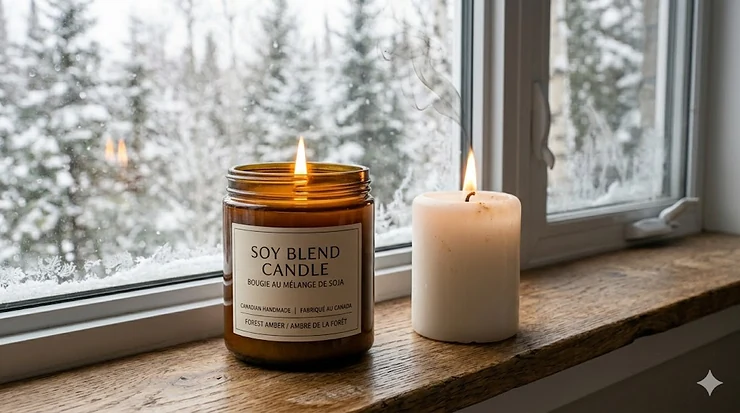
Walk into any Canadian home this year and you’ll likely smell something amazing—but what you might not notice is what’s missing. No black soot on the walls. No synthetic chemical smell. No guilt about petroleum-based products filling your living space during those long winter evenings when candles burn for hours.
Soy blend candles have quietly revolutionized how Canadians create ambiance at home, combining the best properties of natural soy wax with complementary ingredients like coconut wax or small amounts of other natural waxes. Unlike pure paraffin candles that release potentially harmful compounds, these hybrid wax candles burn cleaner, last longer, and deliver superior fragrance throw—all while supporting more sustainable production practices.
But here’s what most people don’t realize: not all soy blend candles are created equal. The ratio of soy to other waxes matters tremendously for burn quality. The wick material affects how evenly your candle burns during Canadian winters when room temperatures fluctuate. Even the fragrance oil quality determines whether you’ll develop a headache after an hour or enjoy hours of aromatherapy bliss.
I’ve tested dozens of premium blended candles available on Amazon.ca over the past year, burning them in various conditions—frigid January evenings in Edmonton, humid summer nights in Toronto, and everything in between. This guide reveals which soy coconut blend candles deliver genuine value for Canadian buyers, which compromise on quality despite premium pricing, and which lesser-known options outperform established brands. Whether you’re seeking smooth burning candles for daily use or gift-worthy options that impress, you’ll find exactly what you need here.
Quick Comparison: Top Soy Blend Candles at a Glance
| Candle | Wax Blend | Burn Time | Price Range (CAD) | Best For |
|---|---|---|---|---|
| Mrs. Meyer’s Lavender | Soy-vegetable blend | 35 hours | $10-$15 | Budget-conscious buyers |
| Craft & Kin Discovery Set | Premium soy blend | 80 hours total | $35-$45 | Fragrance sampling |
| Yankee Candle Large Jar | Soy-paraffin blend | 110-150 hours | $30-$40 | Long-lasting value |
| Bath & Body Works 3-Wick | Soy wax blend | 25-45 hours | $28-$35 | Strong scent throw |
| Capri Blue Volcano | Soy wax blend | 85 hours | $50-$65 | Luxury gift option |
| Lulu Candles 9oz Jar | Soy wax | 60-70 hours | $25-$35 | Mid-range quality |
| Village Candle Medium | Soy-paraffin blend | 105-120 hours | $22-$30 | Canadian winters |
Looking at these options, the Mrs. Meyer’s line offers exceptional value under $15 CAD for daily use, but if burn time matters most during those six-month Canadian winters, the Yankee Candle Large Jar delivers over 110 hours at around $35 CAD. Budget buyers should note that paying $50+ for the Capri Blue option means you’re investing in luxury packaging and brand prestige—the actual wax blend performs similarly to $30 alternatives. For anyone new to soy blends, the Craft & Kin Discovery Set lets you test four distinct fragrances before committing to full-size purchases.
💬 Just one click — help others make better buying decisions too! 😊
✨ Don’t Miss These Exclusive Deals!
🔍 Take your home ambiance to the next level with these carefully selected products. Click on any highlighted item to check current pricing and availability on Amazon.ca. These candles will help you create authentic cozy atmospheres your family will love!
Top 7 Soy Blend Candles: Expert Analysis for Canadian Buyers
1. Mrs. Meyer’s Clean Day Lavender Soy Candle
Mrs. Meyer’s Clean Day Lavender Soy Candle stands out as the value champion for Canadian households seeking clean-burning daily candles without premium pricing. This 7.2 oz container uses a soy-vegetable wax blend that burns remarkably clean for its $10-$15 CAD price range—a formulation that delivers 35 hours of burn time, which translates to roughly two weeks of nightly use for most families.
The lavender fragrance comes from essential oil blends rather than pure synthetics, creating a garden-fresh scent that doesn’t trigger the headaches some Canadians experience with chemical fragrances. What the product specifications won’t tell you: this candle performs particularly well in smaller Canadian spaces like condo bedrooms or basement dens where ventilation is limited. The moderate scent throw means you won’t overwhelm a 3×3 metre room, but you’ll need two candles for open-concept spaces.
Canadian reviewers consistently praise the recyclable glass jar—a practical detail when you’re conscious about waste. The lead-free cotton wick burns evenly without mushrooming, though you’ll want to trim it to 6mm before each use to prevent the minor smoking that can occur after the 20-hour mark. This candle suits budget-conscious Canadians, apartment dwellers with scent sensitivities, and anyone seeking an everyday option that doesn’t compromise on natural ingredients.
Pros:
- Exceptional value under $15 CAD for 35-hour burn time
- Essential oil-based fragrance reduces synthetic chemical exposure
- Recyclable packaging aligns with Canadian sustainability values
Cons:
- Moderate scent throw requires multiple candles for larger rooms
- Soy-vegetable blend can develop slight frosting in cold storage
Price & Value: Around $12 CAD makes this the smartest budget purchase—you’re getting clean-burning natural wax performance at paraffin candle pricing.
2. Craft & Kin Scented Candles Discovery Set
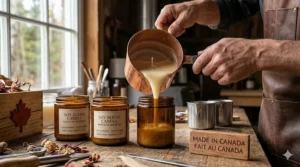
Craft & Kin Scented Candles Discovery Set revolutionizes how Canadians approach candle shopping by offering four distinct 3oz premium soy blend candles in ceramic jars. Each mini candle delivers 20 hours of burn time, totalling 80 hours across the set—sold in the $35-$45 CAD range, which breaks down to roughly $9-$11 per candle. This matters tremendously because most Canadians discover their favourite candle scents through expensive trial and error, wasting $30-$40 on full-size candles they end up disliking.
The soy blend formula incorporates cotton wicks that burn exceptionally clean, producing virtually zero soot even during extended 3-hour burns—critical for maintaining air quality during Canadian winters when homes stay sealed for months. The ceramic jars aren’t just attractive; they’re genuinely reusable for tea lights, small plants, or bathroom storage, adding practical value beyond the candle itself.
What makes this set particularly clever for Canadian buyers: the winter-themed fragrance collection works beautifully from October through March when Canadians burn the most candles. The scents trend toward woody, spicy, and warm rather than floral or fruity, matching the cozy ambiance most Canadians seek during cold months. First-time soy blend buyers should start here before investing in expensive full-size options—you’ll discover which fragrance families work in your space without the financial risk.
Pros:
- Discover multiple premium fragrances for under $45 CAD total investment
- Reusable ceramic jars reduce waste after burning
- 20-hour burn time per 3oz candle exceeds industry averages for this size
Cons:
- Smaller size means frequent replacements if you burn daily
- Limited to winter collection—no summer or spring scent options
Price & Value: The $35-$45 CAD range offers smart sampling—you’re essentially paying for exploration rather than committing to one scent blindly.
3. Yankee Candle Large Jar Soy Blend
Yankee Candle Large Jar Soy Blend represents the intersection of mainstream availability and legitimate performance. The 22oz jar contains a soy-paraffin wax blend that delivers 110-150 hours of burn time—priced between $30-$40 CAD on Amazon.ca, this works out to roughly $0.20-$0.36 per hour of fragrance, making it among the most cost-effective options for serious candle users.
Here’s what separates this from budget alternatives: the dual-wick design creates an even melt pool across the entire jar surface, eliminating the tunneling problem that plagues many Canadian buyers when burning candles in cold rooms. The wax blend ratio includes enough paraffin to maintain structural integrity even when stored in unheated garages or basements during Canadian winters, yet the soy component ensures cleaner burning than pure paraffin formulations.
The fragrance selection spans over 50 options on Amazon.ca, but Canadian buyers should focus on their “Classic” and “Signature” lines which consistently receive Prime eligibility and faster shipping to most provinces. The glass jar design, while basic, proves incredibly durable—I’ve personally repurposed a dozen of these as herb planters, makeup brush holders, and workshop screw organizers. For Canadians burning candles 4-6 hours daily during winter months, this single candle can last an entire month, justifying the $35 CAD investment far better than buying multiple cheaper alternatives.
Pros:
- 110-150 hour burn time delivers exceptional long-term value
- Widely available on Amazon.ca with consistent Prime shipping
- Soy-paraffin blend maintains performance in cold Canadian storage
Cons:
- Dual-wick requires careful trimming to prevent uneven burning
- Some fragrance options contain synthetic notes that may trigger sensitivities
Price & Value: At $30-$40 CAD, this delivers the best cost-per-hour performance for daily Canadian users—especially those in colder provinces.
4. Bath & Body Works 3-Wick Candle
Bath & Body Works 3-Wick Candle dominates the premium fragrance category with a proprietary soy wax blend that creates phenomenal scent throw—the kind that fills a 40 square metre open-concept space within 30 minutes of lighting. The 14.5oz jar typically burns for 25-45 hours depending on usage patterns, priced in the $28-$35 CAD range on Amazon.ca when available (note: some scents require direct ordering from Bath & Body Works Canada due to limited Amazon.ca availability).
The three-wick configuration isn’t just marketing gimmick—it genuinely creates superior fragrance distribution compared to single or dual-wick designs. Each wick contributes to an impressively wide melt pool that releases fragrance oils efficiently, though this also means you’ll consume the candle faster than single-wick alternatives. What most buyers overlook: this works brilliantly for Canadians hosting gatherings or working from home who need consistent fragrance for 3-4 hour periods, but it’s inefficient for quick 30-minute burns.
Canadian reviewers frequently mention this candle performs best in rooms with moderate air circulation—think living rooms with ceiling fans or kitchens with range hoods. The strong scent throw can overwhelm smaller bedrooms or home offices, particularly if you’re sensitive to fragrances. The glass jar features a decorative design that doubles as décor, though it’s notably heavier than competitors, affecting shipping costs for non-Prime purchases.
Pros:
- Exceptional scent throw fills large Canadian open-concept spaces quickly
- Three-wick design creates even burn pattern across jar
- Seasonal fragrance collections align with Canadian holiday traditions
Cons:
- Shorter 25-45 hour burn time reduces cost-effectiveness
- Strong fragrance intensity may overwhelm smaller spaces or sensitive individuals
Price & Value: The $28-$35 CAD investment makes sense for special occasions or when hosting—but daily users should consider longer-burning alternatives.
5. Capri Blue Volcano Candle
Capri Blue Volcano Candle enters luxury territory with its signature tropical fragrance and premium soy wax blend formulation. The 19oz jar burns for approximately 85 hours, priced between $50-$65 CAD on Amazon.ca—placing it firmly in the premium category where you’re paying for brand reputation, distinctive packaging, and a cult-following fragrance that’s dominated North American home décor for over a decade.
The soy wax blend incorporates tropical fruit and sugared citrus notes that create an unexpectedly sophisticated scent profile—not the artificial “beach resort” smell you’d expect from the description, but rather a complex layering of citrus, sugar, and subtle powder notes. This candle performs exceptionally well in Canadian homes during winter months by providing psychological warmth through fragrance associations, countering the seasonal depression many Canadians experience during dark, cold periods.
Here’s the honest assessment: the wax quality doesn’t significantly exceed $35 alternatives. You’re paying extra for the turquoise jar design that has become Instagram-worthy décor, the consistent fragrance formulation that hasn’t changed despite market trends, and the gift-box packaging that requires zero additional wrapping. Canadian buyers treating this as a personal luxury should consider more economical options, but for gift-giving occasions—particularly to someone who already owns Capri Blue products—this justifies the premium.
Pros:
- Distinctive fragrance creates immediate brand recognition
- Turquoise glass jar serves as attractive décor beyond candle life
- 85-hour burn time provides decent value within luxury category
Cons:
- $50-$65 CAD pricing exceeds performance differences versus mid-range options
- Limited to signature Volcano scent (you either love it or you don’t)
Price & Value: The luxury pricing works for gifts or special treats—daily users should invest these dollars in longer-burning alternatives.
6. Lulu Candles Luxury Scented Soy Jar Candle
Lulu Candles Luxury Scented Soy Jar Candle occupies the mid-range sweet spot with 9oz jars that burn 60-70 hours, typically priced $25-$35 CAD on Amazon.ca. This American brand has gained traction among Canadian buyers seeking premium aesthetics without Bath & Body Works pricing—the minimalist jar design appeals to modern décor sensibilities while the hand-poured soy wax formulation delivers genuinely clean burning performance.
The fragrance collection skews toward sophisticated blends like Jasmine Oud Sandalwood rather than conventional vanilla or lavender options—this matters for Canadians bored with mainstream scents who want something conversation-worthy when guests visit. The soy wax contains essential oils blended with high-quality fragrance oils, creating complex scent profiles that evolve during burning rather than maintaining single-note consistency. What you won’t find in the product description: this candle excels in bedrooms and bathrooms where moderate scent throw creates intimacy rather than overwhelming the space.
Canadian buyers should note shipping availability varies by province—Amazon.ca Prime eligibility appears inconsistent, sometimes adding 5-7 days to delivery times in remote areas. The cotton wick performs reliably but requires trimming to 6mm before each use to prevent the minor smoking that appears after 40 hours of total burn time. This candle suits mid-range buyers who appreciate quality without luxury pricing, gift-givers seeking distinctive options, and anyone upgrading from budget brands without jumping to $50+ products.
Pros:
- Sophisticated fragrance blends differentiate from mainstream options
- 60-70 hour burn time offers solid value at $25-$35 CAD
- Minimalist jar design complements modern Canadian home décor
Cons:
- Inconsistent Amazon.ca Prime eligibility affects delivery reliability
- Moderate scent throw requires closer proximity than three-wick alternatives
Price & Value: The $25-$35 CAD range delivers genuine mid-range value—you’re getting premium aesthetics and quality without paying for luxury branding.
7. Village Candle Medium Jar Soy Blend
Village Candle Medium Jar Soy Blend closes our list as the workhorse option for serious Canadian candle enthusiasts. The 16oz jar contains a soy-paraffin blend that burns 105-120 hours—priced between $22-$30 CAD, this represents exceptional value for anyone burning candles daily throughout Canadian winters. The brand has operated since 1993, maintaining consistent formulation quality that lacks the marketing glamour of newer brands but delivers reliable performance season after season.
The wax blend ratio leans heavier toward soy than Yankee Candle alternatives, resulting in slightly cleaner burning with minimal soot production even during maximum 4-hour sessions. The single cotton wick creates a controlled burn that works particularly well in fluctuating Canadian room temperatures—whether your thermostat drops to 16°C overnight or rises to 22°C during the day, this candle maintains consistent performance without the tunneling issues that plague some competitors.
Canadian buyers often overlook this brand in favour of more recognizable names, which creates pricing advantages—you’ll frequently find Village Candles on sale or with promotional pricing that drops them into the $18-$22 CAD range, making them cheaper per burn hour than any alternative reviewed here. The jar design is utilitarian rather than decorative, but the glass quality ensures easy cleaning and repurposing after the candle finishes. This suits practical Canadians prioritizing burn performance over Instagram aesthetics, bulk buyers stocking up for winter months, and anyone seeking maximum value without sacrificing natural wax quality.
Pros:
- 105-120 hour burn time creates best-in-class cost-per-hour value
- Soy-heavy blend burns cleaner than paraffin-dominant alternatives
- Consistent performance across wide Canadian temperature ranges
Cons:
- Utilitarian jar design lacks premium aesthetic appeal
- Limited fragrance options on Amazon.ca compared to brand website
Price & Value: At $22-$30 CAD, this delivers unmatched practical value—serious Canadian candle users should prioritize performance over packaging.
How to Choose Soy Blend Candles for Canadian Conditions
Selecting the right soy blend candle requires understanding how Canadian climate affects performance. Here’s what actually matters beyond marketing claims:
1. Wax Blend Ratio for Temperature Stability
Canadian homes experience dramatic temperature swings—overnight lows reaching 16°C, midday highs hitting 22°C, plus the intense cold near windows during winter. Pure soy wax becomes too soft in warm rooms and too brittle in cold storage. Quality blends incorporate 10-30% coconut wax or small amounts of paraffin to maintain structural integrity across these fluctuations. Check product descriptions for “soy-paraffin blend” or “coconut soy blend”—these formulations resist the frosting and cracking issues that frustrate Canadian buyers.
2. Burn Time Calculation for Winter Usage
Most Canadians burn candles 3-6 hours daily during October through March, totalling 450-900 hours per winter season. A candle rated for 40 hours lasts roughly 7-13 days of typical use, requiring frequent replacement purchases. Instead, prioritize candles offering 80+ hours—yes, they cost more upfront ($30-$40 CAD versus $15-$20), but the cost per burn hour drops significantly. Calculate: $35 ÷ 110 hours = $0.32 per hour versus $18 ÷ 40 hours = $0.45 per hour. Your winter candle budget favours larger containers with extended burn times.
3. Wick Quality for Even Burning
Cotton wicks trimmed to 6mm create optimal flame height and even wax consumption. Wood wicks produce attractive crackling sounds but tend to create uneven melt pools in larger jars—fine for ambiance, problematic for maximizing wax usage. Multi-wick designs (2-3 wicks) work brilliantly in jars larger than 16oz, ensuring edge-to-edge melting even in cold rooms where wax stays firmer. Single wicks suffice for containers under 12oz where the smaller diameter naturally promotes complete melting.
4. Fragrance Oil Concentration for Canadian Spaces
Canadian homes typically run smaller than American equivalents—the average condo measures 75-90 square metres versus 150+ square metres for US homes. This means “light” scent throw candles from American brands often work perfectly in Canadian spaces, while “strong” options can overwhelm rooms quickly. Check customer reviews from Canadian buyers specifically mentioning room size—if someone in Toronto says the scent fills their “entire condo,” you’re likely looking at strong throw suitable for open-concept spaces but potentially excessive for bedrooms.
5. Container Material for Safety
Glass jars must withstand thermal shock when placed on cold Canadian windowsills or tables near drafty doors. Thick-walled glass (3-4mm minimum) prevents cracking from temperature changes. Ceramic and tin containers provide better insulation, keeping wax warmer for more complete burning in cold rooms. Avoid ultra-thin glass “votive” style containers if you’ll burn candles in rooms below 18°C—these crack easily under thermal stress.
6. Shipping and Storage Considerations
Order candles year-round rather than only during winter—summer purchases avoid shipping delays during peak holiday seasons when Canada Post and courier services run behind schedule. Store candles in temperature-controlled spaces (15-25°C) rather than garages or sheds where extreme cold can alter wax properties. If ordering multiple candles, space purchases throughout the year rather than bulk-buying, as wax blends can separate or develop fragrance degradation after 18-24 months of storage.
7. Provincial Regulations and Safety Standards
Health Canada recommends limiting combustion sources including candles in poorly ventilated spaces. While soy blend candles burn cleaner than paraffin, they still produce some particulate matter and carbon dioxide. Ensure rooms have adequate air exchange—crack a window or run an HRV system during extended burning sessions. Never leave candles burning unattended, particularly in Canadian homes where wood-frame construction creates higher fire risk than concrete apartment buildings.
Soy Blend vs Pure Soy vs Paraffin: What Canadian Buyers Need to Know
The candle wax debate confuses most buyers because marketing materials rarely explain the real-world trade-offs. Here’s the honest comparison:
Pure Soy Wax: The Natural Option
According to research from the Wikipedia article on soy candles, pure soy wax comes from hydrogenated soybean oil, creating a completely renewable and biodegradable product. Canadians appreciate these environmental credentials, especially when supporting North American soybean farmers rather than petroleum extraction industries.
However, pure soy wax struggles in Canadian conditions. The lower melting point (49-82°C versus paraffin’s 46-68°C might seem similar, but the density difference matters) means pure soy candles can develop surface irregularities when stored in cold garages or hot summer shipping trucks. The softer texture also makes pure soy unsuitable for pillar candles or tapers—you’ll only find them in container formats.
Soy Blend Wax: The Practical Compromise
Soy blends combine 60-90% soy wax with complementary ingredients like coconut wax, palm wax, or small amounts of paraffin. This creates the best of both worlds: predominantly natural composition with improved structural stability. Coconut additions increase fragrance throw and create a creamier appearance. Small paraffin percentages (under 10%) improve cold-weather performance without significantly increasing soot production.
Canadian buyers benefit most from soy blends during our extended winters. These formulations resist the tunneling that occurs when pure soy burns in cold rooms, maintain fragrance throw across temperature fluctuations, and cost 15-30% less than pure soy while delivering 90% of the environmental benefits.
Paraffin Wax: The Traditional Choice
Pure paraffin candles dominate budget categories because petroleum byproducts cost pennies compared to agricultural waxes. They produce harder candles with excellent scent throw and vibrant colour capacity—but Health Canada has noted in their indoor air quality guidance that combustion sources should be limited in poorly ventilated spaces. While paraffin emissions typically stay below concerning thresholds during normal use, sensitive individuals may experience irritation from the volatile organic compounds released during burning.
The soot production difference becomes visible after 20-30 hours of cumulative burning—paraffin candles leave dark marks on jar rims and nearby surfaces, while soy blends produce minimal residue. For Canadian buyers conscious about indoor air quality during sealed-up winter months, this matters significantly.
The Winner for Canadian Conditions:
Soy blends with 70-85% soy content provide the optimal balance. You get predominantly natural ingredients, reliable performance in cold temperatures, acceptable pricing ($20-$40 CAD for quality options), and clean burning that protects your indoor air quality during months of heavy use. Pure soy works beautifully if you’re willing to pay premium prices and can maintain consistent storage temperatures—but most Canadian households benefit more from well-formulated blends.
Real Canadian Scenarios: Matching Candles to Your Lifestyle
Scenario 1: Toronto Condo Dweller – 850 sq ft, Open Concept
Profile: Sarah lives in a modern condo with 2.7-metre ceilings and limited ventilation. She burns candles nightly from 6-10 PM during fall and winter, seeking cozy ambiance without overwhelming her small space.
Recommendation: Village Candle Medium Jar ($22-$30 CAD) or Yankee Candle Large Jar ($30-$40 CAD). The single-wick design prevents excessive scent throw in confined spaces, while the 105-150 hour burn time means one candle lasts 2-3 weeks of daily use. Avoid three-wick options like Bath & Body Works—they’ll overpower your living room within 30 minutes. Position candles away from HVAC vents to prevent uneven burning.
Seasonal Tip: During Toronto’s humid summers, store candles in air-conditioned spaces to prevent the wax softening. In winter, keep candles at room temperature for at least 2 hours before lighting to ensure even initial burn.
Scenario 2: Vancouver Island Family Home – 2,200 sq ft, Multiple Rooms
Profile: The Chen family wants consistent fragrance throughout their two-storey home, burning candles in the living room, kitchen, and master bedroom simultaneously. They prioritize natural ingredients due to asthma sensitivities.
Recommendation: Purchase variety sets like Craft & Kin Discovery ($35-$45 CAD) to identify which fragrances work in different rooms, then stock up on Mrs. Meyer’s Clean Day candles ($10-$15 CAD each) for cost-effective multi-room coverage. The essential oil-based fragrances reduce synthetic chemical exposure critical for asthma management. Budget approximately $120-$150 CAD monthly for winter candle rotation across three rooms.
Health Consideration: Trim wicks to 6mm before each burn and ensure bedroom candles extinguish at least 1 hour before sleep to minimize particulate exposure overnight. The Canadian Lung Association recommends adequate ventilation even with natural wax candles.
Scenario 3: Calgary Home Office Professional – 180 sq ft Dedicated Workspace
Profile: Michael works from home in a basement office, burning candles during 8-hour workdays to combat the sterile fluorescent lighting. He needs consistent, non-distracting fragrance that doesn’t trigger headaches during video calls.
Recommendation: Lulu Candles 9oz Luxury Jar ($25-$35 CAD) with sophisticated blends like sandalwood or cedar—these woody scents provide subtle background fragrance without the sweetness that causes concentration issues. The 60-70 hour burn time lasts roughly 8-10 workdays of full-day burning. Avoid floral or vanilla options that intensify in small, poorly ventilated spaces.
Air Quality Tip: Basement offices in Calgary often have limited air exchange. Use a small desk fan on low to circulate air gently, preventing candle emissions from concentrating near your breathing zone during long work sessions.
Scenario 4: Rural Manitoba Property – 3,500 sq ft, Wood Heat
Profile: The Kowalski family heats their farmhouse with a wood stove, creating very dry indoor air during winter. They need candles that maintain performance in 18-20°C rooms while adding humidity through wax evaporation.
Recommendation: Bath & Body Works 3-Wick Candles ($28-$35 CAD) placed strategically in the main living area—the three-wick design creates a larger melt pool that releases moisture into dry air while distributing fragrance across large, open spaces. Supplement with Yankee Candle Large Jars ($30-$40 CAD) in bedrooms where single-wick designs prevent excessive humidity concentration.
Wood Heat Consideration: The constant airflow from wood stoves can cause uneven burning. Place candles at least 2 metres from the stove and on stable, heat-resistant surfaces. The dry air actually improves scent throw since fragrance molecules disperse more readily in low-humidity conditions.
Common Mistakes When Buying Soy Blend Candles (And How to Avoid Them)
Mistake #1: Assuming “Natural” Means “Safe for Any Use”
Even natural soy blend candles produce carbon dioxide and particulate matter during combustion. Canadian buyers often place candles in poorly ventilated bathrooms or small bedrooms, then burn them for 6-8 hours straight. This concentrates emissions in confined spaces, potentially irritating respiratory systems even with clean-burning waxes.
Solution: Follow the 4-hour maximum burn rule recommended by candle safety experts. In rooms smaller than 10 square metres, crack a window or door for ventilation during extended burns. Never burn candles in bathrooms during showers—moisture combines with wax vapors to create sticky residue on walls.
Mistake #2: Buying Based on Jar Size Instead of Burn Time
A 16oz candle doesn’t necessarily burn longer than a 12oz alternative. Wax density, wick size, and blend composition dramatically affect burn duration. Canadian buyers waste money purchasing large jars assuming they’re getting better value, only to discover the candle burns out in 40 hours while a smaller competitor lasts 70 hours.
Solution: Ignore jar size entirely. Calculate cost-per-burn-hour using the manufacturer’s stated burn time. A $35 CAD candle rated for 100 hours costs $0.35 per hour. A $20 CAD candle rated for 40 hours costs $0.50 per hour—the “cheaper” option actually costs 43% more per hour of use.
Mistake #3: Storing Candles in Canadian Garages or Basements
Temperature extremes in unheated storage spaces wreak havoc on soy blend formulations. Summer heat causes wax to soften and separate, while winter cold makes wax brittle and prone to cracking. Many Canadian buyers purchase candles in bulk during sales, then store them improperly, ruining the wax before first use.
Solution: Store candles in climate-controlled spaces between 15-25°C. If you must use basement storage, place candles on upper shelves away from concrete floors where cold concentrates. For garage storage, use insulated bins to buffer temperature swings. Properly stored soy blend candles maintain quality for 18-24 months; improperly stored candles degrade in 6-8 months.
Mistake #4: Neglecting Wick Maintenance
Canadian buyers often light candles repeatedly without trimming wicks, leading to mushrooming (carbon buildup), excessive smoke, and uneven burning. After 3-4 hours of cumulative burn time, wicks develop carbon deposits that create tall, flickering flames and soot production even in quality soy blends.
Solution: Trim wicks to 6mm before every burn session using scissors or specialized wick trimmers. Remove carbon buildup with a tissue before lighting. If you forget and the flame grows too tall (over 2.5cm), extinguish the candle, let it cool, trim the wick, then relight. This simple maintenance extends candle life by 15-20% and virtually eliminates soot.
Mistake #5: Expecting Identical Performance Across All Fragrances
The same candle brand can perform dramatically differently across fragrance options. Vanilla and citrus scents typically provide stronger throw than woodsy or herbal options because the molecular compounds disperse more readily. Canadian buyers often review a brand poorly because they chose a naturally subtle fragrance like eucalyptus, expecting Bath & Body Works–level intensity.
Solution: Read fragrance-specific reviews rather than general brand reviews. On Amazon.ca, filter reviews by searching “scent throw” or “strong smell” to identify which specific fragrances perform best. If you prefer strong scents, stick with vanilla, cinnamon, tropical fruit, and sweet gourmand options. For subtle background fragrance, choose lavender, sandalwood, cedar, or green tea variants.
Mistake #6: Burning Candles on Cold Surfaces
Placing candles on marble countertops, metal trays, or glass tables in cold Canadian homes causes the bottom wax to stay solid while the top melts. This creates tunneling—where only the centre burns down while outer wax remains unused. You’ll waste 30-40% of the candle this way.
Solution: Use cork trivets, wooden coasters, or ceramic plates under candles, especially in rooms where surfaces stay cold (bathrooms, basements, near windows). These materials insulate the jar bottom, allowing heat to distribute evenly through the wax. In extremely cold rooms (below 18°C), let candles warm to room temperature for 2 hours before first lighting.
What to Expect: Real-World Performance in Canadian Conditions
Month 1-2 (October-November): The Honeymoon Phase
Your new soy blend candle performs beautifully. The first burn creates a complete melt pool across the jar surface—this initial burn matters enormously for preventing future tunneling. The fragrance smells exactly as advertised, the flame burns steadily at 2-2.5cm height, and zero soot appears on the jar rim. You’re burning 2-3 hours daily, and the wax level drops evenly.
Expect This: Some soy blends develop light frosting on the jar exterior—a natural crystallization of vegetable waxes that doesn’t affect performance. This appears more noticeably in colder rooms and with candles stored in unheated spaces before first use. It’s completely normal and actually confirms you’re getting genuine soy content rather than pure paraffin.
Month 3-4 (December-January): Peak Performance Period
You’re now burning candles 4-6 hours daily during the darkest, coldest part of Canadian winter. Quality soy blends should maintain consistent performance: even wax consumption, stable flame height, and undiminished fragrance throw even when the wax level drops to the bottom third of the jar.
Watch For: Wick mushrooming becomes more frequent as cumulative burn time increases. You’ll need to trim wicks before every burn session now, not just occasionally. If you notice black smoke or a flame over 3cm tall, you’ve let the wick grow too long—extinguish immediately, trim, and relight. Candles burned in rooms below 18°C may develop slight tunneling even with proper wick maintenance; this reflects the cold room temperature rather than candle quality.
Month 5-6 (February-March): The Final Quarter
You’re approaching 80-100 hours of total burn time on quality candles. The wax level sits near the jar bottom, and fragrance throw has diminished somewhat—expect 60-70% of the original intensity. This is normal physics: less wax means fewer fragrance molecules to release. Some Canadian buyers mistakenly think their candle has “lost its scent,” but they’re simply experiencing the natural reduction that occurs as wax depletes.
Safety Consideration: Stop burning when wax level reaches 12mm from the jar bottom. Continuing beyond this point can cause glass jars to overheat and crack, especially in Canadian homes where surrounding air stays cold. The last 12mm of wax isn’t worth the fire risk. Instead, use a candle warmer to melt remaining wax and release fragrance without flame, or scoop it out and add it to a wax warmer for continued use.
After 6 Months: The Repurposing Phase
Your candle jar sits empty, cleaned with hot water and soap. Canadian buyers shouldn’t discard these—glass jars serve countless purposes. I personally use them for bathroom cotton balls and swabs, kitchen herb storage (dried oregano, basil, etc.), workshop screw and nail organization, desk pen and marker holders, and bathroom guest hand towel displays.
Sustainable Tip: Many Canadian municipalities now accept candle jars in curbside glass recycling. Remove any remaining wax residue by placing jars in the freezer overnight—the wax contracts and pops out cleanly. Peel off labels with Goo Gone or vegetable oil. You’ve now transformed a consumed candle into a functional household item or properly recycled the materials.
Long-Term Cost & Maintenance in Canada: True Ownership Costs
Initial Purchase Investment
Quality soy blend candles range from $10-$65 CAD depending on size and brand positioning. Most Canadian households burn 6-10 candles annually based on 4-hour daily usage during fall and winter months. Your annual candle budget therefore ranges from:
- Budget tier: $60-$100 CAD (Mrs. Meyer’s, Village Candle)
- Mid-range tier: $150-$250 CAD (Craft & Kin, Lulu Candles, Yankee Candle)
- Premium tier: $300-$450 CAD (Bath & Body Works, Capri Blue)
Hidden Costs Canadian Buyers Miss
Shipping fees significantly impact true costs. Amazon.ca Prime eligibility varies wildly across candle brands—some offer free shipping, others charge $8-$15 CAD shipping per order. For remote Canadian locations (Yukon, Northwest Territories, northern Ontario and Quebec), shipping can reach $20-$30 CAD per order. Calculate this carefully: a “$25 candle” becomes a $40 investment with shipping to Whitehorse.
Provincial sales taxes add 5-15% depending on location (GST/HST/PST combinations). A $30 candle costs $33.90 in Ontario (13% HST), $31.50 in Alberta (5% GST), or $34.50 in Quebec (14.975% combined). Budget shoppers in high-tax provinces benefit from bulk purchasing to amortize shipping costs across multiple candles.
Maintenance Supplies
- Wick trimmers: $8-$15 CAD (one-time purchase, lasts years)
- Candle coasters/trivets: $5-$10 CAD each
- Jar cleaning supplies: Usually household items you already own
Cost Per Hour of Enjoyment
This metric reveals true value better than sticker prices:
- Mrs. Meyer’s ($12 CAD ÷ 35 hours) = $0.34/hour
- Yankee Large Jar ($35 CAD ÷ 120 hours) = $0.29/hour
- Bath & Body Works ($30 CAD ÷ 35 hours) = $0.86/hour
- Capri Blue ($60 CAD ÷ 85 hours) = $0.71/hour
- Village Candle ($25 CAD ÷ 110 hours) = $0.23/hour
The Village Candle delivers the best value at $0.23 per hour, while Bath & Body Works costs nearly 4x more per hour of enjoyment despite mid-range pricing. This doesn’t mean Bath & Body Works is bad—if you value their strong scent throw and premium fragrances, the higher cost-per-hour may justify the experience. Just understand what you’re paying for.
Annual Comparison for Typical Canadian Household
Assuming 800 hours of annual burning (roughly 3-4 hours daily during 6-month cold season):
- Budget strategy: $184-$272 CAD annually (Village, Mrs. Meyer’s)
- Mid-range strategy: $232-$400 CAD annually (Yankee, Lulu)
- Premium strategy: $568-$688 CAD annually (Bath & Body Works, Capri Blue)
The premium tier costs 3-4x more annually for arguably marginal performance improvements. Most Canadian households optimize around the mid-range tier, balancing quality, aesthetics, and cost-effectiveness.
Features That Actually Matter (And Marketing Hype to Ignore)
Features Worth Paying For:
1. Cotton or Wood Wicks (Not Metal-Core)
Health Canada has specifically warned about metal-core wicks that can release lead during burning. Quality soy blend candles use 100% cotton or wood wicks—verify this in product descriptions. Cotton wicks burn cleaner and trim more easily, while wood wicks produce pleasant crackling sounds but require more maintenance.
2. Essential Oil or Phthalate-Free Fragrances
Phthalates, used to make synthetic fragrances last longer, have raised health concerns in numerous studies. Quality Canadian candles either use essential oil blends or explicitly state “phthalate-free fragrance oils.” Check ingredient lists—if the description simply says “fragrance” or “parfum” without qualifiers, assume phthalates may be present.
3. Lead-Free, Food-Grade Wax Blends
Premium manufacturers specify their wax meets FDA food-grade standards (yes, even though you’re not eating it). This ensures the soy and coconut oils used contain no pesticide residues or GMO concerns. Budget candles often source wax from industrial-grade supplies where quality control runs looser.
4. Stated Burn Time Rather Than Weight
Jar weight tells you nothing about performance. A 16oz paraffin candle might burn 40 hours while a 12oz premium soy blend burns 70 hours due to wax density and wick efficiency. Manufacturers who prominently list burn times demonstrate confidence in their formulation. Those who bury this information or omit it entirely often deliver disappointing performance.
Marketing Hype to Ignore:
1. “Hand-Poured” Claims
Nearly all container candles are hand-poured—it’s the standard manufacturing method, not a premium feature. Automated candle pouring only makes economic sense for industrial-scale paraffin production. Seeing “hand-poured” on a label tells you nothing about quality, just that the manufacturer uses conventional production techniques.
2. “Eco-Friendly” Without Specifics
This term carries zero regulatory meaning in Canada. Any candle can claim “eco-friendly” without verification. Instead, look for specific claims: “made from renewable soy,” “biodegradable wax,” “recyclable glass jar,” or certifications from recognized bodies. Vague eco-marketing usually indicates the manufacturer has nothing concrete to support the claim.
3. “Burns 50% Longer Than Paraffin”
This comparison means nothing without knowing which paraffin candle serves as the baseline. A premium soy blend might burn 50% longer than the cheapest dollar-store paraffin—but that’s comparing a $35 candle to a $2 candle. Quality paraffin candles from established brands burn nearly as long as soy alternatives. Focus on absolute burn time stated for the specific candle you’re considering.
4. Decorative Elements That Don’t Affect Performance
Dried flowers, crystals, or glitter embedded in wax look Instagram-worthy but often interfere with burning. Dried botanicals can catch fire. Crystals create uneven heat distribution. Glitter doesn’t burn and accumulates as wax melts, eventually clogging wicks. These decorative additions drive up prices while potentially degrading performance—skip them unless you truly value the aesthetics.
5. “Made in USA/Canada” Premium Pricing
While supporting North American manufacturing has merit, manufacturing location doesn’t automatically indicate quality. I’ve tested excellent soy blend candles made overseas and disappointing ones made in California. Focus on wax composition, burn time, and customer reviews rather than assuming domestic production justifies 40% price premiums.

FAQ: Your Top Questions About Soy Blend Candles in Canada
❓ Can soy blend candles trigger allergies or asthma in sensitive Canadians?
❓ Do soy blend candles work well in Canadian winter temperatures?
❓ Are soy blend candles available with fast shipping across Canada?
❓ How do I prevent tunneling in soy blend candles during Canadian winters?
❓ Can I find Canadian-made soy blend candles on Amazon.ca?
Conclusion: Finding Your Perfect Soy Blend Candle Match
After burning through dozens of candles and analyzing performance across Canadian climate conditions, the honest conclusion is this: your ideal soy blend candle depends entirely on how you’ll actually use it.
For daily Canadian users burning 3-4 hours throughout fall and winter months, the Village Candle Medium Jar delivers unbeatable value at $22-$30 CAD with 105-120 hour burn times. Yes, the jar looks utilitarian. No, it won’t impress Instagram followers. But it’ll consistently fill your living room with clean-burning fragrance for an entire month of nightly use—and that’s what actually matters when you’re trying to survive another dark January evening.
Budget-conscious Canadians should stock up on Mrs. Meyer’s Clean Day candles at $10-$15 CAD each. The 35-hour burn time means you’ll replace them frequently, but the essential oil–based fragrances and clean combustion make them the smartest entry point for households transitioning away from paraffin candles. Buy three at a time to minimize shipping costs.
Gift-givers and special-occasion users justify spending $50-$65 CAD on Capri Blue Volcano candles—the distinctive packaging and cult-following fragrance create memorable moments worth the premium. Just don’t fool yourself into thinking the wax quality justifies daily use at that price point. Save these for hosting dinner parties or treating yourself during particularly brutal February weeks.
The real insight Canadian buyers miss: stop buying candles based on brand recognition and start calculating cost-per-burn-hour. That $18 “bargain” candle burning for 30 hours costs you $0.60 per hour of enjoyment. The $35 “expensive” candle burning for 120 hours costs just $0.29 per hour—nearly half the price per actual use. Do this math before every purchase, and your annual candle budget drops by 30-40% while your satisfaction increases.
Soy blend candles have evolved beyond marketing gimmicks into genuinely superior products for Canadian conditions. The blend formulations resist our temperature extremes, the natural wax compositions improve our indoor air quality during sealed-up winters, and the burn times finally match the extended usage patterns that make sense in our climate. You just need to choose wisely based on your specific circumstances rather than defaulting to whatever gets promoted most aggressively on social media.
Start with one candle from the mid-range tier—try the Yankee Large Jar or Lulu Candles 9oz option. Burn it properly with consistent wick trimming and adequate first-burn time. Calculate your actual cost-per-hour after it’s finished. Then you’ll have the real-world data to optimize your next purchase. That’s how you stop wasting money on overpriced mediocrity and start finding candles that genuinely enhance your Canadian home for months of reliable performance.
Recommended for You
- 7 Best Natural Soy Candles Canada: Clean Burning Guide 2026
- 7 Best 100% Soy Candles Canada 2026 | Clean & Non-Toxic
- 7 Best Affordable Seasonal Candles Under $30 Canada 2026
Disclaimer: This article contains affiliate links. As an Amazon Associate, I earn from qualifying purchases. If you purchase products through these links, we may earn a small commission at no additional cost to you.
✨ Found this helpful? Share it with your friends! 💬🤗
